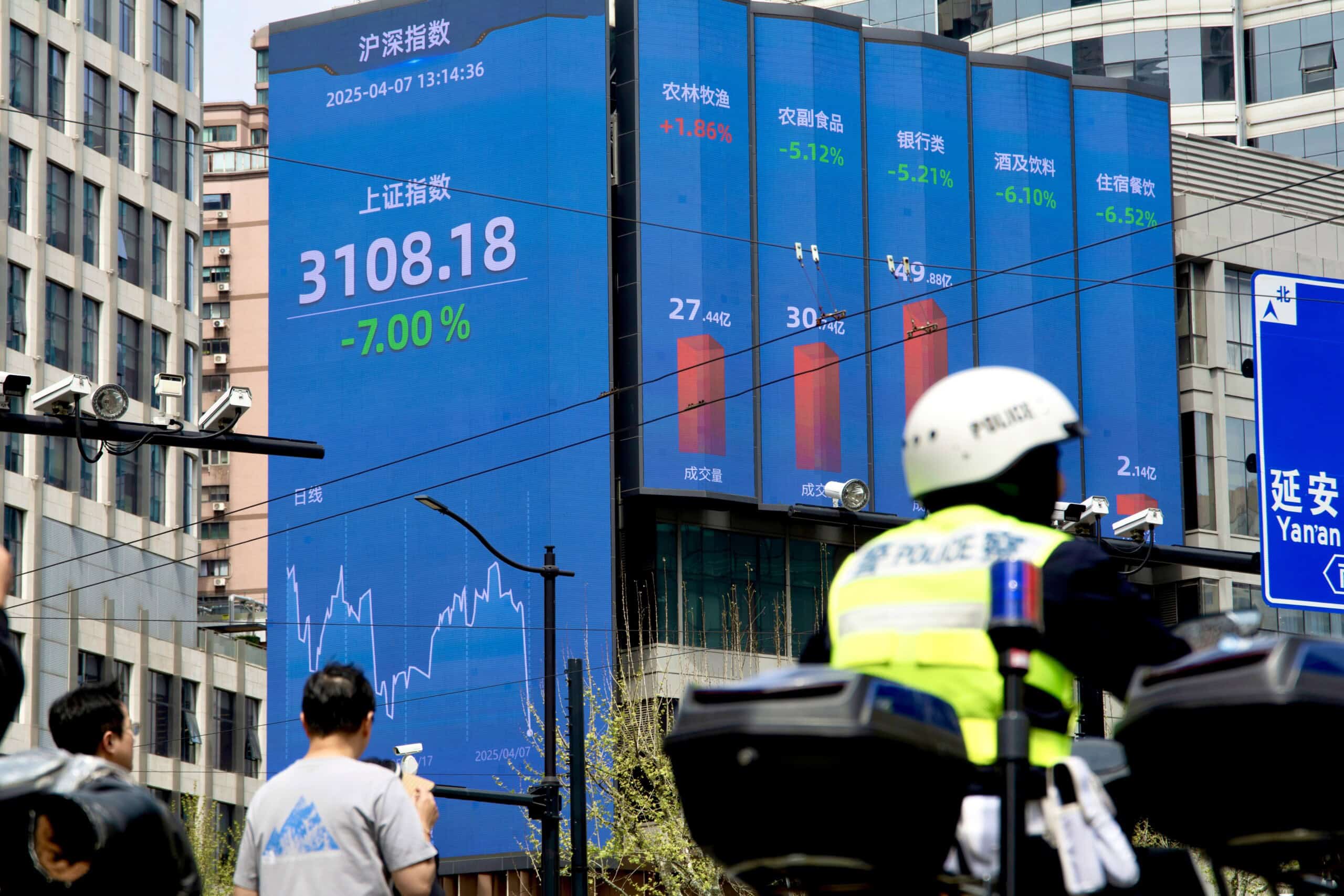
China’s technology shares have spent the past fortnight going the wrong way. Onshore, Shanghai’s STAR 50 index — which contains many of China’s top tech stocks — has surrendered much of a rally that lifted it by some 70 percent between April and July, while the broader CSI 300 sits roughly 9 percent below its late-June peak. In Hong Kong, the Hang Seng Tech Index has been underperforming for months, all the more so since July began.

What makes the slide striking is not its size but its timing. For the selling has largely come in the same two weeks during which China recorded three milestones its industrial planners have chased for a decade.
ChangXin Memory Technologies (CXMT) staged a blockbuster debut on Shanghai’s STAR market, giving the country a listed national champion in DRAM chipmaking. A state-owned domestic manufacturer was reported to have moved a home-grown deep-ultraviolet (DUV) lithography tool into production, cracking a vital step in advanced chipmaking that the West (through Dutch lithography maker, ASML) assumed it still controlled. Finally, Moonshot AI released Kimi K3, an open-weight model which is the closest China has had to American frontier models since the AI race started in 2022.
Three triumphs for technological sovereignty: and yet investors in China’s stock markets sold every category that produced them.
While such a sell-off might look surprising, it can easily be explained by the gap between the growing technical capability of Chinese tech companies, and their profitability.
If anything, Chinese stock markets (especially those onshore) have not yet fully recorded the difference between the two. Beijing’s “national team” of large investment funds — China Reform Holdings, China Chengtong and their peers — have recently deployed roughly 60 billion yuan (nearly $9 billion) to prop up falling AI-related stocks, stemming the market bleeding somewhat. A stock-buyback re-lending facility which China’s central bank set up in September 2024 has clearly been handy in reducing the cost of such market intervention.
In Hong Kong, the verdict of investors is relatively unfiltered by such state-backed support. On the very day the DUV news broke, mainland investor money rotated out of Hong Kong-based technology stocks and into financials and consumer names, leaving the headline index flat while the tech sub-index sagged. Investors were not buying the tech sovereignty story. They were selling the companies that are at the forefront of achieving this state-led goal.
The reason is simple: investors still care about profits. The Chinese word for the problem is neijuan — involution. In memory chips, CXMT’s arrival on the stock market through its IPO on July 27 was perceived as a warning, rather than a triumph — the warning being that another heavily subsidised entrant would now be racing to add capacity into a market already braced for a price war.
The milestone reached in advanced lithography carries the same double edge. If China really has developed its own DUV machine it will erode the pricing power of what to date, in the form of ASML, has been a quasi-monoply, potentially commoditizing these currently very expensive pieces of equipment.
A frontier-class Chinese model now runs at a fraction of the Western list price; the token itself is becoming a commodity export. The result is the peculiar spectacle of world-class technical achievement generating almost no visible profit at the point where it is produced.
Nowhere is the divergence starker than in artificial intelligence. China’s open-weight strategy implies that its companies, from Deepseek to its more recent global champion, Moonshot, are the price-setters in this area and a genuine force in global adoption. But open weights, by design, strip the model layer of pricing power. Anyone can use the model, so no one can charge a premium for it. A frontier-class Chinese model now runs at a fraction of the Western list price; the token itself is becoming a commodity export. The result is the peculiar spectacle of world-class technical achievement generating almost no visible profit at the point where it is produced.
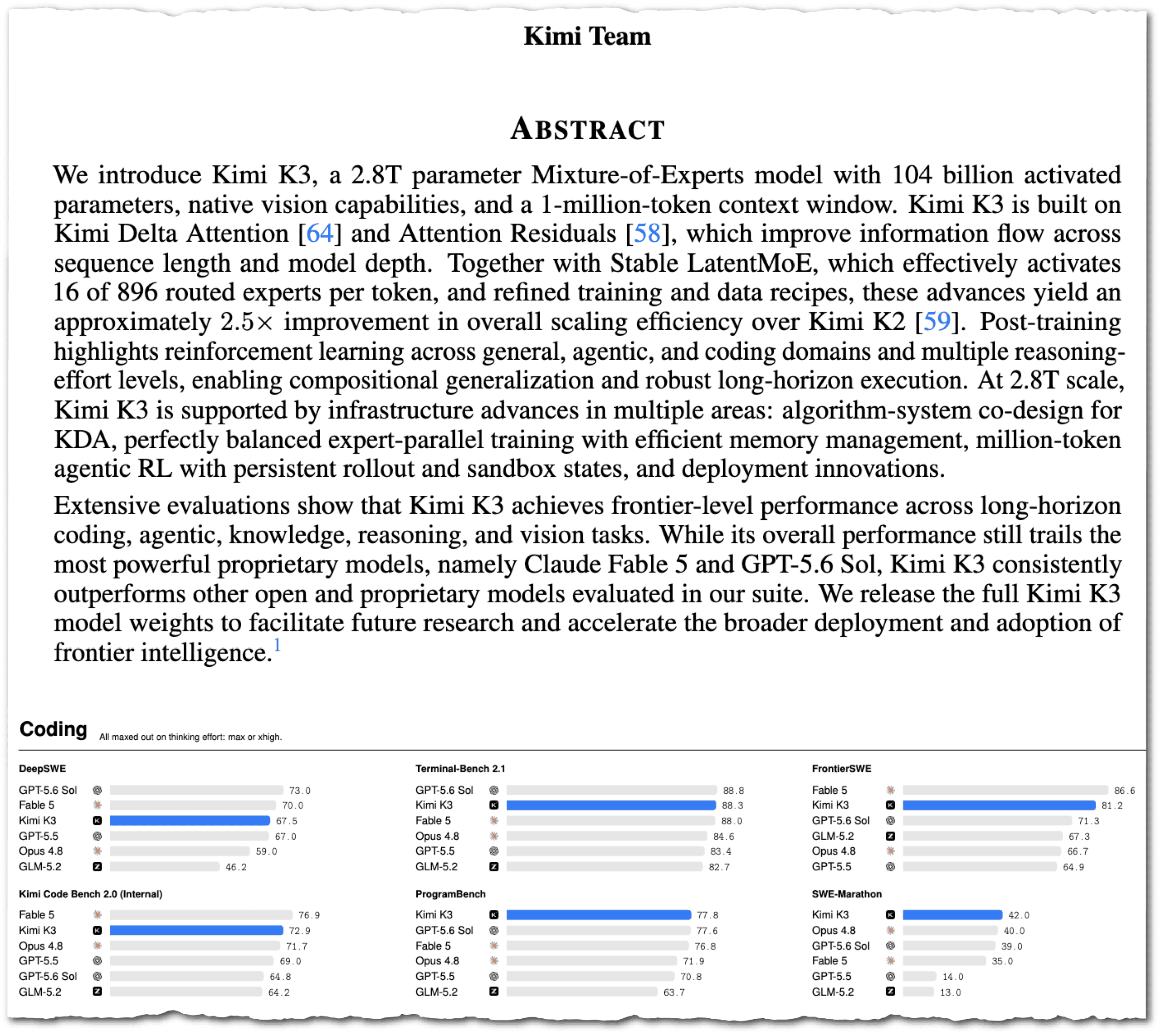
That is precisely the problem for equity investors: the sprawling roster of listed model companies that have produced breakthroughs such as Moonshot, are not great as investments. A sector can lead the world in capability and still be a poor place in which to seek market gains.
Beyond China’s intrinsic problem, namely that of ever lower prices due to extreme competition in sectors from manufacturing to AI goods and services, two external forces are behind China’s ongoing market sell-off in tech stocks.
The first is contagion. The same DUV report that thrilled China’s industrial strategists sent Korea’s Kospi down more than 10 percent in a single session and dragged the Nikkei and ASML down with it. Chinese chip names could not decouple from a regional rout the country’s apparent advance had actually triggered.

The second is mood. Global markets have turned skeptical of the AI trade, demanding evidence of monetization to justify the staggering amounts of capital that have already been sunk into it. This has been made even worse by the Federal Reserve turning more hawkish. China’s breakthroughs did not arrive into an enthusiastic market; they arrived as fresh ammunition for the bears.
All in all, while Chinese companies’ breakthroughs in AI are real and helpful in terms of China’s strategic autonomy, they will not easily equate to more profits for them. It is hard to see how this might change if the country’s leading AI models remain open weight and the involution problem remains intact.

Alicia García-Herrero is a Senior Fellow at Bruegel. She is also the Chief Economist for Asia Pacific at French investment bank Natixis, a non-resident Senior Fellow at the East Asian Institute of the National University Singapore and Adjunct Professor at the Hong Kong University of Science and Technology.