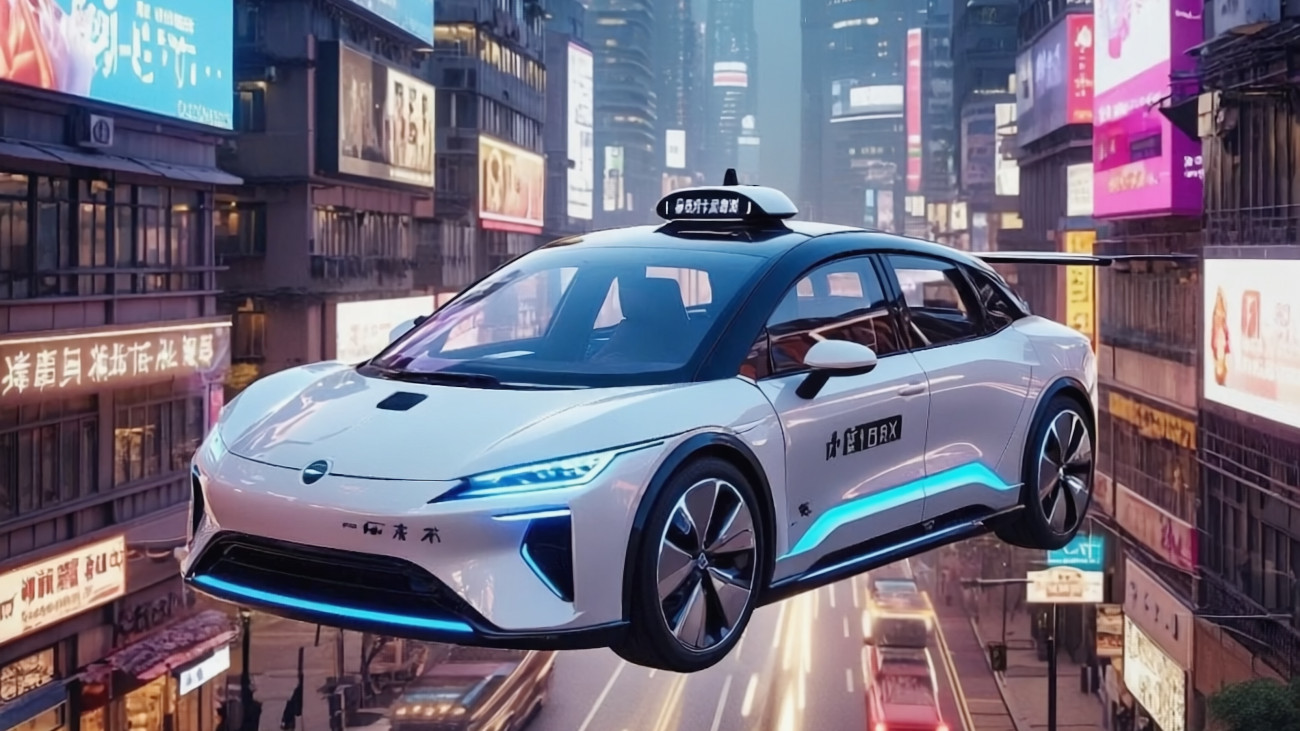
China’s young people have a generally positive outlook on autonomous vehicles (AVs). That will prove key to the future success of the ‘Robotaxi Revolution’ that is currently sweeping the country. Similarly, different levels of trust in Europe and North America may determine whether robotaxis will be accepted in those markets.
Examining attitudes to AVs of 738 Chinese drivers aged 18 to 35, a recent study by Southeast University in Nanjing found China’s young adults are generally positive towards AVs as a means for easier, more efficient travel – but that outlook is tempered by caution about data privacy and system reliability.
Perceived usefulness
The study confirms earlier findings that show China’s younger generations are receptive to AVs, driven by their perceived usefulness, high levels of social trust, and cultural inclinations towards group conformity and positive attitudes towards technological innovation.
Among the key factors driving AV acceptance, perceived trust is the strongest predictor, more so than perceived usefulness. Both are enhanced by curiosity and social influence (the “buzz’” of interest in AV technology from family, friends and colleagues, as well as online).
Participants in the survey were willing to pay the equivalent of just over $4,000 for a fully autonomous car, but just under 27% of participants would pay nothing extra – aligning with previous findings that lower-income groups would prefer shared AVs (SAVs) to maximize cost and convenience benefits.
Token of progress
The survey focused on a pivotal segment of the world’s largest auto market: young adults, who are both digitally native and economically influential. They perceive AVs as a token of progress and a status symbol. However, car owners with high vehicle dependency were less inclined towards AVs, as owning (and personally driving) a car are also still perceived as markers of social promotion.
This and other studies indicate that, while the decline in acceptance of SAVs with age is a global phenomenon, the baseline is much higher in China.
- 85% of Chinese consumers are comfortable with unsupervised autonomous driving, versus 39% in the U.S.
- 72% ‘trust’ AI, versus 32% in the U.S.
This difference stems from aggressive government promotion of SAVs through policies, pilot programmes in over 30 cities, 32,000 km of test roads, and 16,000 licenses issued. More self-driving cars are tested in China than anywhere else globally.
That rollout is supported by superior digital infrastructure, including reliable connectivity even in remote areas. And with tangible results. Tech giants like Baidu, XPeng, Alibaba, and Huawei have already integrated AVs into broader digital ecosystems. AVs are creating economic value primarily through fleets for ride-hailing, delivery, and logistics, aligning with China’s massive e-commerce sector.
A ChatGPT moment
Baidu’s Apollo Go operates nearly 500 supervised robotaxis in Wuhan alone, targeting profitability by year’s end, while the industry anticipates a ‘ChatGPT moment’ with full autonomy in one-fifth of new cars by 2030 and 70% featuring ADAS technology.
If and when China’s Robotaxi Revolution takes off, the rest of the world may not be ready to follow. Trust and safety remain issues, especially with wide media coverage of AV failures. In Australia, a 2024 study found nearly 70% uncomfortable driving near AVs. In the U.S., regulatory fragmentation and high-profile crashes have limited the industry’s growth.
Meanwhile, Chinese AV companies are already expanding into other markets, with partnerships like WeRide-Uber in the UAE, Baidu’s Apollo Go in Dubai and Abu Dhabi, and planned Lyft-Baidu rollouts in Southeast Asia and elsewhere.
As it looks now, it seems like Europe and North America are repeating the same mistake with AVs as they made with EVs: letting public distrust slow the pace for the rollout of the technology, leaving China to pioneer business models and dominate the global market.
Image: shutterstock_2670476295
