A recent study highlights a significant vulnerability in China’s global rare earth dominance, revealing that the United States and Japan largely control the core patents for advanced rare earth functional material technologies, crucial for high-value applications.

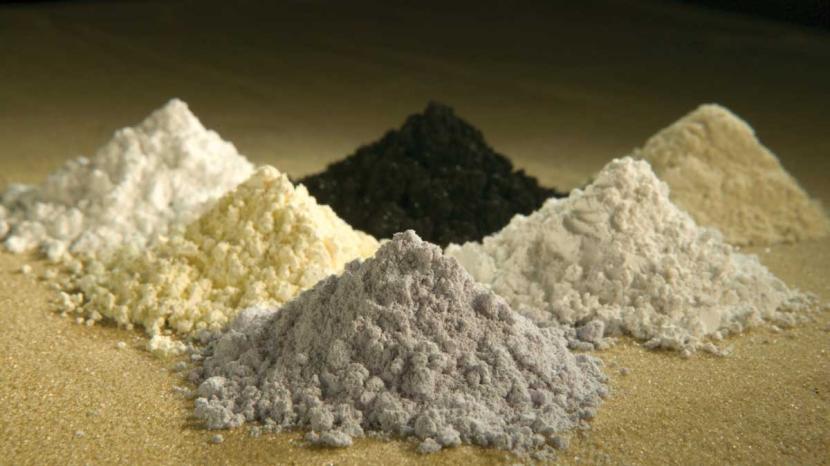
Photograph: Kind courtesy Peggy Greb, US department of agriculture/wikipedia.org/Creative Commons
Key Points
- China’s rare earth dominance is undermined by US and Japan holding core patents for advanced functional material technologies.
- Despite controlling 70% of mining and 90% of processing, China lacks leadership in high-value rare earth applications.
- Japan leads in permanent magnets, while the US excels in catalytic, luminescent, and polishing materials.
- China’s innovation system produces many patents, but few are high-value international patents with broad commercial influence.
- Researchers recommend China focus on technological gaps, dedicated research, and stronger industry-academia collaboration.
China’s dominance in the rare earth industry has a key structural weakness as the US and Japan largely hold many of the core patents for advanced rare earth functional material technologies, according to a study.
According to the Hong Kong-based South China Morning Post, the study said China was “not in a leading position in mastering key core technologies in certain fields” despite its dominance across the global rare earth supply chain.
China accounts for about 70 per cent of global rare earth mining and nearly 90 per cent of processing capacity, making it the dominant player in the global supply chain. This dominance has long been viewed as a strategic advantage, which Beijing has sought to leverage in its trade and strategic competition with the US.
China also tightened export controls on several rare earth products in recent years, disrupting supply chains in India, Japan and Europe.
Rare earth materials are critical for defence equipment, including fighter jets, missiles, radar and sonar systems, as well as automobiles, smartphones, satellites and a host of other modern equipment.
Unpacking China’s Rare Earth Vulnerability
According to the South China Morning Post, the researchers examined advanced rare earth functional material technologies rather than China’s resource reserves or production capacity and concluded that key patents underpinning these materials remained largely controlled by Japan and the United States.
According to the report, downstream products derived from processed rare earths – including permanent magnets, catalysts, luminescent and polishing materials – account for more than 80 per cent of rare earth-related patents worldwide and represent the industry’s most commercially important applications.
Japan retained an overall technological lead in permanent magnets, while the US led in most core technologies related to catalytic materials, luminescent materials and polishing materials, it said.
China was found to have an edge in only a limited number of technologies in these sectors while continuing to trail Japan and the US in several critical manufacturing processes and material systems, it said.
The researchers said China’s dominance in the supply of rare earth raw materials had not translated into comparable leadership in the higher-value technologies built on them.
The Innovation Gap In Rare Earth Technology
According to the report, the study attributed the gap partly to China’s innovation system, noting that while the country files a large number of rare earth patents, only a relatively small proportion are high-value international patents with broad commercial influence.
It also found that many scientific advances had yet to develop into commercially significant patent portfolios and pointed to weak coordination among universities, industry and intellectual property management.
Recommendations For China’s Technological Advancement
The researchers called for greater focus on areas where China faces technological gaps, dedicated research programmes and stronger collaboration between industry and academia to improve the country’s position in high-value rare earth technologies.
Disclaimer: News content is sourced from the stated source. Headlines, summaries, section headers, and images are automatically generated or selected using AI/algorithms and may not always be fully accurate. Readers are advised to refer to the full article for complete context.