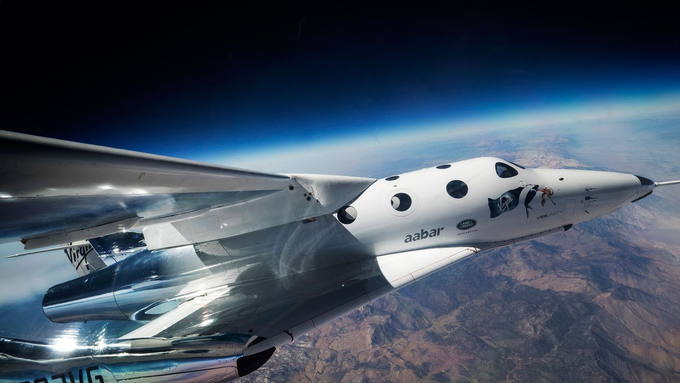
Offered through Trip.com’s luxury travel brand HHtravel, the package includes four days of training in the U.S. before a 90-minute suborbital flight operated by Virgin Galactic from New Mexico.
Passengers will experience several minutes of weightlessness and view Earth through the spacecraft’s 17 windows during the flight, scheduled for the fifth day.
The price covers preflight training, transportation and accommodation during the training period, a spacesuit, badges and videos of the experience. International flights, U.S. visas and personal insurance are not included.
Two customers had booked the package, the most expensive publicly available space tourism product in China, since the 2027 program was launched on Tuesday, according to the South China Morning Post.
Before taking off, passengers will undergo simulator-based preparation, including centrifuge and high-G-force training, parabolic flights, sensory-overload exercises, emergency drills and equipment-operation training.
Ctrip, Trip.com’s mainland China platform, describes the experience as a “sport for the elite” and says it is more than simply a “rich person’s game.”
Trip.com, China’s biggest online travel agent, accounts for more than half of the country’s online hotel booking market and handled more than 1 trillion yuan worth of bookings globally in 2025, according to the Financial Times.
 |
|
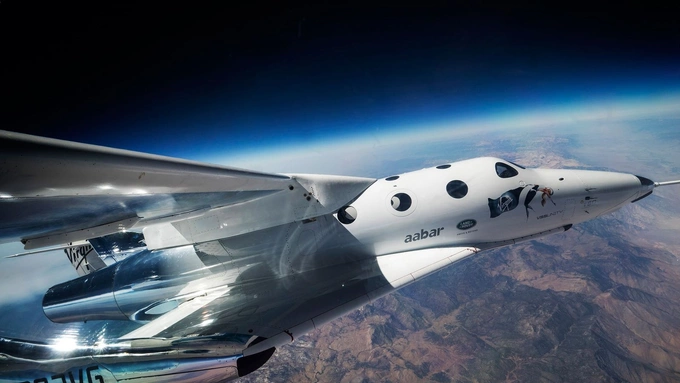
Virgin Galactic SpaceShipTwo suborbital spaceplane in flight. Photo courtesy of Virgin Galactic |
The price and safety of the trip have sparked debate on Chinese social media, with reactions ranging from excitement over the prospect of space travel to skepticism about whether the experience is worth the cost, the Global Times reported.
Some users questioned whether commercial spaceflight would be mature enough by 2027, while others raised concerns about who would be responsible for passengers’ safe return. Others questioned whether four days of preparation would be sufficient, noting that professional astronauts typically undergo much longer physical training before going to space.
Virgin Galactic, founded by British billionaire Richard Branson in 2004, opened bookings in April for 50 spaceflight seats priced at $750,000 each. The batch was oversubscribed by Aug. 12, adding more than $50 million to the company’s expected future spaceflight revenue.
China has yet to conduct a commercial space tourism flight, although several domestic companies are developing their own services.
Deep Blue Aerospace began selling suborbital space tourism tickets for 1.5 million yuan each in 2024 and is targeting its first crewed flight in 2027. CAS Space has said it plans to begin crewed space tourism flights around 2028.
Other U.S. companies have also offered private trips to space. Jeff Bezos’s Blue Origin operates suborbital flights, while Axiom Space has arranged private orbital missions using SpaceX spacecraft.
Blue Origin’s New Shepard carried Vietnamese-American Amanda Nguyen and five other women on an 11-minute suborbital flight in April 2025. The company does not disclose a standard ticket price, although prospective customers have been required to place a fully refundable $150,000 deposit to begin the booking process.
