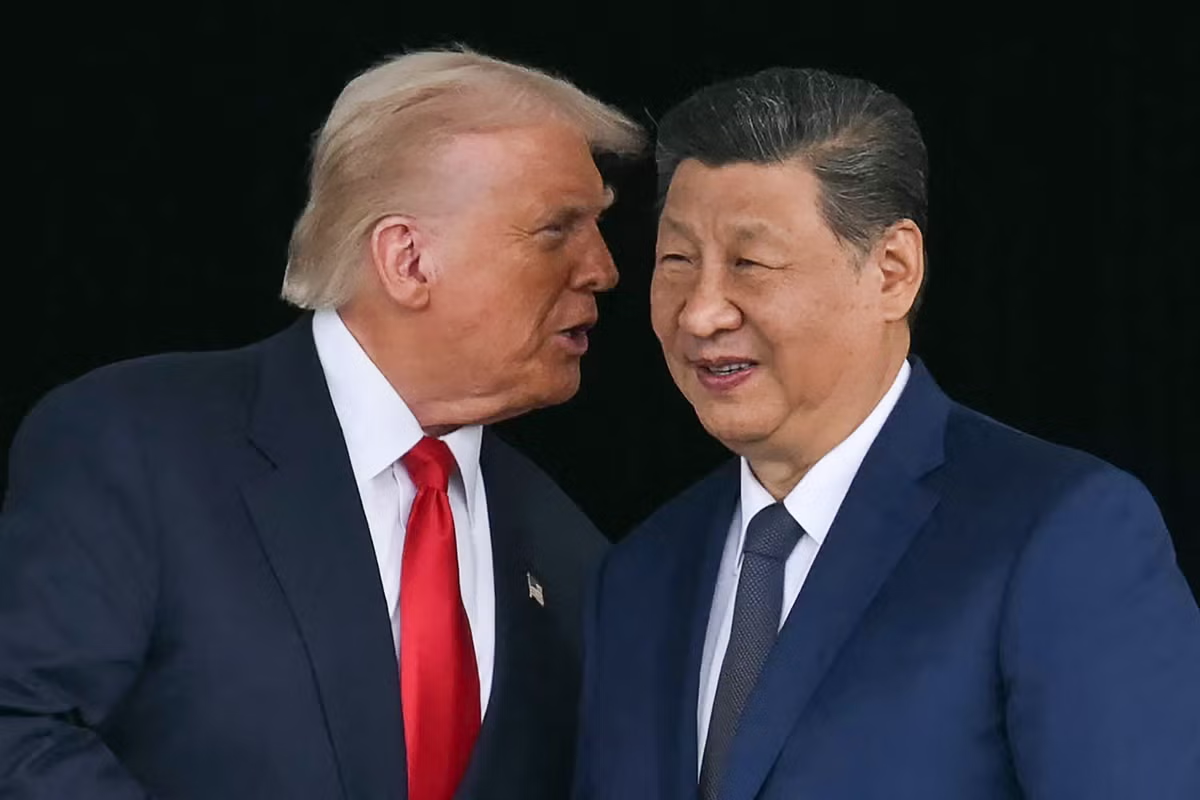
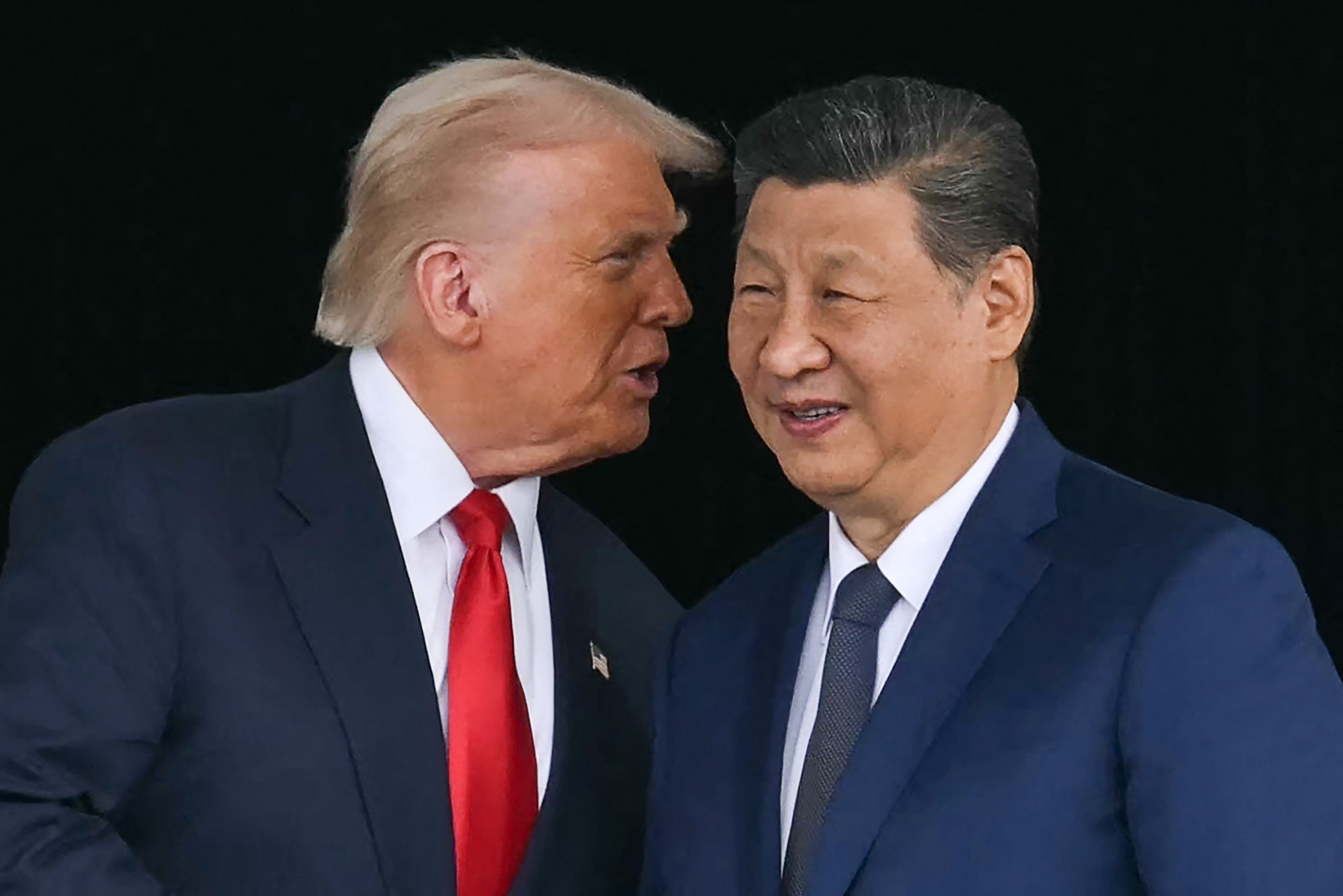
As Donald Trump prepares to depart for China to meet Xi Jinping, it is a moment for America’s traditional allies to reflect on a sobering fact: the balance of power is rapidly shifting against the United States. Since becoming president, Trump’s actions have fractured America’s alliance system just as Xi Jinping and Vladimir Putin have consolidated theirs.
As if to underscore this, the Russian President will likely arrive in Beijing days after Trump. His will be a red carpet welcome. Donald Trump’s will be far more exposing – and we all know why. Instead of a mighty demonstration of American firepower, his Iran war has exposed huge vulnerabilities. And less discussed but no less consequential has been the outcome of the economic warfare Trump initiated on his tariff “liberation day”: an American defeat.
Under Joe Biden, the Democrats admitted for the first time that China not only has a project to displace the United States as the world’s most powerful country, but that it was already well advanced in that direction.
They saw America’s alliances as Washington’s diplomatic superpower. And as National Security Adviser and Secretary of State, Jake Sullivan and Tony Blinken set about strengthening and deepening America’s alliances wherever they could. Not only did they restore warm relations with Europe’s democracies after Trump’s first term and support Ukraine in resisting Russia. They also systematically built up ties with the Asian democracies – both militarily and diplomatically. Team Biden launched the AUKUS submarine-and-tech alliance with Australia, increased basing rights in the Philippines and Papua New Guinea, and initiated the first leader-level Quad meeting with New Delhi, Tokyo and Canberra.
Trump could not have been more different. Extortionate tariffs hit allies in a fanfare of disregard. Mexico was threatened with military strikes on its own territory over the cartels. American aid to Ukraine all but ended. Model ally Denmark was threatened with Greenland’s annexation. Britain was humiliated over Chagos. Thousands of US troops were reportedly set to be pulled out of Germany at a whim. European allies were left shocked and disoriented by dalliances with Putin that might sell out both their Ukrainian ally and their core security interests, while Gulf allies were aghast at the lack of consultation and serious planning over Iran. Meanwhile, in Asia, Japan was reportedly told to cool tensions during a spat with China, South Korea was bullied into paying billions in up-front cash for a tariff deal, Taiwan’s president was reportedly blocked from visiting New York, and India was heavily sanctioned. The list of humiliations directed at even America’s most loyal and compliant allies goes on.
The reason for this violent and systematic swing in the way America treats its allies is bigger than Trump alone. The deep Cold War consensus between Republicans and Democrats – which allowed allies to build their foreign and security policies around Washington – is dead. Both parties now reflect fundamentally different world views. Democrats see allies as partners, multiplying American power and cooperating on challenges such as China or climate change. Republicans increasingly see allies as freeloaders, draining American prosperity and requiring coercion to stay in line.
Washington’s top strategists are now sounding the alarm to allies. Neither side is likely to vanquish the other, argues Thomas Wright, former senior director for strategic planning on Biden’s National Security Council, in Inflection Point, a policy memoir and assessment of his time in government. The lesson is clear: America is now erratic and unreliable in the eyes of its allies.
Meanwhile, Vladimir Putin and Xi Jinping have been deepening their axis of authoritarians. The Ukraine war propelled far deeper coordination between Russia, China, Iran and North Korea. To prevent a Russian strategic defeat, China has provided huge quantities of non-lethal military aid to Russia – almost everything the war needed except bullets.
Jake Sullivan reportedly came to believe that, had it not been for China, Putin might well have lost the war. Under the banner of what Putin and Xi call a “No Limits Friendship”, Moscow and Beijing have reconstituted and fused significant parts of their defence industries, while Iran dispatched Shahed drones and technicians to assist Russian strikes on Ukraine. Russia has also inked a mutual-defence pact with North Korea in exchange for 12,000 troops, vast quantities of artillery shells and other weapons. Wright recalls in Inflection Point that the deepening axis of authoritarians “went far further than anyone expected”.
Trump’s return to power has meant that the Ukraine war – instead of bringing the Atlantic alliance closer together, as it did under Biden – has pushed it further apart. Now Trump’s Iran war risks driving Russia, China and Iran even closer together still. Russia has reportedly gone as far as assisting Iran with intelligence, cyberwarfare and drone capabilities, while China has provided radar systems, electronic-warfare support and access to commercial satellites in Tehran. Beijing also continues supplying critical non-lethal components to Iran’s missile programme while importing the oil on which the regime depends. Worse still, there is also credible reporting suggesting that China is toying with going even further on military aid.
Trump will arrive in Beijing not as the make-believe “Daddy” of Republican memes, but as the leader of a country the Chinese increasingly see as vulnerable. The fact that Washington was reportedly forced to withdraw forces from Gulf bases within range of Iran’s drone and missile arsenal raises an uncomfortable question: would the Pentagon be forced to do the same with bases close to China? Likewise, if Iran could damage some of America’s most advanced radar systems, could China do the same? By prompting such questions, Trump has undermined America’s deterrence in Asia.
Do the United States’ historic “first island chain” bases in Asia – stretching from Japan’s Okinawa to the Philippines – still look fully secure in the event of war?
But what happened in the trade war may matter even more: America lost. For more than 20 years, Beijing has built a stranglehold over the world’s rare earths. According to the US Geological Survey, there are 50 minerals critical to America’s economy and security, and China is the primary source for 22 of them. Xi Jinping’s restrictions of these in response to Trump’s 145 per cent tariffs pushed the United States towards a cliff edge at which it risked running short of key machine parts for hospitals, air conditioners and the defence industry. The White House yielded in May 2025, then yielded again in October 2025 after Beijing ramped up the pressure once more.
This is so significant we have to spell it out clearly. China put sanctions on the United States and it buckled in a geopolitical contest. Never was the Soviet Union able to do something like this. And as a result, a backfooted Trump has allowed China to gain access to Nvidia’s H200 chips critical to America’s lead in artificial intelligence. This has set off alarm bells in London, Brussels and Tokyo. According to the Australian think-tank ASPI, Beijing already now leads on 64 out of 74 of the world’s most critical technologies with Trump’s giveaway certain to dangerously close the narrow gap where the US remains ahead in AI. Doubtless this will be discussed when the Chinese and Russian leaders meet. After all, Putin has long said when it comes to AI, “whoever becomes the leader will become the ruler of the world.”
This week, as the world’s two other most powerful men come to him, Xi Jinping has reasons to be pleased. The rest of us, America’s traditional allies, have much to be concerned about. As Trump’s return to power is only strengthening the Axis of Authoritarians — not the West.