Dear Friends and Colleagues,
Thirteen years ago, on May 9, 2013, I was seated on Red Square alongside dozens of other diplomats at a ceremony commemorating the anniversary of the Soviet victory over Nazi Germany in 1945, or what they call the Great Patriotic War. As U.S. ambassador to Russia, I was proud to represent my country in honoring the enormous sacrifices made by all Soviet citizens in defeating fascism.
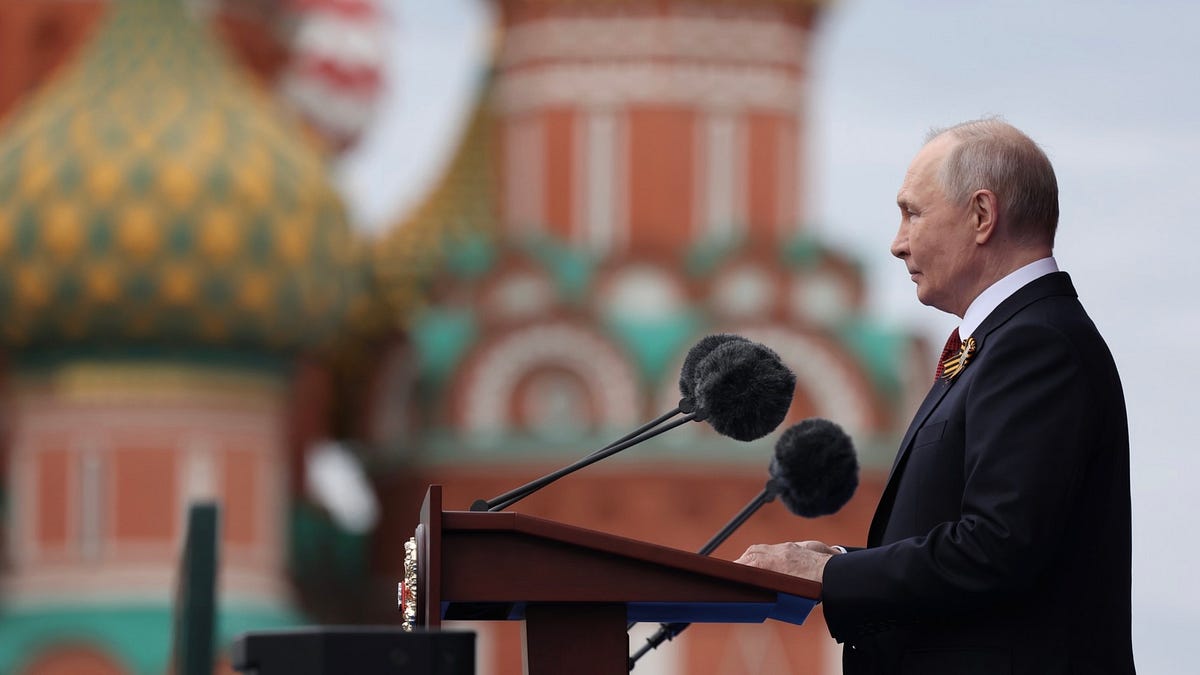
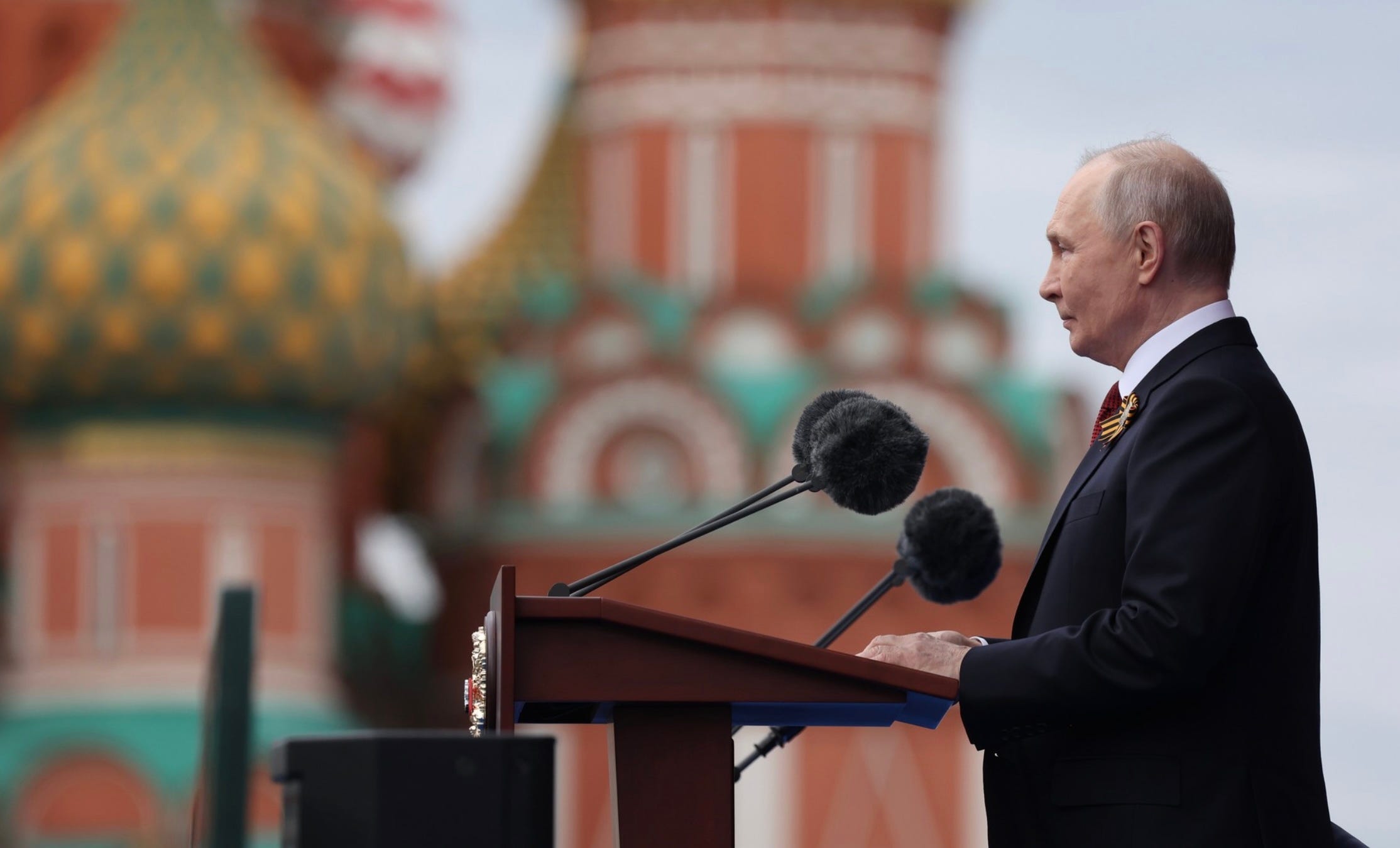
Over the years, however, Victory Day has evolved into something very different. Under Russian dictator Vladimir Putin, the commemoration has increasingly become a ritual of state propaganda, designed to reinforce nationalism and legitimize his rule through appeals to past military glory. It has become customary to see columns of tanks, military hardware, and even intercontinental ballistic missiles rumble down Tverskaya Street and across Red Square—a clear projection of Russian military might to the world. A few years ago on Substack, I wrote an essay on why I no longer celebrate this holiday. (Read it here.)
This year, however, something was different. For the first time in decades, tanks and other heavy military hardware did not roll through Red Square. It is difficult to celebrate military victories of the past when your army is performing so poorly in the present.
It was against this backdrop that I published my Substack essay, Growing Cracks in Putin’s Dictatorship. In the piece, I examine how the mounting economic, social, and political costs of Putin’s war in Ukraine are generating increasingly visible signs of strain inside Russia’s authoritarian system. This does not mean that Putin’s regime is about to collapse; repression still works, and the Russian state remains highly centralized and deeply coercive. Political change in autocracies is also notoriously difficult to predict. But compared to even four years ago, there are now more visible signs of dissatisfaction among elites, pro-Kremlin commentators, military bloggers, economists, and ordinary citizens. It is something I will be watching closely in the coming months.
Watch a video discussion of the ideas in that piece here.
Trump in China
In 2025, when Russia marked the 80th anniversary of the Soviet victory over Nazi Germany, more than a dozen world leaders joined Putin on Red Square. Among them was Xi Jinping, chairman of the Chinese Communist Party, who was seated prominently at Putin’s right-hand side. The image was carefully choreographed: a public display of solidarity between the two leaders and a signal to the West about the deepening alignment between Moscow and Beijing.
This year, Xi was absent from Red Square, though Putin did travel to China on May 19–20 for talks with the Chinese leader. Notably—and not coincidentally—the meeting came just four days after U.S. President Donald Trump’s own visit to Beijing concluded.
Ahead of Trump’s trip, I wrote a Substack essay titled Détente 2.0: Hoping for a Boring Summit in Beijing, in which I argued that Trump would arrive in China in a much weaker position than when he first visited Beijing as president in 2017. Some of the shifts in the balance of power in China’s favor can be put down to Xi’s policies and China’s continued economic and military growth. But Trump’s own actions have also contributed to America’s relative decline.
In the essay, I argued that the best realistic outcome for the United States at this moment may be a new détente with China—one that buys America time to recover, rebuild, and renew. I also outlined a series of policy prescriptions that future American leaders will need to pursue if the United States is to compete more effectively with China over the long run. Read more on that here.
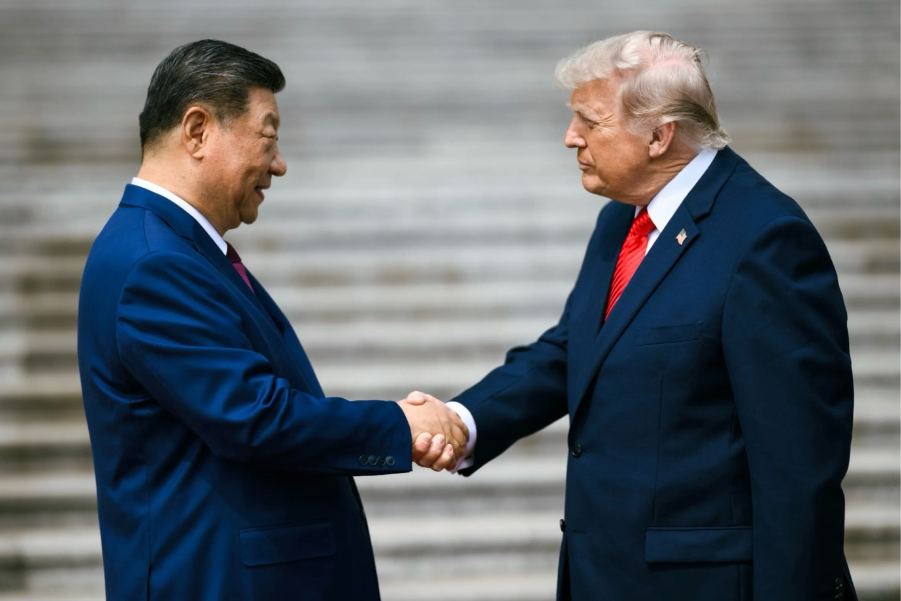
In the end, the Trump-Xi summit was heavy on pageantry and light on substance. Sometimes, in diplomacy—and especially in relations between leaders of great powers—feel-good pomp and circumstance can yield concrete outcomes that advance American national interests. But that did not happen in Beijing. As I wrote in my piece some economic and trade deals were reportedly agreed—but there was anticipation that they would be greater.
On a more worrisome note was Trump’s comments on Taiwan, in which he fueled doubt about US commitment to defending the island. Asked whether he would follow through on new arms sales to Taiwan, Trump demurred, explaining that he had not yet made that decision and that the arms package is “a very good negotiating chip for us.” That’s a disastrous policy change. Those weapons enhance deterrence and help to keep that peace. Treating those commitments as bargaining chips to secure unrelated concessions from Beijing would set a deeply troubling precedent, as I wrote in my piece Happy Talk in Beijing, but Few Gains for America (Yet).
If Trump was hoping to secure Xi’s help on his increasingly difficult foreign-policy agenda—most urgently the war in Iran and the disruption of shipping through the Strait of Hormuz—he did not get it. Although Trump told Fox News that Xi had promised to do “whatever he could to help,” Beijing offered no concrete public commitments following the summit. More broadly, the episode underscored America’s weakened position. As I told Jen Psaki on MS Now, the very fact that the U.S. is now asking China to help reopen a strait that was functioning normally before Trump launched his war with Iran makes us look weak, not strong. I was also critical of Trump’s relentless praise of Xi, whom he kept calling a “friend” and “a great leader”. This was not reciprocated by XI. Again, as I told Ana Cabrera on MS Now, this asymmetry made Trump appear in a weakened position.
My visit to China
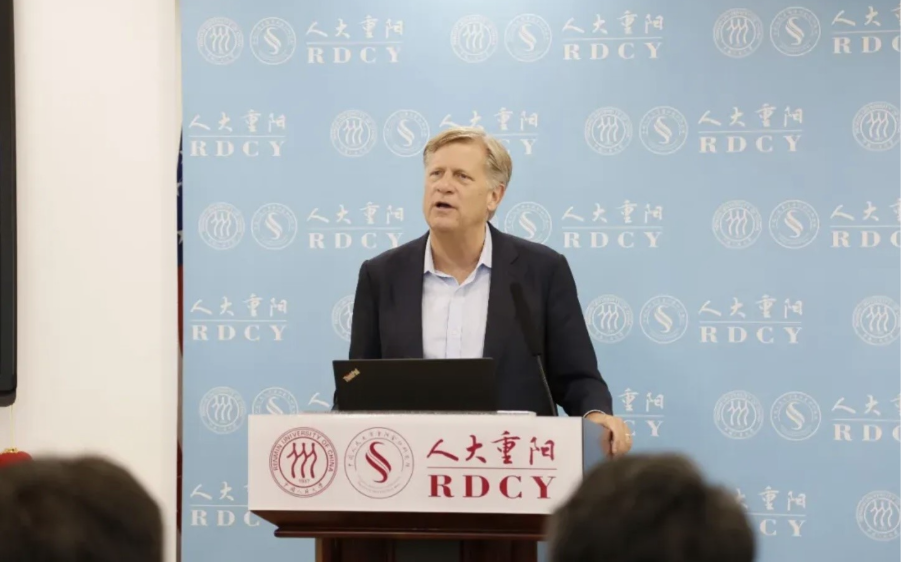
It wasn’t just Trump and Putin who visited China in May—I was also in Beijing to speak at a conference hosted by the Stanford Center at Peking University.
As I usually do when traveling to China, I also spoke at several universities and participated in a roundtable with Chinese and American business leaders. In my latest Substack essay, I reflect on those conversations with academics, students, and businesspeople across the Chinese capital, as well as my broader impressions of the country. From AI and electric vehicles to Taiwan and great-power competition, the trip challenged some of my assumptions and sharpened others. Read more in my Beijing Trip Report.
World events this month on great-power relations replayed many of the themes I covered in my most recent book, Autocrats vs. Democrats. Major summits between Xi, Trump, and Putin this month in Beijing underscored that great-power relations will remain a major driver of international politics for decades to come. For my ideas on how the United States should deal with China and Russia more effectively than we are now, read the last three chapters of the book. I continue to give talks on the book, including at a fantastic book festival in Annapolis, Maryland, earlier this month. CSPAN Books filmed the event. You can watch it here.
That’s all for this month. I am, of course, watching developments around Iran as well as in Ukraine, and hope to write something on both soon.
As always, thank you for your continued engagement!
Mike