SYNTH WEEK 2026: Despite a reputation as an electronics manufacturing powerhouse and a history with synthesizers going back to the 1970s, it was only recently that China produced its first mass-market synth.
Think of synthesizer-producing nations, and you’re likely to imagine America and Japan first, followed by European countries like the UK, Germany and Italy next, with many smaller polities popping up when you start including Eurorack manufacturers.
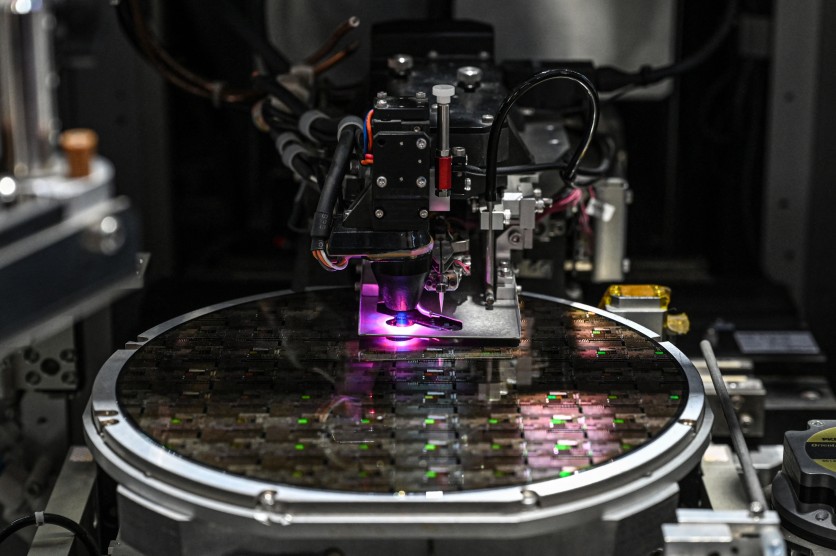
What about China, though? For a country with 1.4 billion people, it has a shockingly small domestic market. And this, despite being the world’s choice electronics manufacturer.
Article continues below
Why is this? Why should a country so large (the population is the second biggest in the world and second only to India) be so bereft when it comes to synths?
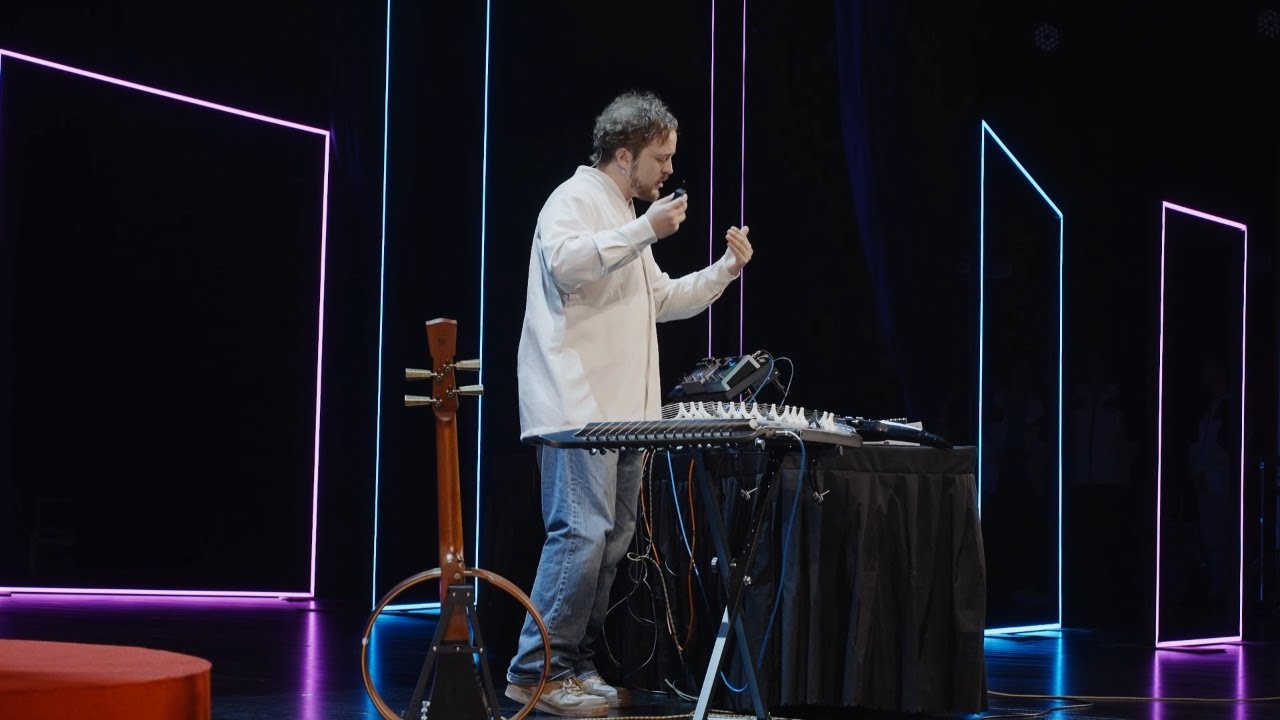
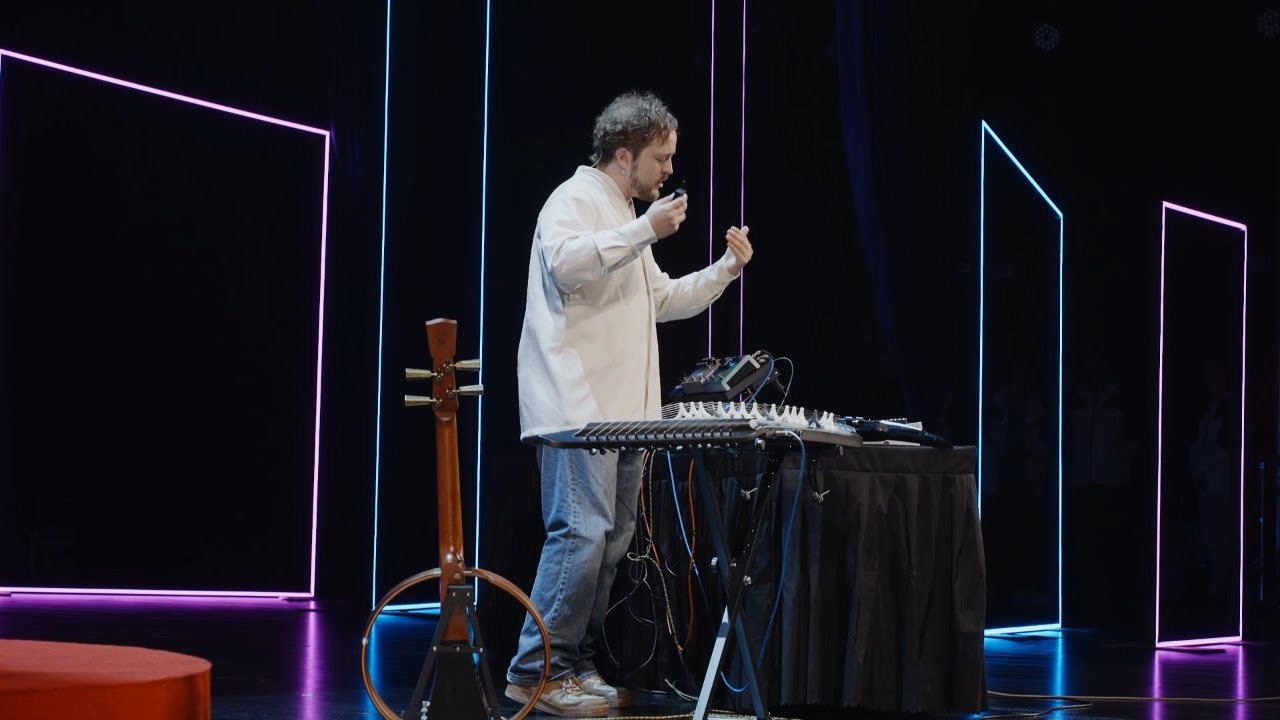
It was “very slow to adoption,” explains Yukes 玉刻, an American musician living in Shanghai and a marketing consultant for Teenage Engineering, in his TEDx video, The Sounds of Tomorrow: China’s Electronic Instrument Renaissance. “Some would say it’s a few generations behind”.
How it came to be so behind, and what’s currently happening on the other side of the Great Wall, is a fascinating story that incorporates both a unique local culture and the power of globalisation.
In 1973, two Americans, Bernie Krause and his musical partner Paul Beaver, traveled to China as part of Richard Nixon’s ongoing efforts at so-called ping-pong diplomacy, trying to open the country to trade with the West. They brought with them a Moog Model III modular synthesizer and demonstrated it for then Premier of the People’s Republic of China, Zhou Enlai.
A commenter on an article on CDM, taken from his own personal correspondence, quotes Krause as saying, “It was soon after Nixon opened up the country for travel and we went as part of a State Department-sponsored trip to show new politically-vetted technologies, among which was the analogue synth. We set up a few sounds based on the voices of traditional Chinese instruments, plus thunder, rain, ocean waves, human breathing…”

According to Yukes in his talk, the CCP declared that the concept of the synthesis wasn’t inherently Western. “The synthesizer has no cultural bias”, they reportedly said.
“Therefore”, said Krause, “it was acceptable politically and culturally to demonstrate in the country, and composers there could generate their own voices through the use of the instrument.”
In order for composers to generate their own voices, they’d need instruments to play, and the man that stepped up to create them was musician and engineer Tian Jinqin.
Tian had already been inventing his own electric and electronic instruments for two decades. With the Cultural Revolution having ended two years before, he approached the government in 1978 with a prototype for an instrument called either the Dianzi Qin or XK-1 (sources are unclear). The authorities in Beijing signed off on the instrument, and work began on what most consider the first Chinese synthesizer.
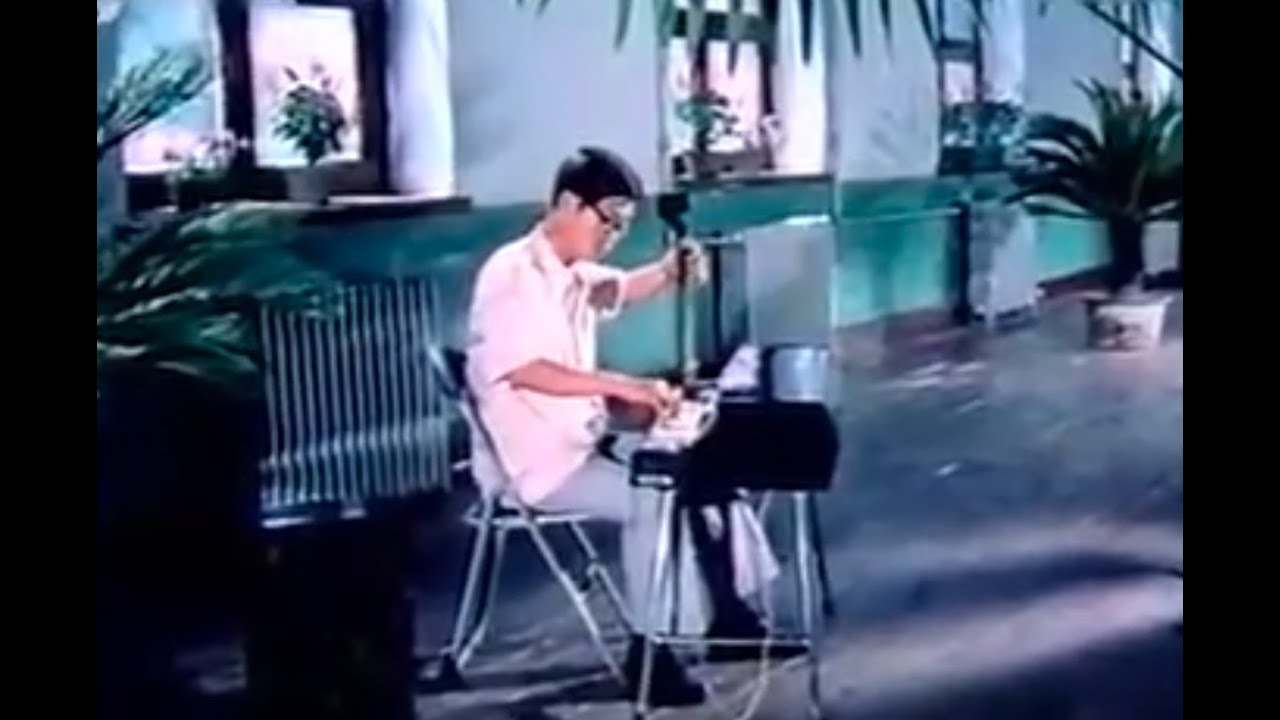
English-language sources are few and murky, but it appears that he developed the Dianzi Qin based on traditional Chinese string instruments like the Erhu. This resulted in an instrument with a very different shape and interface than the standard Western synthesizer, with the neck of a string instrument rising vertically from a horizontal panel that housed additional controls.
According to the website Tangible Music Lab, the XK-1 offered four electronic ribbon strings with independent continuous control of pitch and volume, plus a dynamic filter that players worked with a knee like a Hammond organ.
At least 21 were reportedly sold but sadly, none appear to remain extant.
Although Tian continued to innovate, creating various prototypes like a modular synthesizer in 1980 and the Electronic Battlefield Acoustic Simulators, an intriguing-sounding instrument for military training that could “simulate the sound effects of a variety of battlefield equipment and guns,” his bread and butter would be inexpensive toy organs for children and amateurs. There just wasn’t a market for anything more sophisticated.
Despite the efforts of Tian Jinqin, it would take another 40 years for a Chinese synthesizer to really make waves. According to Yukes in his video, the first Chinese synthesizer to enter the global market was the Hydrasynth from Ashun Sound Machines.
“I think Yukes’ TEDx talk was simplifying a much longer story”, answers ASM CEO Glen Darcey when asked about this. For Glen, ASM may be part of Chinese musical instrument company Medeli, but he considers it more of a global affair than a Chinese one

“ASM began when our parent company, Medeli, brought together an international team”, he says. “I’m from Los Angeles, (Director of Product) Dominic Au is based in Hong Kong, and Medeli assembled some of their top engineers in Shanghai. From the beginning, ASM has been a global effort, and we continue to expand with recent additions to engineering resources in the US and EU.”
He also doesn’t think the Hydrasynth is a particularly ‘Chinese’ synth.
“The only place where geography sometimes plays a role is in sound content, or maybe with alternate scale/tuning support”, he stresses, pointing out that one of the 32 microtonal scales ASM has is based on a 300 AD Chinese wind instrument scale.

“On synthesizers, sound sets tend to follow musical genres rather than geography. On sample-based instruments we might include sounds from Chinese or Middle Eastern instruments, but those are also widely used by film, television and game composers around the world”.
Summing up, Glen says, “Ultimately, our goal is to design instruments that musicians everywhere can use to create their own sound”. The company’s recently released Leviasynth – a 16 voice, hybrid algorithmic synthesizer – continues ASM’s journey.

So, what does make a synthesizer Chinese?
“There’s practically nothing to define a Chinese synthesizer from its western counterparts”, says Yukes. “And that’s a good thing. Electrical engineering is a universal concept, as are synthesizers”.
Gone are the days when developers looked to classical Chinese instruments and the past for inspiration. Modern Chinese-made synths are just that, modern, and more reflective of their creators than anything broadly indicative of culture.
“That being said”, counters Yukes, “there are a few differentiators to consider. Almost immediate access to electronic components and PCB printing means incredibly fast development, lots of niche components, and things that’d require commercial or special order overseas. It’s a DIY tinkerer’s dream here, and as such many devs here use and rely on interesting components”.
Accordingly, many feel their “design culture is rooted in the DIY scene, not the country of their origin”, says Yukes.
However, some instruments may end up reflecting aspects of Chinese culture by happenstance. “Synthesizers are all about sonic exploration, and if (developers) choose to design a synthesizer rooted in Chinese mysticism or an ancient scale, it’s because it’s what interests them”, Yukes explains.
“I’ve yet to see a synth be Chinese for China’s sake”.
One look at the products currently available from developer Meng Qi – who Yukes calls the first Chinese indie synth developer to find success overseas – and you get an idea of what he means. Meng Qi’s instruments, such as the Wingie2 Stereo Resonator and Cricket Sound Jewelry Synthesizer, are utterly unique and also available through retailers around the world.
Meng Qi’s bio confirms that he’s an artist with a highly personal vision that, like Yukes says, has little to do with where he’s from:
“(Meng Qi) focuses on the duality of instruments: control/chaos, harmony/noise, quantization/continuity, and so on, and he concentrates these ideas on highly gestural interfaces”. Not Chinese in the slightest.

Other developers that Yukes namechecks in his TEDx video include Electro Weird, the Eurorack outfit Synso, and Modular Theatre, just three of “two dozen or so indie developers” currently active.
And these are just the ones that sell their creations. With manufacturing in China so prevalent, prototyping is easy and affordable, leading to many whipping up instruments for personal use only. Yukes relates striking up conversations with random people in his adopted city of Chengdu who just happen to make electronic musical instruments for fun.
Many of these Chinese indie developers, hobbyists, musicians and artists come together in the fall for Modular Commune, a “series of events about modular synths and other electronic instruments” in Beijing, China.
Most of the community, however, tends to meet on the internet, which makes sense when you consider just how big of a country China is, geographically speaking.
“Lack of a strong cohort means a lot of learning online, a lot of shared resources, and not many offline opportunities to share their interests”, says Yukes. “There’s some brilliant work being done but unfortunately not enough people to share it with within the country”.
While America, Japan and Europe experienced something of a Golden Age of synthesizers in the 1970s and 1980s, China didn’t have the same kind of culture-defining spotlight that synths had overseas. No synth-pop, no Doctor Who soundtrack, no Rick Wakeman rocking four Moogs on stage in China.
“I can’t speak authoritatively on how absent the conversation of synthesizers were in music history here”, says Yukes, “but I did have a thought on this. China has a model called technological leapfrogging, where they tend to lag behind in one technological development so they can innovate on the next, like skipping over credit cards entirely and getting straight to digital payments. Chinese music producers have completely embraced DAWs and workstations, maximising efficiency and access to a wide array of tones and functionality. Maybe there was a generation lacking such focused tools”.
Thankfully, this does seem to be changing. Xinghai Conservatory of Music in Guangzhou now has a Department of Musical Instrument Engineering where students are learning about musical instrument design, both hardware and soft.
There’s clearly an interest from younger generations in creating the next wave of Chinese instruments. And, with the country’s robust manufacturing infrastructure in place, exciting things can happen quickly. Move fast and break things? More like move fast and build things.
Hopefully, this will also translate into more global exposure.
Unless you’re like Yukes and happen to live within the country and speak the language, getting access to some of the companies mentioned in this piece can be difficult.
China tends to operate a parallel internet, one separated largely by language, with Chinese versions of most popular Western sites like eBay and YouTube for the local population. This can be daunting for outsiders. It would be great to see more of the country’s homegrown instruments someday available for overseas purchase.
After all, as Glen Darcey of ASM says, “I don’t think there is really a Chinese way of thinking, just as there is not an American way of thinking. Like any large country, China contains many different cultures and perspectives. The same is true in the United States or Europe. Think of the differences between California, Texas, Utah… China is similar – cities such as Beijing, Shanghai, Zhuhai, and Hong Kong all have their own distinct styles and character.”

With a little luck, one day soon the rest of the world will be able to experience what the Chinese developers of Beijing, Shanghai, Chengdu, and Hong Kong have been building. “Truly”, says Yukes, “there are great minds in our industry here.”