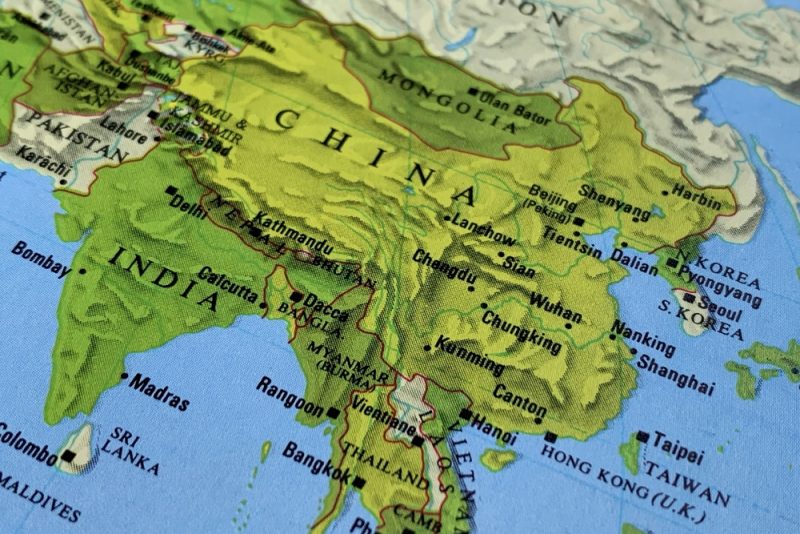
China has strengthened its position as the world’s leading contributor to high-quality research, while the wider East Asia region continues to outpace Europe and North America in output growth, according to the latest Nature Index Research Leaders tables.
The 2026 Research Leaders rankings, based on full-year 2025 data, also mark the most significant methodological update to the Nature Index since its launch in 2014. The database has broadened its disciplinary coverage by adding applied science and social science titles, while introducing a new article-level classification system designed to provide a more accurate picture of global research activity.
The Nature Index now includes 17 applied-science journals, one conference and 15 social-science journals. The additions were selected following a global survey of more than 4,000 researchers on where they would choose to publish their most significant work.
The index has also replaced its journal-based classification approach with an article-level subject classification system, allowing individual papers to be assigned to specific disciplines rather than inheriting a journal’s primary subject area. To maintain comparability, articles from the newly added journals have been incorporated retrospectively for 2024 and 2025, while the revised classification methodology has been applied across the entire database.
“With expanded disciplinary coverage and a recalibrated methodology, the Nature Index now provides a more comprehensive and precise view of high-quality research output,” said Simon Baker, Chief Editor, Nature Index. “In terms of the results, we are continuing to see extremely strong performance from China, while there is also evidence that the wider East Asia region is growing output at a faster rate than Europe and North America.”
China remained the world’s leading contributing country, recording a 22.4 per cent increase in research output between 2024 and 2025. It was the only country in the global top ten to achieve double-digit growth. Japan, South Korea and India also featured in the global top 10, with both Japan and South Korea posting growth of almost 10 per cent.
The United States and Germany remained among the top five countries across all seven subject areas. The US led globally in health sciences and social sciences, while the UK ranked among the top five in every subject area except chemistry.
At the institutional level, the Chinese Academy of Sciences retained its position as the world’s leading research institution overall and across most subject areas, excluding health sciences and social sciences. Nine of the world’s top 10 institutions are now based in China, up from eight in the previous rankings, with Zhejiang University rising to second place globally.
Harvard University climbed to third overall and led the rankings in both health sciences and social sciences. US institutions dominated the social sciences rankings, accounting for nine of the top 10 positions.
In biological sciences, Harvard ranked second, while Germany’s Max Planck Society placed third. European institutions also performed strongly in physical sciences, with four organisations in the global top 10, including the Max Planck Society in second place and Italy’s National Institute for Nuclear Physics in fourth. The Helmholtz Association ranked fourth globally in Earth and environmental sciences.