At the University of Arizona’s graduation ceremony in May, Eric Schmidt, Google’s legendary former CEO and one of the leading architects of the internet era, took the stage. When Schmidt began extolling the “enormous benefits” of artificial intelligence, the hall did not respond with polite applause.
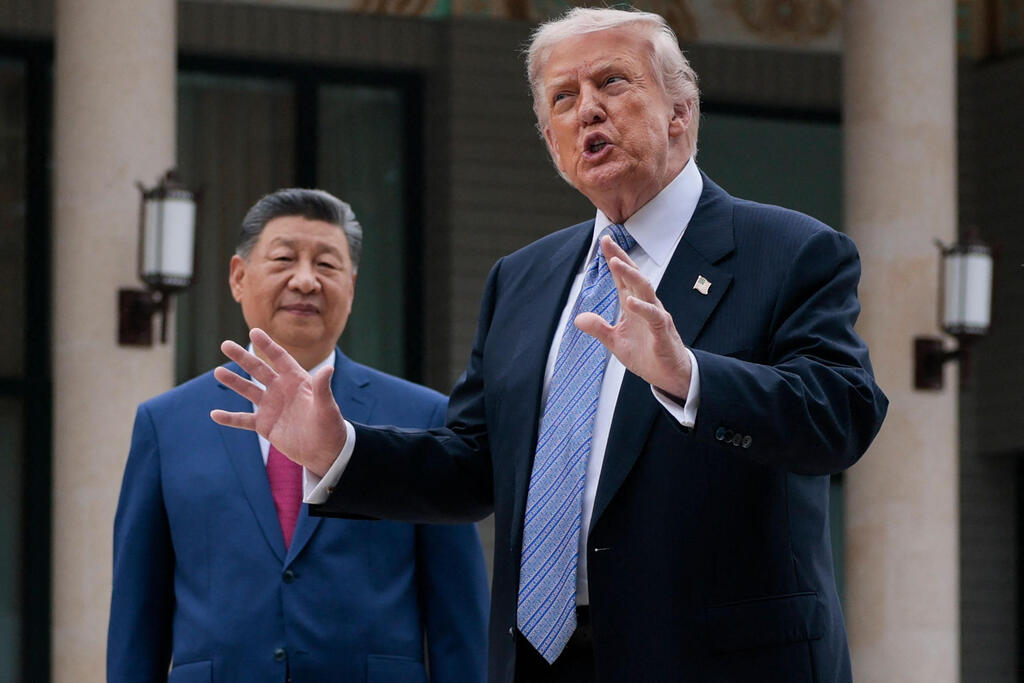
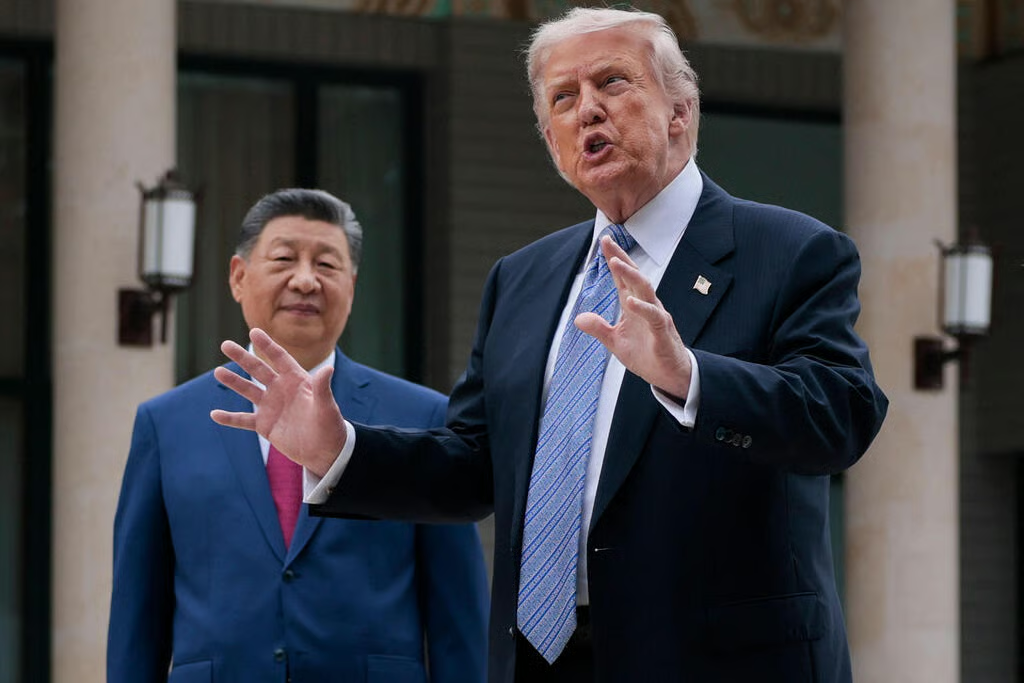
U.S. president with Chinese president in Beijing. The same revolution, different approaches
(Photo: Evan Vucci / POOL / AFP)
That same week, nearly 11,000 kilometers away, China’s state media reported with overt excitement on the way students and schools across the country were embracing artificial intelligence in classrooms. There were no protests and no fear of an algorithm taking over the lesson.
According to Stanford University’s AI Index, 84% of respondents in China expressed excitement and optimism about AI developments, the highest rate among all countries surveyed worldwide. In the U.S., by contrast, the figure drops to just 38%. In comparable measures of trust, only 32% of Americans say they trust artificial intelligence, compared with 72% of Chinese citizens.
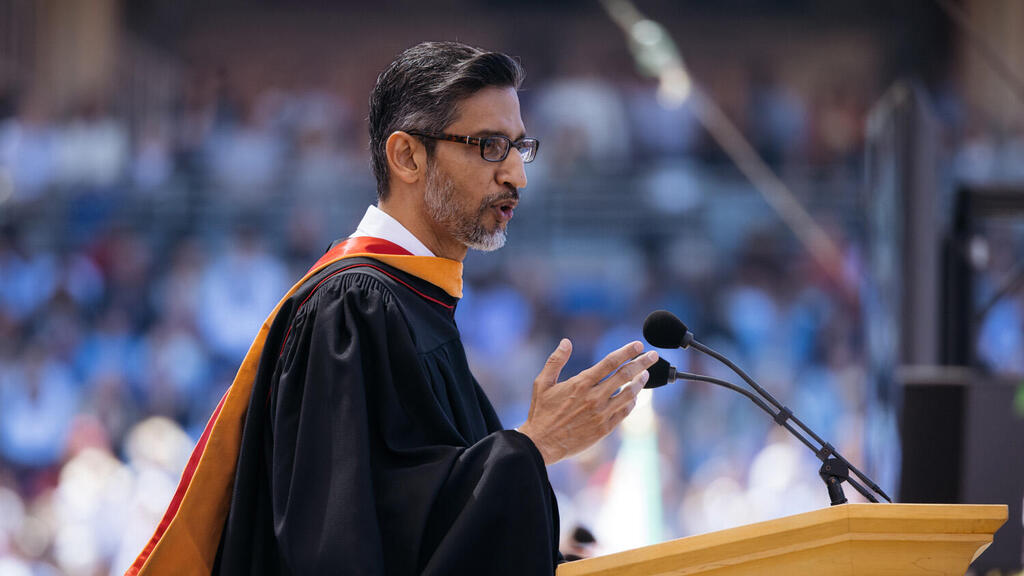
Google CEO Sundar Pichai at Stanford University. He was booed, too
(Photo: Stanford Report)
The explanation for this enormous gap is not that Chinese consumers are naive or blind to the dangers, nor is it because Americans use technology less. Chinese citizens are no less concerned about online scams, deepfakes and their children’s prospects of finding work, while Americans remain the heaviest daily users of technology and the field’s primary source of funding.
The roots of the difference lie somewhere else entirely: whether ordinary people believe the fruits of technological growth will reach them too and whether there is anyone powerful enough to keep the companies developing it in check.
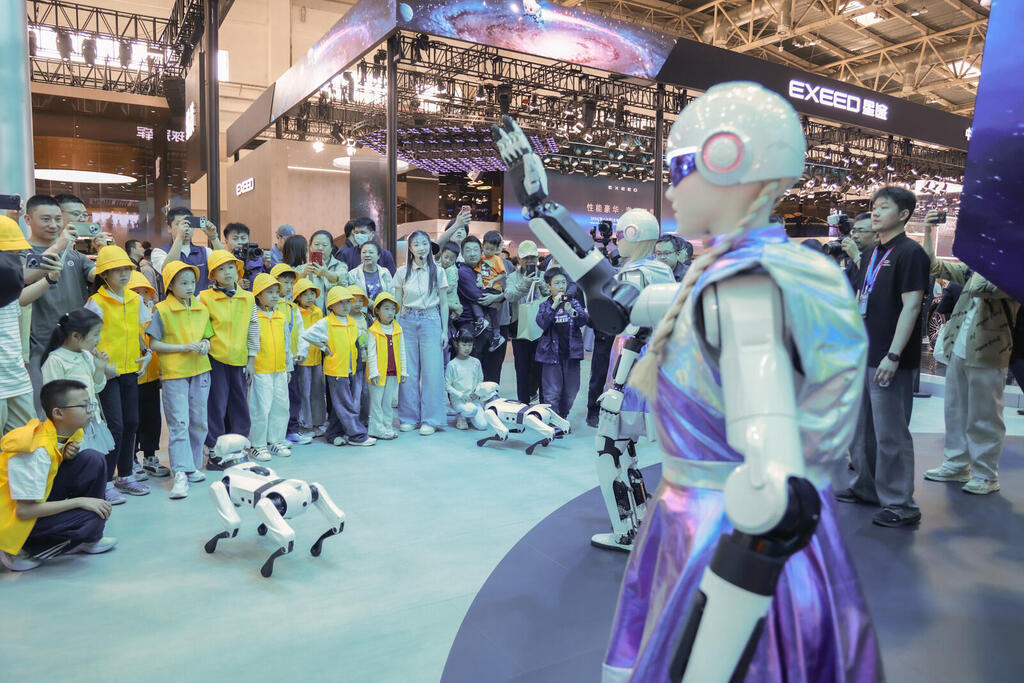
Robots at an exhibition in China
(Photo: Reuters)
In China, by contrast, even when there are concerns about the impact on employment, public discourse is framed in a radically different way. A study by Matt Sheehan of the Carnegie Endowment for International Peace found that among Chinese AI policy experts, concern over job losses rose from sixth place in early 2024 to second place in early 2026.
Protests by taxi drivers in Wuhan against fleets of autonomous taxis, which were accused of “stealing the drivers’ rice bowl,” showed that the friction is real and growing. In addition, the government’s censorship apparatus works to silence some critical voices online.
Still, the prevailing perception of artificial intelligence in China remains utilitarian and pragmatic: a useful work tool or an entertainment add-on. The main reason lies in the structure of the economy. In the United States, nearly 80% of the workforce is employed in the services sector and in white-collar jobs — precisely the areas most vulnerable to the automation of language, data analysis and information processing.
In China, the services sector employs only about 46% of workers, while one-fifth of the workforce is still employed in agriculture and tens of millions more work in heavy industry and physical manufacturing. The direct threat posed by language models simply does not affect most Chinese workers — for now.
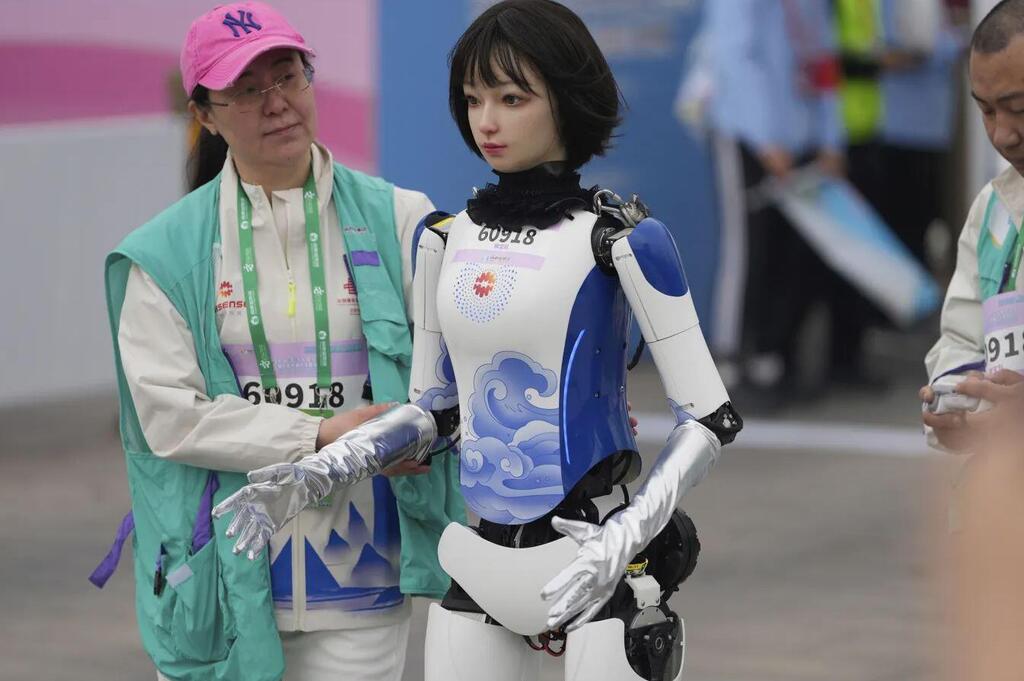
Some humanoid robots are more unsettling than others. Beijing half-marathon
(Photo: AP /Ng Han Guan)
As Brookings researcher Kyle Chan aptly put it, China has swallowed the AI pill, but not the AGI pill — the idea of artificial general intelligence that would make humans obsolete. Although domestic companies such as DeepSeek, Moonshot and Z.ai have declared ambitions of achieving artificial general intelligence, the economic discourse set by government officials emphasizes AI as a symbiotic partner for increasing productivity and driving broad economic growth. Put simply, the technology is seen as a tool that will make everyone richer, not make everyone redundant.
For Chinese citizens, the promise that new technology will generate prosperity does not sound like a public-relations speculation, but rather a direct continuation of their personal history. Over the past two decades, the digital revolution has completely transformed the quality of life in China. Mobile payment systems, fast online commerce, cheap package delivery, short-video apps and the gig economy opened employment opportunities and enabled millions of rural residents to escape poverty and move to cities.
In remote, mountainous rural areas, access to consumer goods, microloans and global knowledge came almost exclusively through the smartphone, which is now held by about 80% of the population. This technological leap took place alongside the government’s declaration that extreme poverty had been eradicated. Whether or not there is a clear direct causal link between the two developments, the public experienced technology as a force that provided economic security and improved living standards. When the historical starting point is so low, every leap forward is perceived as a rescue.
For the average American, the technological memory of recent decades is radically different. The U.S. already had vast retail networks, reliable payment systems and relatively advanced postal services even before the dot-com era. The rise of the internet and online commerce added a layer of convenience on top of existing abundance rather than providing an escape from genuine deprivation.
Moreover, the main technology stories that have left a mark on the American consciousness over the past decade have been largely negative: the psychological and social harm of social media to young people, the energy and carbon costs of rapid delivery services, Edward Snowden’s surveillance disclosures and the unprecedented spread of fake news and false information. Silicon Valley technology companies have come to be seen by many as predatory monopolies.
Both countries have significant social disparities and economic inequality, but the concentration of wealth in the hands of a handful of billionaires angers the American public far more. In China, beyond the fact that the ultrawealthy are extremely wary of drawing attention to themselves, financial wealth does not automatically translate into political power. Real power remains in the hands of the party’s senior officials.
In the U.S., by contrast, the impression has emerged that the government and the tech giants are playing on the same team. The revolving door through which senior officials move from Silicon Valley to Washington and back, the extensive lobbying operations of billionaires, venture capital executives appointed as AI advisers at the White House and CEOs who finance political campaigns have all created a public perception that there is no neutral referee on the field because the referee and the players share the same locker room.
Americans fear that the government is either too weak or too beholden to the interests of technology companies to protect their livelihoods. In China, the hierarchy of control is clear and unambiguous. A tech founder who tries to rise too high and criticize the system is quickly brought back down to earth, as Alibaba and AliExpress founder Jack Ma discovered when he disappeared from public view for a period of “reeducation” about a decade ago.
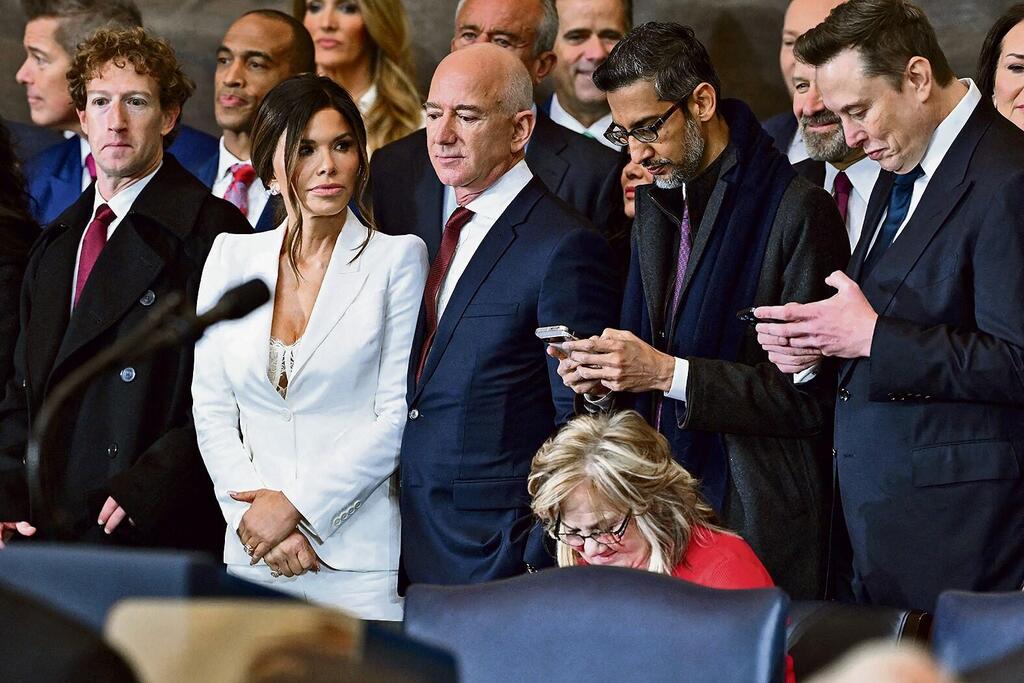
Elon Musk, Google CEO Sundar Pichai, Jeff Bezos and Mark Zuckerberg at President Trump’s inauguration
(Photo: Saul Loeb, Reuters)
Platforms that engaged in monopolistic practices or violated workers’ rights faced massive fines and intense investigations during the government’s enforcement campaign at the beginning of the decade. When the authorities announced their vision of common prosperity, the tech giants quickly moved billions of dollars into social development funds. Investors and entrepreneurs in China may fear Beijing’s sudden policy shifts, but the broader public is convinced that someone is restraining the companies’ power and protecting the public interest.
Ironically, it is precisely this trust in the regulator and the memory of technological growth that help explain why China displays greater optimism. But there is another layer to understanding the phenomenon: In an intensely competitive society, anxiety does not generate a demand to stop or slow down. It creates an urge to accelerate.
In China, the term “involution” is widely used — a sociological concept describing running faster and faster on a competitive treadmill simply to maintain one’s existing position without actually moving forward. The term, which was used to describe price wars in the electric vehicle market and battles between delivery apps, now defines society’s relationship with artificial intelligence: The fear of being left behind is far stronger than the fear of technological change itself.
The education system is the clearest example. Major cities such as Beijing and Hangzhou have made AI classes mandatory in schools. Local parents enroll their children in AI programs from elementary school because robotics clubs and math Olympiads no longer provide a sufficient competitive advantage.
When the DeepSeek AI model stunned the world, Chinese online commerce platforms were flooded within days with thousands of cheap guides and courses on writing prompts and instructions. The model itself was rapidly integrated into phones, household appliances, cars and hospitals. This mass rush was not driven by complacent confidence, but by a collective fear of missing the train.
The widening gap between the U.S. and China, then, cannot be reduced to a simplistic division between optimism and pessimism. It reflects how each society remembers its previous encounter with technology, how much it trusts the government to regulate corporations and, above all, the ability of ordinary people to imagine how the new machine will improve their own lives rather than merely the bottom lines of the people developing the algorithms.