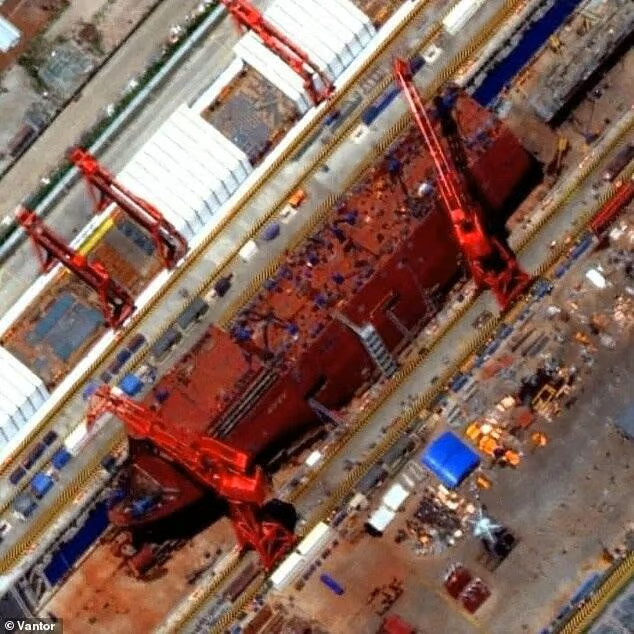
The vessel was identified under construction at the Hudong-Zhonghua shipyard in Shanghai, a facility where China has previously built large amphibious assault ships. Images taken by U.S. defense intelligence company Vantor show a large red-hulled ship whose unusual design has prompted analysts to suggest it is intended for a new class of underwater warfare.
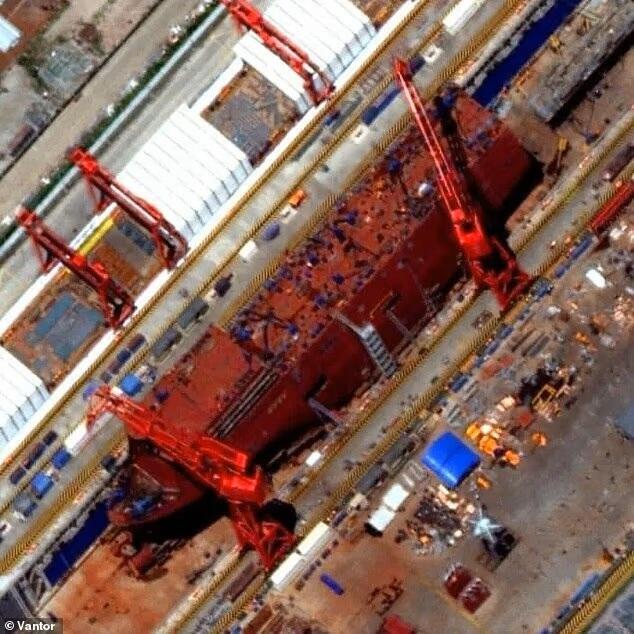
“The most plausible explanation is that it is a special drone submarine mothership,” H I Sutton, an independent defense analyst specializing in underwater warfare, told Naval News, according to the Daily Mail.
Sutton assessed that the vessel could potentially carry at least four of China’s enormous autonomous submarines and transport them thousands of miles before deploying them at sea.
China is the only country known to have developed uncrewed submarines on such a scale. Their size has prompted analysts to classify them as extra-extra-large uncrewed undersea vehicles, or XXLUUVs.
Two Chinese models, measuring approximately 35 meters and 45 meters, or 115 to 148 feet, were first revealed in January 2025 and have already undergone testing in the South China Sea near Hainan, according to the report.
The vessels are significantly larger than comparable Western designs. The U.S. Navy’s Boeing Orca XLUUV measures about 16 meters, or 51 feet, while Britain’s XV Excalibur is roughly 12 meters, or 39 feet, long.
The Orca has a reported range of up to 6,500 nautical miles and is intended for long-range maritime missions. Britain’s Excalibur began underwater trials in July and is expected to become operational by 2028, with a reported endurance of up to 1,000 miles.
Much less is publicly known about China’s XXLUUVs, including their intended weapons and missions. Sutton said the much larger Chinese submarines could potentially carry heavier payloads than Western underwater drones. The Daily Mail noted that the U.S. system can carry multiple heavyweight torpedoes, suggesting China’s larger vessels may be capable of transporting still greater payloads.
The suspected mothership appears to contain a large internal hangar that analysts believe could house the underwater drones. Its size and configuration, Sutton said, make a civilian or research role less convincing. The ship also appears to have a separate hangar near the bow that could accommodate a helicopter.
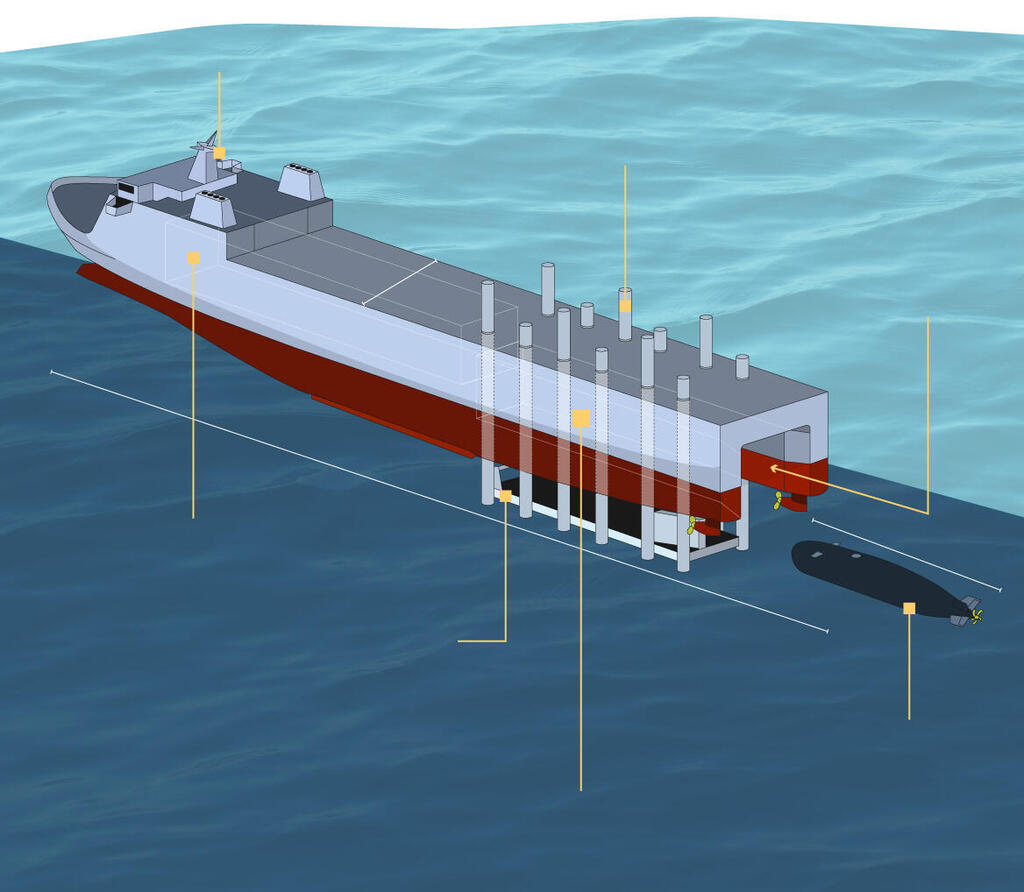
Such a platform could substantially extend the operational reach of China’s autonomous submarines. Instead of using much of their range traveling from Chinese ports to distant mission areas, the drones could be carried aboard the mothership and released much closer to their destination.
The project comes as Beijing continues to rapidly expand its naval capabilities. China is already one of the world’s largest producers of warships, and estimates cited by the Daily Mail put its fleet at about 405 vessels, compared with roughly 295 in the U.S. Navy.
Much of that buildup reflects China’s focus on maritime security and its strategic priorities in the western Pacific.
Chinese President Xi Jinping has repeatedly said Beijing intends to bring self-governed Taiwan under Chinese control and has not ruled out the use of force, a position strongly opposed by Taipei. China has also expanded its military presence in the South China Sea, where its sweeping territorial claims are disputed by the Philippines, Vietnam, Brunei and Taiwan.
The precise purpose of the vessel under construction in Shanghai has not been publicly confirmed. But if analysts are correct, it could give China a capability no other navy is currently known to possess: a mobile platform able to transport, launch and potentially recover some of the world’s largest autonomous submarines far from home waters.