By:LUO Weidong, Consul General of the People’s Republic of China in Toronto
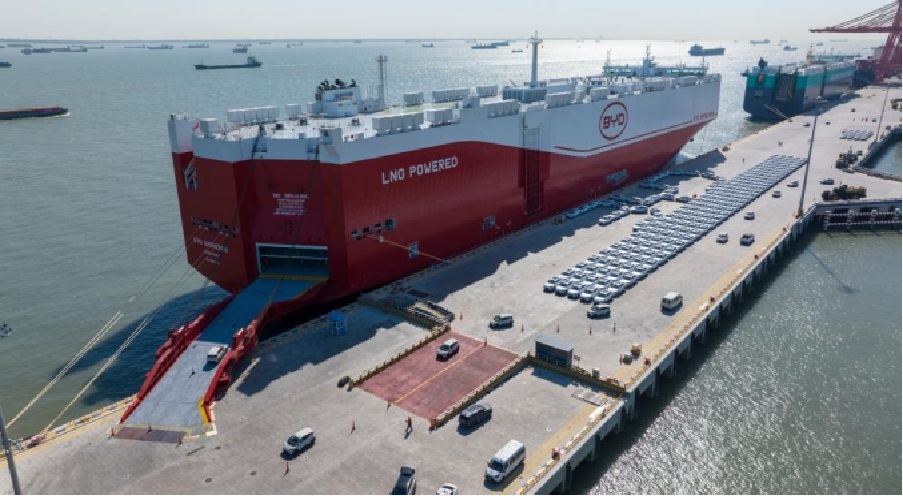
In January 2026, Canadian Prime Minister Carney successfully visited China. The two countries reached an important consensus on electric vehicle (EV) cooperation. PM Carney personally announced a deal allowing 49,000 Chinese EVs into Canada annually at a reduced 6.1% tariff and invited Chinese automakers to invest in Canada. The “restart” of China-Canada cooperation in the EV sector is encouraging to drive momentum across a broad range of our bilateral collaborative efforts.
Ever since the two sides reached the framework agreement, many Canadian consumers have been eager for the Chinese EVs. Public opinion reflects this enthusiasm; several independent polls showed that the majority of Canadians support importing Chinese EVs; a poll specifically targeting Ontario showed that 60% of Ontarians back the agreement. Recently, many friends in my consular district have asked me when they can pre-order Chinese EVs.
The strong support from the Canadian people highlights the competitive edge and advanced features of Chinese EVs.:
First, reduce spending to improve affordability. The steep price of EVs has long been a pain point for Canadian households. In September 2025, a report by Clean Energy Canada highlighted a startling gap: while European drivers have access to 21 EV models priced under $40,000 CAD, only one of those was available in Canada. Notably, seven of those affordable European options are produced by Chinese automakers.
In this regard, PM Carney pledged that by 2030, more than 50% of those imported Chinese EVs will be affordable ones with prices below $35,000, providing new lower-cost options for Canadian consumers. By leveraging China’s mega market, comprehensive industrial chain, robust R&D capabilities, and sophisticated brand management, Chinese EV makers have successfully achieved the “sweet spot” between premium quality and cost-efficiency.Facing the current rising energy prices and inflationary pressure,these models offer a much-needed pathway to reducing the total cost of vehicle ownership for the average Canadian.
Second, variety offers more choices. A mature market is necessarily guided by consumer needs and free choices. By importing a strategic quota of Chinese EVs at a low tariff, Canada is opening the door to a diverse range of brands—from established giants like BYD and Chery to innovative upstarts like NIO, XPeng, and Li Auto.
This tiered industry structure ensures that whether a consumer is looking for a city commuter or a long-haul adventurer, there is a model that fits their specific lifestyle: from spacious, multi-seat “family cruisers” to rugged, intelligent off-road vehicles capable of tackling 45-degree slopes with a 1,000-kilometre range.
Third, excellent performance for a better life. Intelligence and digitalization are hallmarks of Chinese EVs. From the highly automated production plant in Ningbo to continuous breakthroughs in power batteries, automotive-grade chips, and driver assistance technologies, the technological and fashionable appeal of Chinese EVs continues to bring consumers a sense of “cars of the future.” The Wall Street Journal’s Senior Personal Technology Columnist Joanna Stern noted that “China is winning the digitally enhanced electric-car race” after testing a Xiaomi EV. She was impressed by the intelligent connectivity and advanced driver assistance features.
Beyond the “tech-forward” appeal, safety and reliability are prioritized by Chinese EVs. Recently, 26 EV brands underwent an extreme-cold performance test in Norway, and six of the top nine were Chinese brands. Julie Beun, Managing Director of Communications and Public Relations at CAA North & East Ontario, commented that many Chinese EVs perform exceptionally well in harsh conditions. Stable fast charging, competitive real-world range and premium build quality are no longer a question.
At the same time, Chinese EVs offer a complete solution for Canada’s automotive development strategy.
First, this cooperation is a catalyst for industrial transformation. Earlier this year, PM Carney unveiled Canada’s new automotive strategy, a bold framework designed to pioneer a new generation of automotive manufacturing. In the strategy, joint ventures with Chinese automakers and imports of Chinese EVs are a key pathway.
Potential for future cooperation between China and the two provinces in our consular district is immense. As Canada’s automotive heartland, Ontario remains a frontrunner in the transition to electric mobility. Meanwhile Manitoba offers unique advantages in green transportation and renewable energy. The recent heated discussion about the Stellantis Brampton plant reflects the high complementarity of the Chinese and Canadian EV industries and the possibility of future cooperation. It is clear that through sustained, in-depth collaboration, the entry of more Chinese automakers will provide the Canadian EV industry with various high-quality solutions for long-term growth.
Second, the EV cooperation fertilizes Canada’s green transition and protect its environment. The Canadian federal government has set targets for EVs to account for 75% of new car sales by 2035 and 90% by 2040. These benchmarks are essential to reduce greenhouse gas emissions and advance the environmental protection agenda.
As a leading force in the global effort to address climate change, China has made the development of its EV industry a cornerstone of its “carbon peaking and carbon neutrality” goals. By integrating Chinese EVs into the domestic market, Canada can reach its EV sales targets and low-carbon emission reduction goals with lower cost.
Third, the EV partnership energizes trade. Canada is currently pursuing a strategy of international trade diversification to enhance economic resilience. China has a comprehensive industry chain and a reliable supply chain for EVs. The EV trade is expected to drive collaboration across the entire automotive ecosystem—from auto parts manufacturers to raw material suppliers. This provides Canadian automotive industry with new opportunities to seek partners and customers in China, and helps Canadian firms optimize their international trade cooperation pattern.
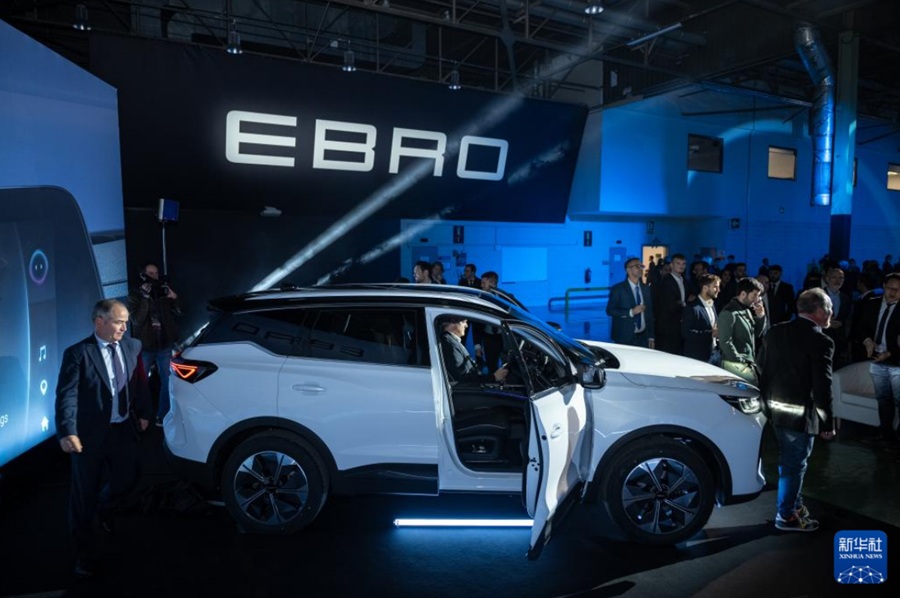
Looking globally, there are numerous successful models for China-Canada EV cooperation. Chery Automobile’s partnership with the Spanish company EBRO helped fully recover the Spanish national car brand, revitalizing the local supply chain, directly creating over a thousand jobs, and boosting local economic growth. It has earned a reputation as a global “model of cooperation.” Similarly, Chinese EVs built a presence from the ground up in Australia. Today, nearly 30 brands and approximately 750 new dealerships operate across the country, serving as a powerful engine for local employment and infrastructure development.
The aforementioned examples have evolved from unfamiliarity to understanding, from caution to mutual trust. It is believed that with China’s mega market and Canada’s vast untapped potential for EV development, the synergy is clear. By leveraging our respective supply chain strengths and technological advantages, China-Canada EV cooperation can achieve healthy “co-opetition” for win-win results. We are delighted to see more Canadian businesses and customers embracing Chinese EVs, as well as China-Canada economic and trade cooperation powered by the EV cooperation.