Support CleanTechnica’s work through a Substack subscription or on Stripe.
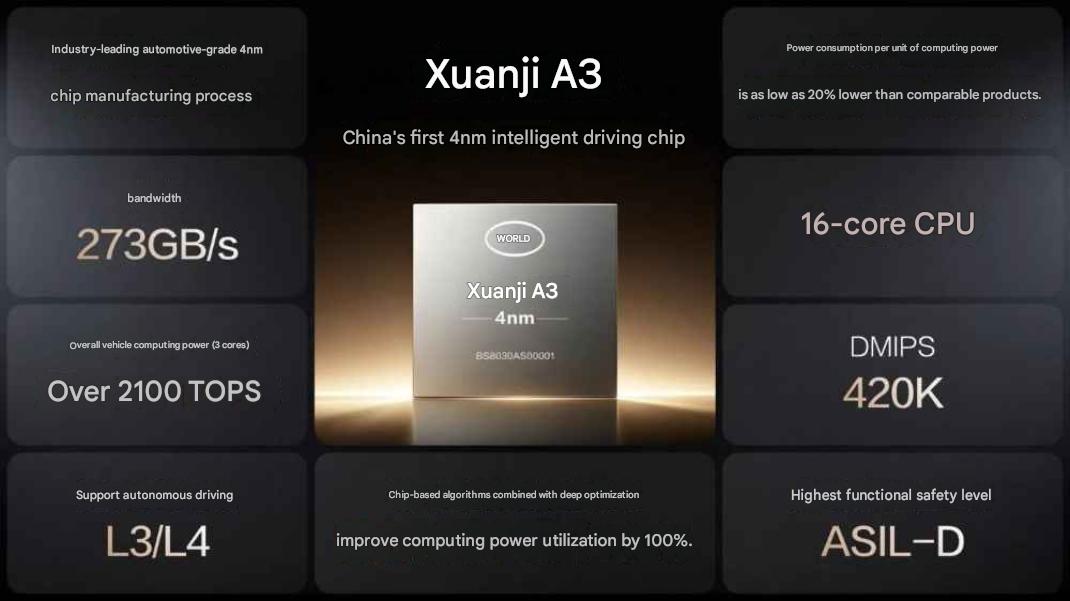
On May 28, BYD launched its “Dare to Be” intelligent strategy, which taps into their deep vertical integration. BYD Chairman Wang Chuanfu stated, “The first half of electrification is all about batteries, while the second half of intelligentization is all about chips.” At the event, BYD unveiled China’s first 4nm intelligent driving chip, the Xuanji A3, which it sees as accelerating the “intelligentization” of the company.
Currently, BYD believes that their intelligent driving capabilities will comprehensively surpass human driving capabilities on the way toward zero accidents. Not only is BYD rolling out intelligent driving to their cars, but also to buses and commercial vehicles.
“God’s Eye” A (3 LiDAR), B (1 LiDAR) and C (just cameras and radar) combine with their latest 5.0 version of intelligent driving software. However, City Navigation has only been offered on their LiDAR equipped models, which have tended to be more premium. At the conference, BYD announced that they would offer LiDAR across every vehicle on their lineup, ordered as a 12,000 RMB ($1770 USD) option on vehicles that do not include it standard.
In addition, BYD announced that it would take full responsibility for any accidents that occur while City Navigation is in operation, much as it did for self-parking last year. It covers all losses without an upper limit, including vehicle repair, third party property damage and personal injury. An accident will not affect the insurance of the driver. Currently, this applies to the first year from delivery for new buyers of cars with the “God’s Eye” A and B systems. In addition, the benefit also extends for one year for existing drivers who OTA update to the latest software.
Of note, to truly be classified as L4 intelligent driving, the car needs to be responsible for driving. That might be a challenge for responsibility-adverse automakers. But it could also give BYD an advantage. As new capabilities become available, BYD can roll them out faster because the automaker takes responsibility in the case that anything goes wrong.
In addition, since offering the self-parking guarantee, usage increased from 21% of parking to 93%. This increases the amount of data fed into the AI models, increasing the capability of the system. While the City Navigation Guarantee is currently only 1 year, it is intended to get people in the habit of using the system, which BYD believes will keep them using the system once the guarantee period is over. There are currently 3.15 million BYD cars on the road using their intelligent driving system in China, which is more than any other automaker.

Focus on Chips with Xuanji A3
BYD has been making semiconductors for the past 24 years, before it started making cars. It is the largest automotive semiconductor producer in China and has over 2000 chip products. Before, those products tended to focus on SiC power chips (where they are the world leader) and less advanced chips used for more basic functions. Chips found in everything from phones and smartwatches to infotainment and air conditioners. When COVID caused chip shortages, BYD massively increased output to fill the gap, increasing their presence in the market. BYD chips are also in the cars of 46 other automakers.

Now, BYD has developed a top-tier 4nm AI chip with the Xuanji A3, which is currently in production. Three chips offer over 2100 TOPS of computing power for L3/L4 intelligent driving. It is also ruggedized for automotive standards and can handle extreme heat and cold. BYD also claims the lowest power consumption per unit of computing power, 20% less than comparable products. That not only means less energy consumption, but also less heat that needs to be managed. 20% is a significant step forward and makes you wonder what other applications are possible in our increasingly power-hungry AI-enabled world. In addition, BYD claims algorithm optimizations have led to a 100% increase in computing power utilization.
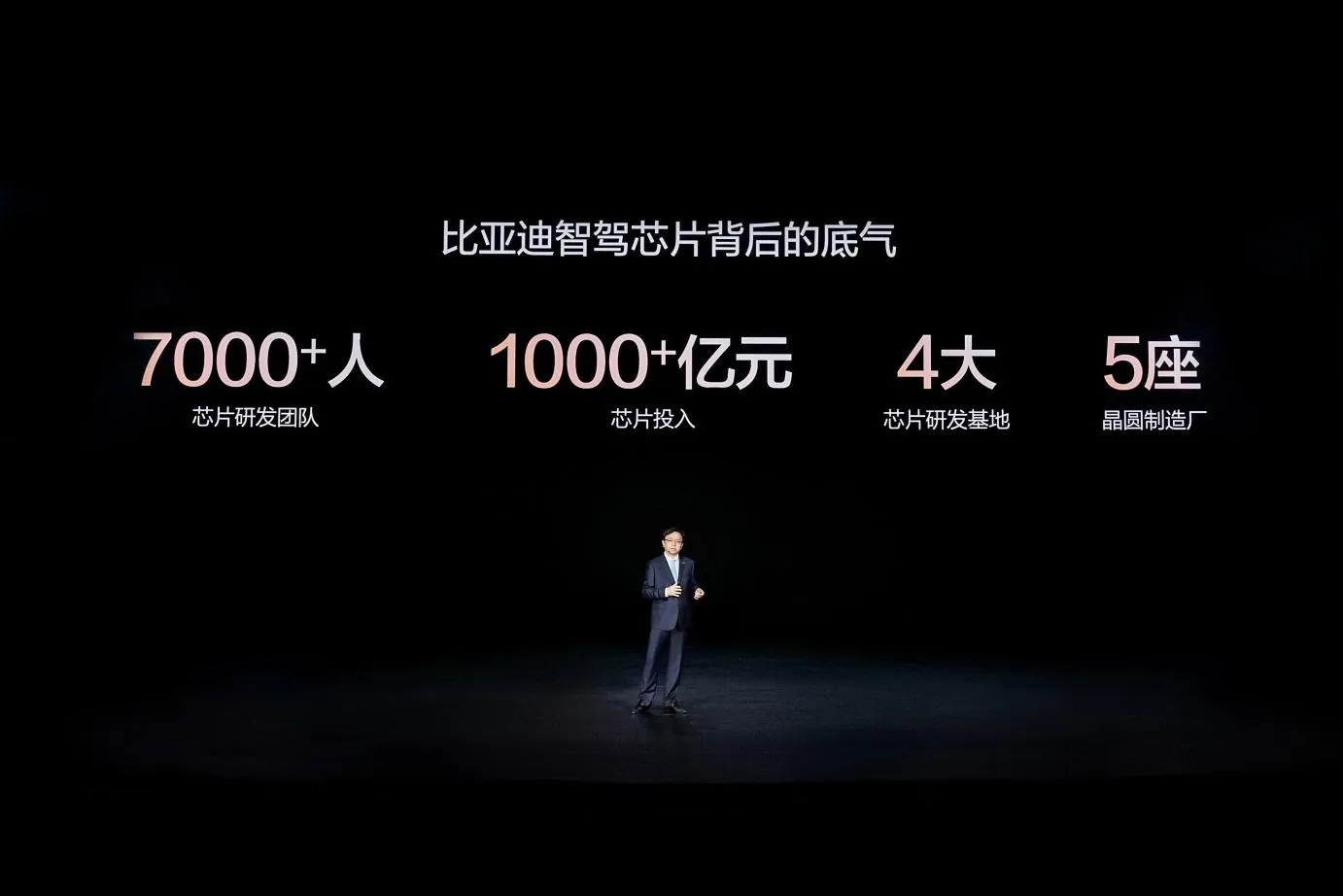
This is not just developing the chip and handing it off to a manufacturer like TSMC. BYD is designing, developing and producing the chip, as well as the software running on it. Driving that capability is a chip development team of over 7000 employees and over 100 billion RMB of cumulative investment.
This puts the Xuanji A3 on par or above the top automotive chips globally. The gap has now closed and may soon reverse. The effort to block the country with the majority of AI engineers globally from the most advanced AI chips may go down in history as one of the most counterproductive uses of protectionism ever. Many Chinese companies were perfectly fine buying chips from companies like NVIDIA chips before we forced China to make their own.
System & Sensor Integration
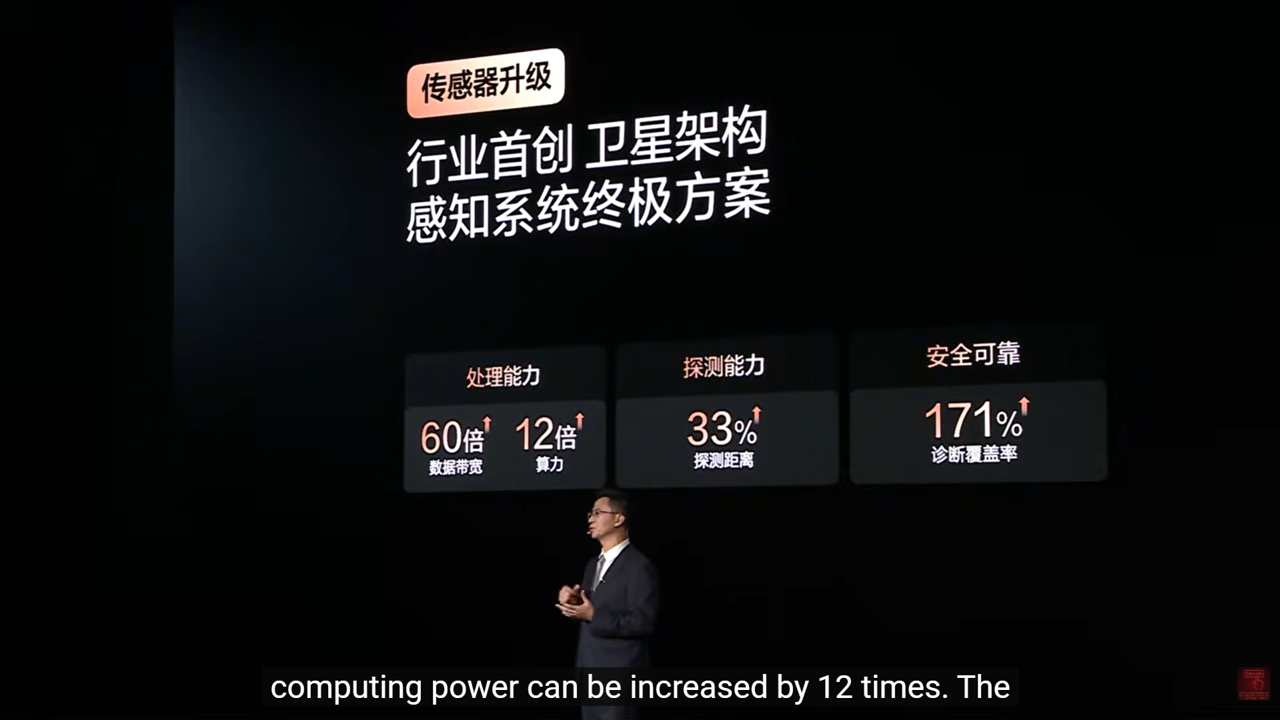
Intelligent Cabin, intelligent driving and electric drive are now being combined into one controller. Meanwhile, BYD’s “satellite architecture” cuts out the processing at the sensor level and feeds raw signals directly into the central processing unit. BYD claims that this increases data bandwidth by 60x, computing power by 12X, detection range by 33% and coverage by 177%. They also state that this is something that only companies with full-stack development capabilities can accomplish. However, this system would also dramatically reduce chip count, even though BYD is the largest supplier of automotive chips in China.
On the sensor front, BYD’s solid-state, 1000-line LiDAR increases resolution from the sensor. It also simplifies LiDAR sensors, which traditionally use a motorized rotating mirror to scan the laser, potentially increasing reliability and reducing cost. The switch to solid-state construction also has the potential to reduce sensor size and shrink the bump at the top of the windshield. Meanwhile 1000 fps cameras ensure fast moving objects are captured. Far infrared cameras improve vision and help to see warm human bodies at night. Combined with radar and ultrasonic sensors, BYD clearly isn’t intent on going down the vision-only path, with multiple levels of sensor redundancy.
Builds Upon Existing System: Song Ultra “God’s Eye” B Test
The new developments build upon BYD’s existing intelligent driving systems. I visited a local dealer in Beijing last month and was able to ride in a LiDAR-equipped Song Ultra using its intelligent driving system. I can see why it is popular. The overall time of the drive was at least twice as long as the video, although I cut much of it where we were standing still in the dense traffic of Beijing. While I like to drive, in that kind of traffic, I would be using intelligent driving functions most of the time. Overall, the system is competent and safe. If anything, it errs on the side of safety. In going through a roundabout, I probably wouldn’t have yielded to some of the cars entering, but entering drivers in China also do not yield to vehicles already in traffic circles.
Compared to XPENG’s intelligent driving system on the P7, the BYD system was a little less smooth and assertive. For someone from New York, I expect more aggressive driving and liked the style of the XPENG. Other people may prefer the more conservative style of the BYD. Overall, both are capable and felt safe, but offer different flavors that may have different appeals to different drivers.
While the BYD system felt a little less human-like than the XPENG on my test, that could be due to the 300 TOPS of computing power on that vehicle. In comparison, the P7 had 2250 TOPS of computing power. However, much of that computing power is also needed to make inferences from the vision-centric system, while the BYD system utilizes multiple levels of sensors. However, with 2000 TOPS from the new Xuanji A3 chipset, BYD will have largely closed the processor gap. XPENG is also rapidly developing their AI to improve the system. The competition is now fierce and moving fast for intelligent driving in China.
Moving Forward
According to BYD Chairman Wang Chuanfu: “True ‘daring’ is never about being fearless, but about having reverence for life, rules, and technology, knowingly doing the difficult but right thing, daring to be a pioneer, and moving forward all the way!”
Overall, BYD is positioning intelligent driving as a way to improve convenience and safety, with the goal of achieving zero traffic accidents. BYD claims that their intelligent driving system has already achieved a 50.91% usage rate. In other words, their cars equipped with intelligent driving capabilities now drive themselves more miles than people drive them. With further optimization, we could soon see most of the cars on the road with the little blue lights that indicate they are driving themselves. BYD is still focused on selling cars, rather than getting into services like Robotaxis. However, it will be interesting to see how the role of automakers changes as the role cars play in our daily lives changes.
Sign up for CleanTechnica’s Weekly Substack for Zach and Scott’s in-depth analyses and high level summaries, sign up for our daily newsletter, and follow us on Google News!
Have a tip for CleanTechnica? Want to advertise? Want to suggest a guest for our CleanTech Talk podcast? Contact us here.
Sign up for our daily newsletter for 15 new cleantech stories a day. Or sign up for our weekly one on top stories of the week if daily is too frequent.
CleanTechnica uses affiliate links. See our policy here.
CleanTechnica’s Comment Policy