BMW Group began trial production of the central control unit for its sixth-generation electric vehicle battery at its Shenyang powertrain plant on September 22, 2026, completing full domestic localization of the battery’s core technology chain within China.
The unit, which BMW calls the energy intelligent control system, functions as the battery’s central nervous system. Mounted directly atop the battery pack, it runs hardware and software developed entirely in-house by BMW, managing voltage regulation, data exchange and power distribution to keep the high-voltage pack running safely.
With that system now assembled domestically, every stage of the sixth-generation battery is produced inside China: research and development, component supply, cell manufacturing, pack assembly and the energy management hardware itself. BMW describes the milestone as the completion of full localization for the battery’s core segments.
Shenyang is now the only BMW production site outside Germany capable of building this control unit, and the only plant in the automaker’s global network that combines casting, engine, battery and energy-management manufacturing under one roof. Engineers ran virtual simulations and pre-tested workflows before installing physical equipment, syncing employee training to the new line to limit startup risk.
Advertisement – Continue scrolling for more
The Shenyang battery project dates back to a 10 billion CNY (c. $1.49 billion) investment BMW Brilliance announced in May 2023, which the automaker said would create about 2,000 jobs in the region. The production hall was completed in November 2023 after 21 months of construction, with plant and machinery installation beginning the following March.
That build-out is one node in a wider push. BMW is establishing sixth-generation high-voltage battery capacity at five sites across three continents: Irlbach-Straßkirchen in Germany, Debrecen in Hungary, Shenyang in China, San Luis Potosí in Mexico and Woodruff in the United States. Markus Fallböhmer, BMW’s senior vice president for battery production, has said “close connection of battery production with vehicle production is part of our strategy.”
Advertisement – Continue scrolling for more
BMW (ETR: BMW) has built vehicles in Shenyang since 2003 through its joint venture BMW Brilliance Automotive, and the base marked its seven millionth vehicle on May 28, 2026. BMW Brilliance president and CEO Birgit Boehm said the plant is “accelerating into a new era through innovation, deeper localization, and intelligent manufacturing.”
For the cells feeding that control unit, BMW draws on large-format 46mm cylindrical cells supplied by CATL, SVOLT and EVE Energy, with CATL serving as BMW’s largest cell partner since 2018. The two companies also signed a joint development agreement in February 2026 covering battery-passport compliance under incoming European Union battery regulations. BMW has projected that Chinese-made cells could account for more than 60 percent of its global battery volume by 2027.
BMW is not alone in deepening its China battery ties. Volkswagen has taken a roughly $1 billion stake in Gotion to help cut battery costs, Stellantis is building a Spanish cell plant with CATL, and Mercedes-Benz sources cells from a Chinese-owned supplier in the United States while holding an equity stake in China’s Farasis Energy.
Advertisement – Continue scrolling for more
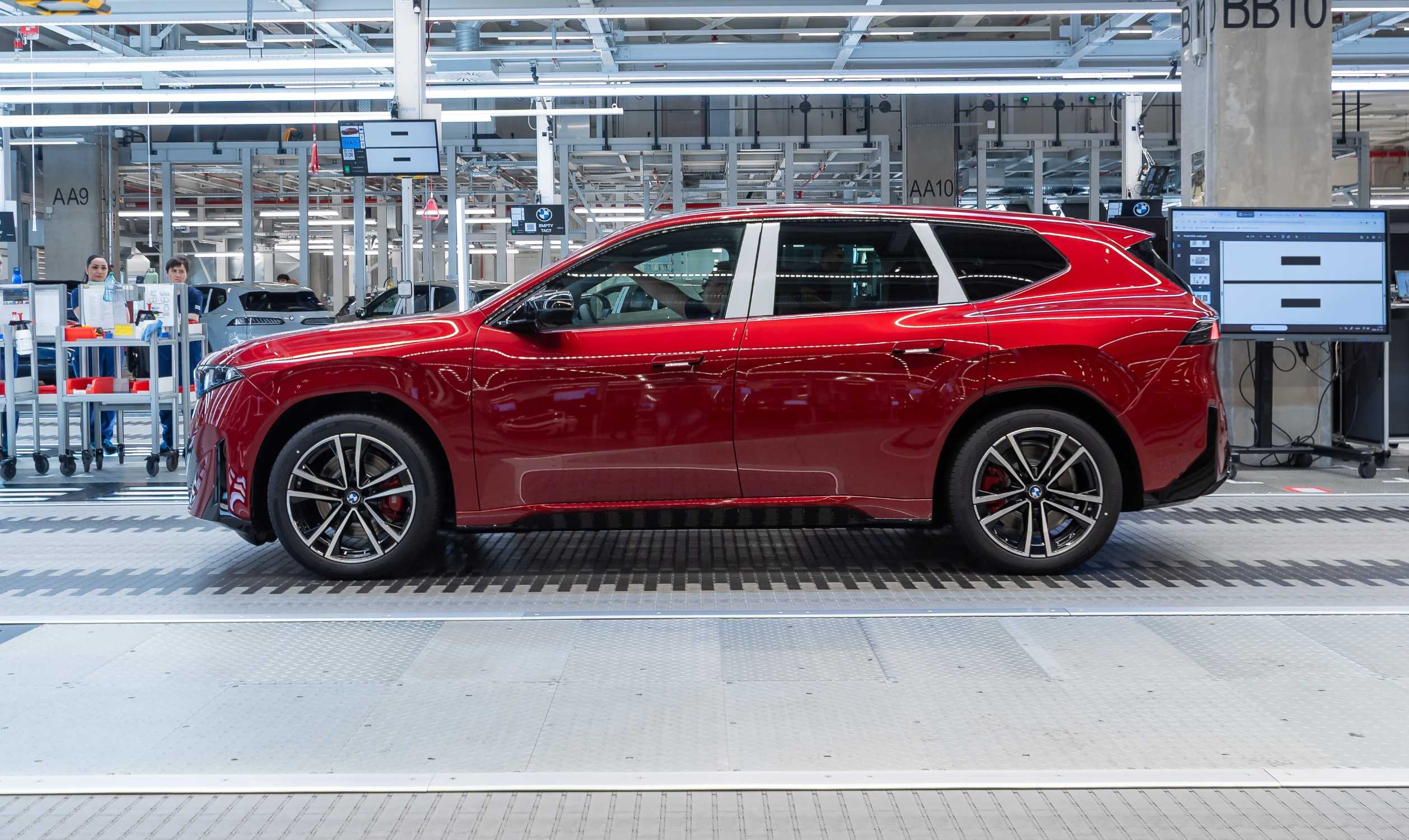
The newly localized battery stack underpins the Neue Klasse iX3, the China-only long-wheelbase electric SUV that will be the first model built on BMW’s sixth-generation platform in the country. BMW opened pre-sales in August 2026 at the Chengdu Auto Show, with deliveries set to begin in November 2026.
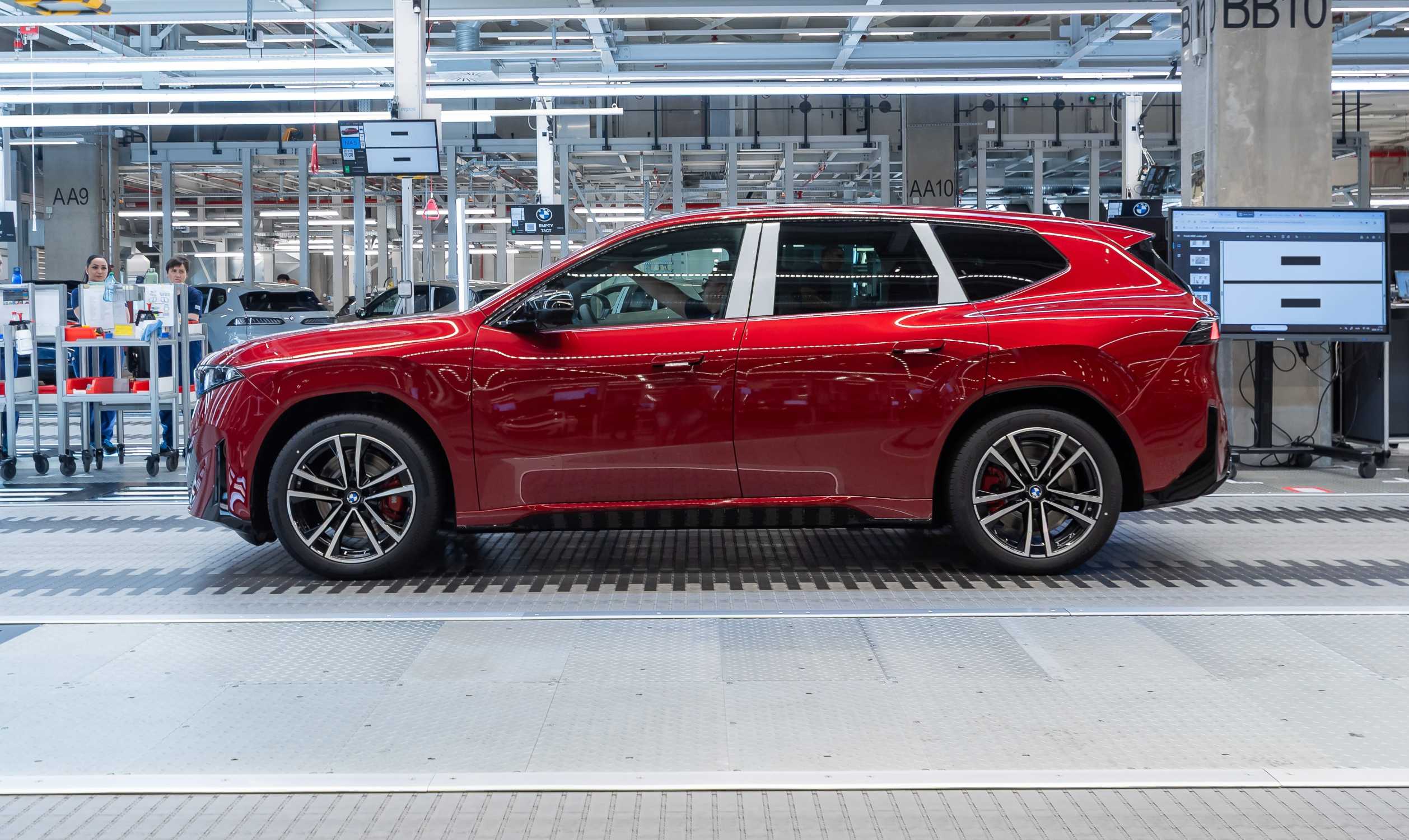
China is following, not leading, this rollout. Series production of the standard-wheelbase iX3, the first Neue Klasse model, started at BMW’s plant in Debrecen, Hungary, which also houses BMW’s first Gen6 battery facility and runs entirely on renewable electricity. Demand there proved strong enough that BMW built its 50,000th European-market iX3 within months of launch and added a second shift ahead of schedule, with incoming orders on pace to reach 100,000 units, the fastest ramp-up of any new BMW plant to date.
The Shenyang line arrives as BMW’s footing in China has weakened. In the first half of 2026, BMW’s China sales fell 20.4 percent year over year to 261,800 units, and China’s share of BMW’s global deliveries slid from 33.5 percent to about 25.5 percent as Europe overtook it as the automaker’s largest market. A fully localized, China-built Neue Klasse is part of BMW’s answer to that slide.
The long-wheelbase iX3 uses roughly 108 kWh of those cylindrical cells in a module-free, cell-to-pack layout on BMW’s 800-volt architecture. Top-trim CLTC range runs over 900 km (559 miles), and a 10-minute fast charge adds about 400 km (249 miles) of CLTC range, with a 10 to 80 percent charge taking 21 minutes.
Advertisement – Continue scrolling for more
Pricing for the long-wheelbase iX3 spans three trims: the 269,900 CNY (c. $40,200) iX3 30L, the 299,900 CNY (c. $44,700) iX3 40L xDrive, and the 339,900 CNY (c. $50,700) iX3 50L xDrive, whose dual-motor setup produces a combined 351 kW (477 hp).
Whether BMW extends full-stack battery localization, from R&D through energy management hardware, to its other regional battery plants, or keeps Shenyang’s setup specific to the Neue Klasse iX3 it currently supplies, should become clearer as Neue Klasse production ramps up beyond China over the next year.
Conversion rate: 1 USD = 6.71 CNY as of September 23, 2026.
Advertisement – Continue scrolling for more