Photo Credit: Getty Images
A Reddit post comparing Detroit’s EV pullback to Kodak’s fateful resistance to digital cameras is striking a nerve online, particularly as Chinese automakers continue widening their lead in the global electric vehicle market.
Companies that cling too long to yesterday’s profits could miss tomorrow’s industry entirely.
What happened?
A discussion in r/electricvehicles centered on whether the Big Three American automakers — Stellantis, Ford, and General Motors — are making the kind of short-term decisions that preceded the decline of companies like Kodak and BlackBerry.
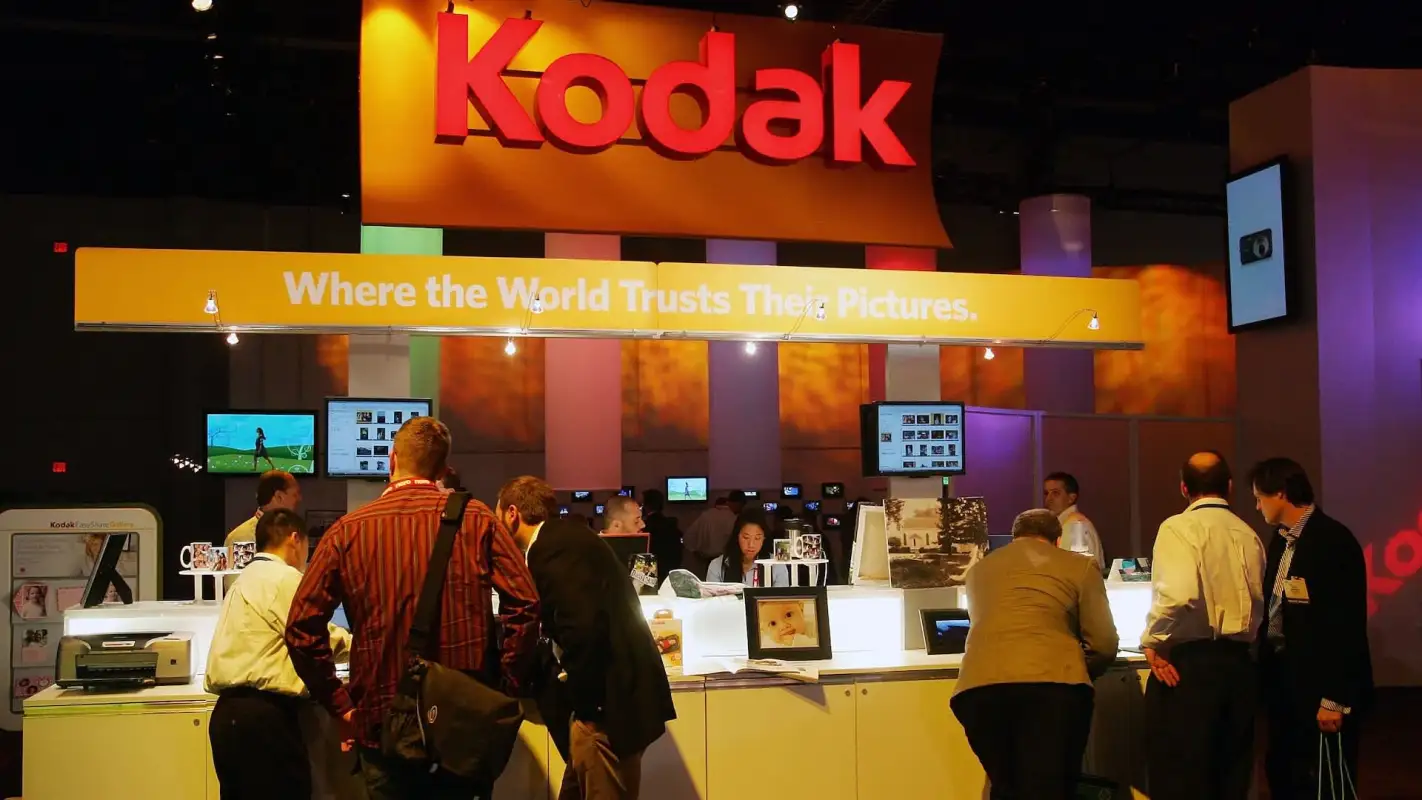
Framing Detroit’s retreat from some EV efforts as a warning sign, the poster pointed to Kodak’s history: the company invented the digital camera in the 1970s but “were afraid it would ruin their film camera profit margins, so they suppressed their invention.”
In turn, the user explained, the company later had to seek bankruptcy protection. From there, the thread asked whether U.S. automakers are risking a comparable outcome.
Alongside the broader warning, the author contrasted shrinking gas-car dominance in the U.S. with rising EV adoption abroad and at home.
The user backed their argument with data showing a clear shift in the U.S. auto market away from internal combustion engine, or ICE, vehicles. In 2016, ICE vehicles made up 99% of passenger vehicle sales in the United States; today, that share has fallen to around 90%, they explained.
Europe and China are experiencing rapid EV market growth, while the U.S. continues to lag behind. As a result, American automakers hold a smaller share of the global EV market compared to international competitors, even as the shift toward electric vehicles accelerates worldwide, the original poster argued.
Why does it matter?
When major U.S. automakers slow EV development in favor of gas-powered vehicles, everyday drivers could end up with fewer affordable electric options just as many families are looking for relief from volatile gas prices and high maintenance costs.
It also carries broader consequences for public health and the environment. Gas-burning cars release planet-warming pollution from their tailpipes, and EV adoption can help reduce those emissions.
If Detroit falls behind while overseas competitors scale faster, American workers and consumers could both lose out — workers through weaker competitiveness, and buyers through delayed access to better, cleaner technology.
What are people saying?
The original poster didn’t mince words, asking: “Are they headed the way of Kodak, Blackberry, and Blockbuster?”
Despite the concerns outlined by the original poster, users in the comments were quick to add that all three of the vehicle manufacturers mentioned still have EVs in the works.
“Abandoning some specific models that weren’t selling well isn’t the same as abandoning EVs in general,” one commenter wrote. “As far as I know, the Big 3 all still have future EV plans and development projects.”
Others pointed out that the U.S. continues to heavily subsidize the oil industry while simultaneously scaling back or limiting federal incentives for EV drivers, making the switch less appealing.
Even with fewer incentives available, switching to an EV can still lead to significant long-term savings by helping you avoid rising gas prices and reducing ongoing maintenance costs, such as oil changes, engine repairs, and other expenses tied to traditional gas-powered vehicles.
Get TCD’s free newsletters for easy tips, smart advice, and a chance to earn $5,000 toward home upgrades. To see more stories like this one, change your Google preferences here.