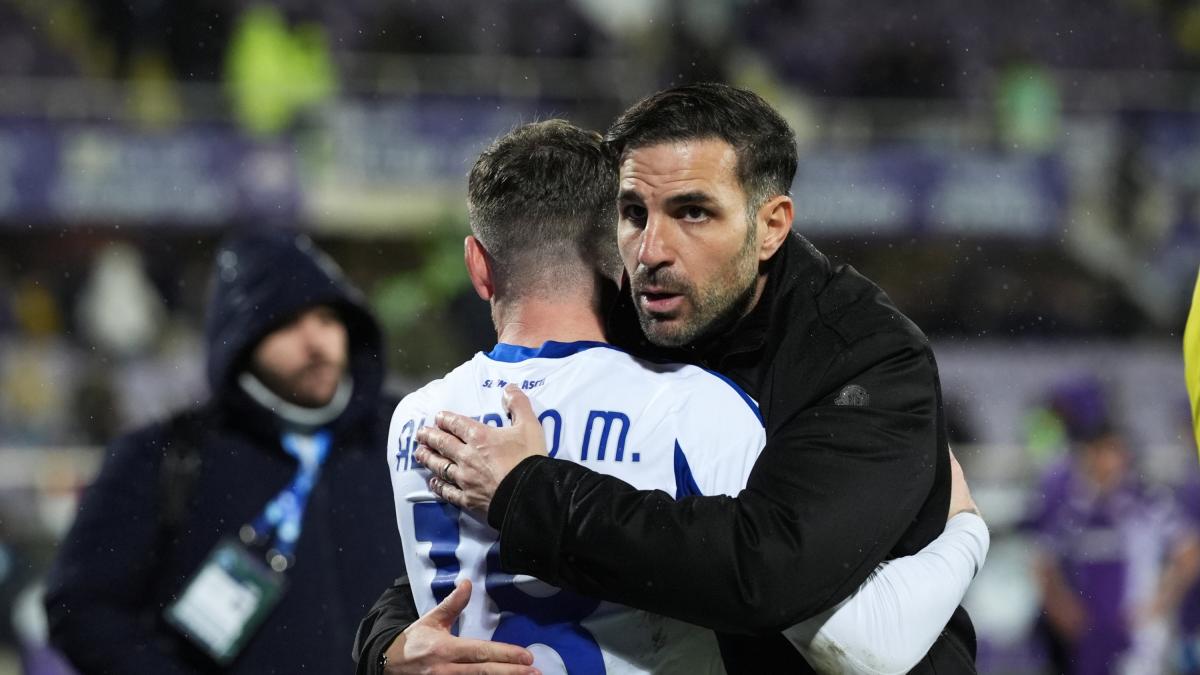
Six of the top seven teams in our league used a three-man defence, starting with Chivu’s Inter, the Italian champions.
While only teams employing a back four reached the World Cup Quarter-finals, the standings of the last Serie A season appear to be an advertisement for the three-man defence. Six of the top seven teams in the league played with three central defenders: whether it was a 3-5-2 (Inter, Milan), 3-4-2-1 (Napoli, Roma), 3-4-3 (Juve), or 3-4-1-2 (occasionally Atalanta), these were variations, albeit significant, but always centred on the same tactical approach. They would drop back into a back five. Only Como bucked this trend, and the temptation to equate a back four with attractive football is strong. While that would be a mistake, it’s undeniable that, compared to the elite international landscape, Italian clubs are the least likely to employ a back four. More defensive?
Inter
—
That’s not necessarily the case. Gasp isn’t defensive, nor is Spalletti; the fact that their teams consistently play attacking football is a different matter. Conte and Chivu are pragmatic. Allegri certainly adopts more ‘protective’ approaches. Palladino has developed Gasp’s teachings in his own way. However, something could change this year, partly due to the merry-go-round of managerial changes or the search for new ideas. Last year, Chivu understood that Inter would slip away from him if he drastically altered it after the Conte-Inzaghi era. However, this year he might look for other solutions, perhaps a broader attacking line. It will also depend on the transfer market. At the moment, it’s difficult to imagine a back four.
Back Three
—
Summer often brings dreams that are later shattered. Allegri was supposed to play a back four at Milan, but as soon as it started, it became a 3-5-2 with all its pros and cons: a more solid defence, players out of position starting with Leao as a centre-forward. His tactical blueprints for his future Napoli side currently feature a back four. We’ll see. At Milan, Amorim has arrived, whose preferred system is a 3-4-2-1, although at United he often resorted to a 4-2-3-1. For him too, it’s a time for study and adaptation. It’s unlikely that Gasp will abandon his back three and man-marking; it’s his style of football, and at Roma, he can only improve after his first season.
Back Four
—
Fabregas is unlikely to abandon the back four. From the transfer market, it’s clear that Como are fine-tuning their promising project. Spalletti comes from a back four system, even if he was among the first to ‘formalise’ a flexible back three system at his Roma. With the national team, he tried to vary things, but his point is clear: “If all the top clubs play with a back three, then the players I call up will be used to a back three.” How can you argue with that? The impression, however, is that the new Juve will play with a back four. As will Atalanta, who, having chosen Sarri, know how they will line up in defence. Not necessarily a 4-3-3: Sarri has always sought variations since his Chelsea days.
The Others
—
Tedesco’s new Bologna and Grosso’s Fiorentina seem set for a season with a back four. The same goes for Aquilani’s Sassuolo, who immediately stated his inspiration from De Zerbi. A back three can be expected for Monza, who have signed Juric. Gattuso has always said that using a back three for the national team was an emergency measure; therefore, Lazio will also not change after Sarri. Runjaic has always deployed Udinese with a back three, and Di Francesco, formerly a 4-3-3 advocate, has also shifted to a back three in recent years. Certainly, Europe, at least the teams that win or reach the latter stages, always play with a back four. But more than tactics, it seems to be a matter of attitude, running, personality, quality…
This article was originally written in Italian by La Gazzetta dello Sport editor. The English version has been generated using AI translation tools. If you notice any translation errors or have suggestions, please contact us at iniziativegazzetta@rcs.it
© RIPRODUZIONE RISERVATA