
It’s a good time to take a look at Atlético Madrid’s finances, not just because they have reached the Champions League semi-finals for the first time in a decade, but also because we are at a very interesting point in the club’s journey.
This comes after private equity firm Apollo Sports Capital became majority shareholder last November, buying a reported 55% stake.
Atlético’s chief executive Miguel Ángel Gil Marin explained why the club had taken this decision, “We’re ambitious, we take risks, we’ve brought in new partners to invest capital, which is necessary to keep growing on and off the pitch.”
Following this deal, Quantum Pacific, founded by Israeli billionaire Idan Ofer, is the second largest shareholder with a stake of roughly 25%, while American investment firm Ares Management now has 5%.
Gil Marin has seen his stake reduce to 10%, though he will remain as CEO, while club president Enrique Cerezo is down to 3%.
Apollo’s investment valued the La Liga club at around €2.5 bln, which is equivalent to an eyebrow-raising 6x revenue multiple, based on current figures.
That might seem pretty steep, though the investment thesis has surely been driven by the major developments taking place in Madrid. The club has already moved to a splendid new stadium, but the jewel in their crown is the Sports City project, which will transform the club’s finances.
Gil Marin again, “It was important to me to select a long-term investment partner who believes in our strategy and can enhance our activities off the pitch with the development of Ciudad del Deporte (Sports City).”
Of course, Atlético Madrid are also an attractive proposition from a sporting perspective, as the club has performed well in the near 15 years since Diego Simeone became head coach in December 2011.
During the Argentinian’s tenure, the club has won the league twice, most recently in 2020/21, while finishing runner-up on two more occasions.
Atlético are the only club that has managed to break up the duopoly of Real Madrid and Barcelona in this period, which is pretty impressive, given the enormous financial advantages enjoyed by Spain’s Big two.
In fact, they have finished in the top three in La Liga in 12 out of the last 13 seasons, thus ensuring qualification for the lucrative Champions League. They have twice been runners-up in Europe’s most important club tournament, while reaching the semi-finals on two other occasions.
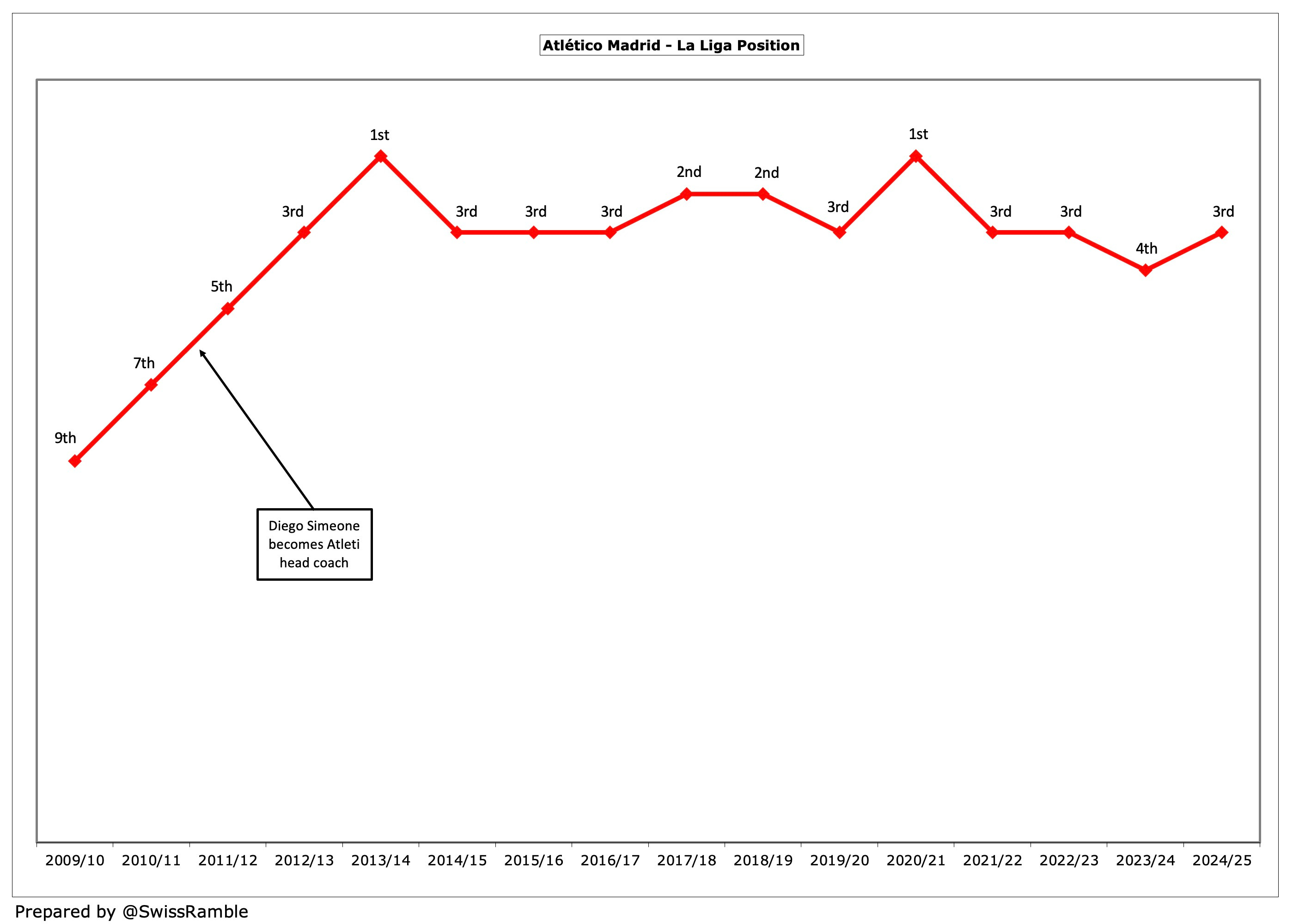
Our review of Atlético Madrid’s potential will be based on the latest available accounts from the 2024/25 season, when they finished third in La Liga and reached the semi-finals of the Copa del Rey, where they were beaten by Barcelona.
They also got to the last 16 of the Champions League, where they suffered an agonising defeat on penalties to city rivals Real Madrid.
In addition, they were one of Spain’s two representatives in the expanded Club World Cup last summer, though they failed to get out of their group, being eliminated on goal difference.
Atlético’s revenue broke through the €400m barrier for the first time, rising €21m (5%) from €395m to €416m, while profit on player sales was also up €21m from €27m to €48m and other operating income increased €6m (24%) from €25m to €31m.
However, the impressive revenue growth was more than offset by higher operating expenses, up €30m (7%) from €444m to €474m, and net interest payable, up €3m (29%) from €21m to €24m.
In addition, exceptional items swung from an €18m credit to a €4m charge.
As a result, they made a small €6m loss before tax, compared to a €1m profit the previous season.
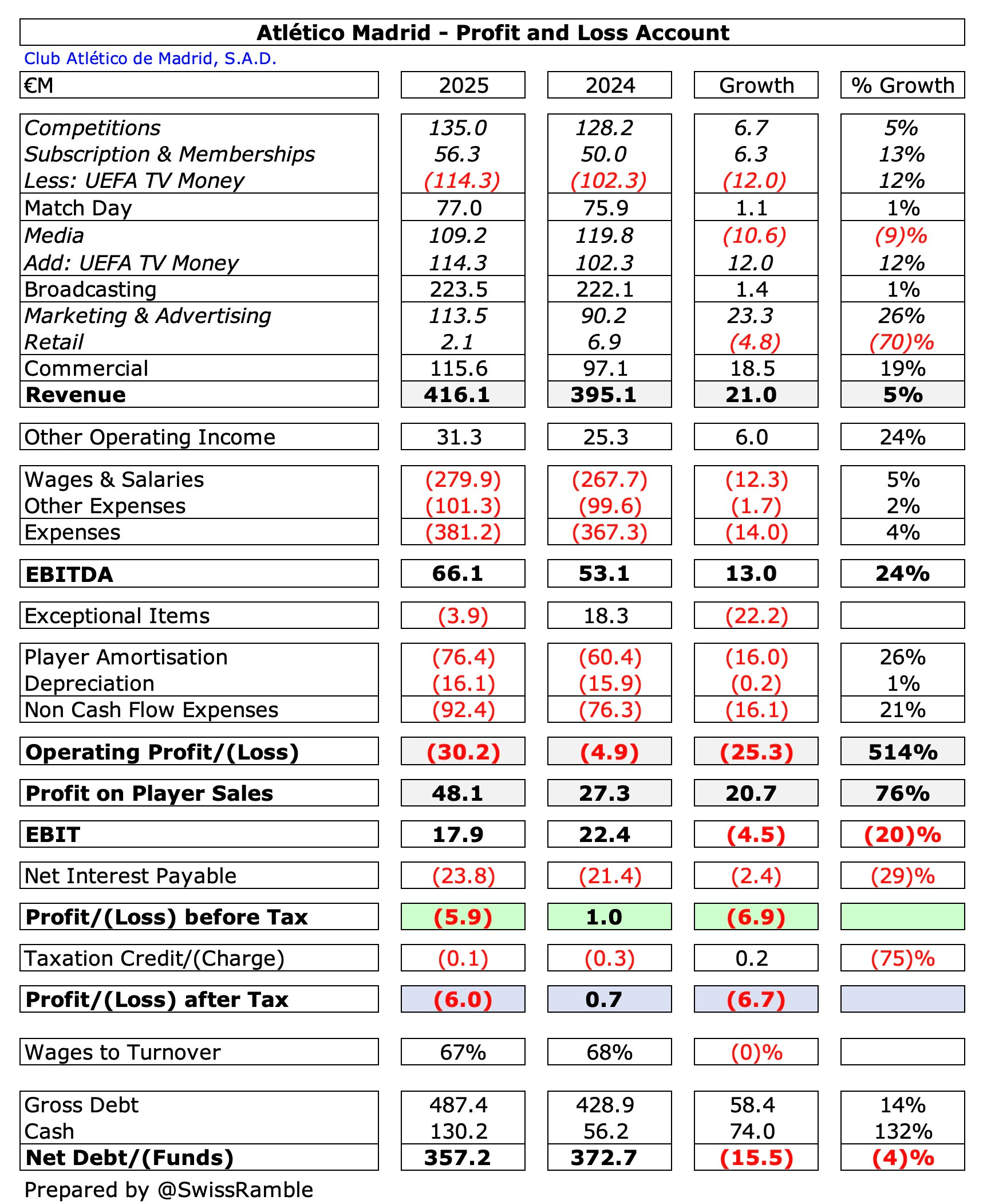
Atlético’s revenue growth was almost entirely driven by commercial, which shot up €19m (19%) from €97m to €116m. The other revenue streams were also up, but only slightly higher, as broadcasting rose €1m to €223m, while match day increased €1m to €77m.
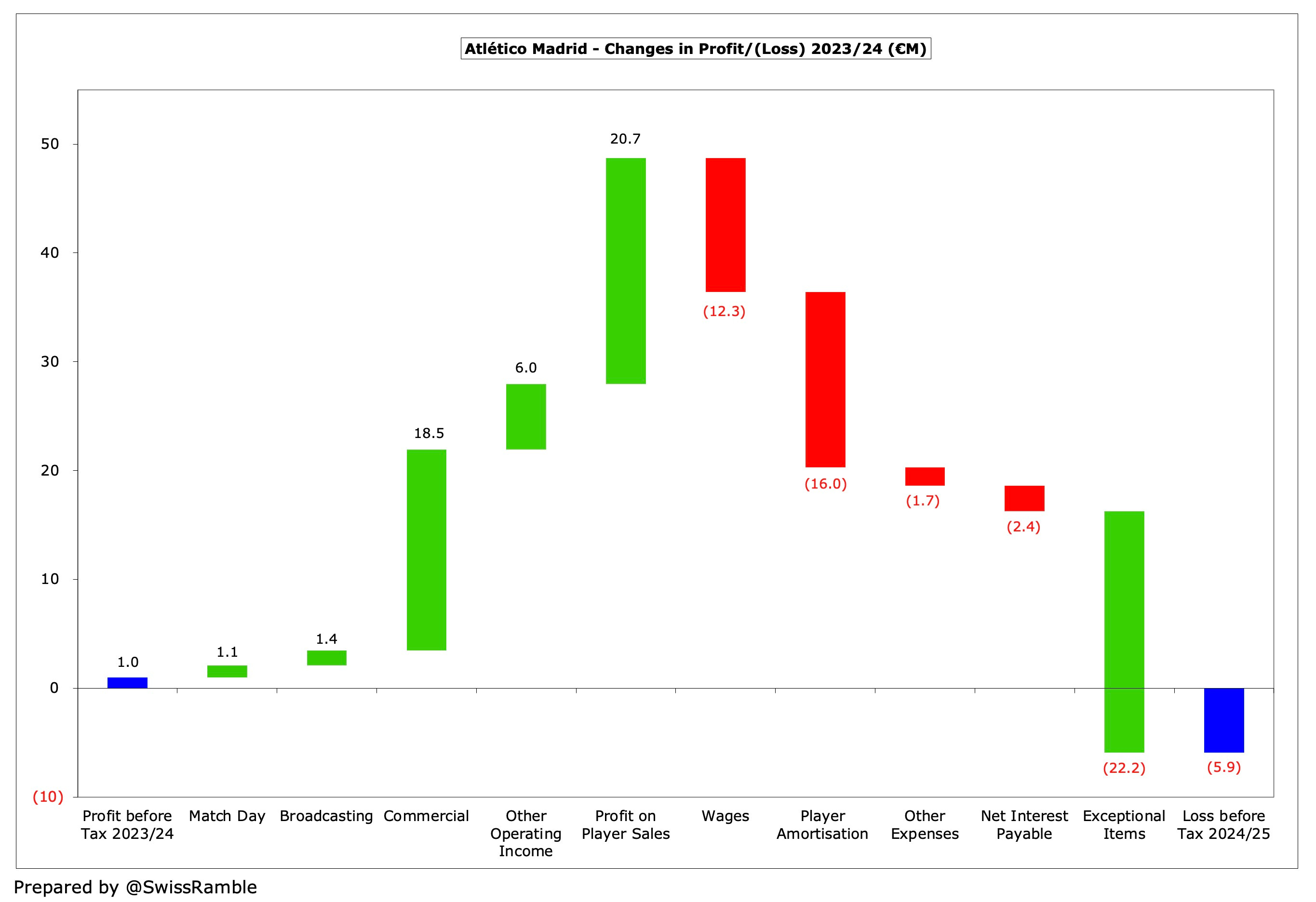
However, there was a steep increase in the cost base, as wages rose €12m (5%) from €268m to €280m, while player amortisation significantly increased by €16m (26%) from €60m to €76m.
In contrast, other expenses were only up 2% to €101m, while depreciation was flat at €16m.
Most Spanish clubs are in the black, influenced by La Liga’s tight financial controls, so only one lost more than €10m last season, namely Sevilla with €54m.
Therefore, even though Atlético’s €6m loss was very small, especially compared to other leagues, it was actually one of the worst in Spain. Barcelona lost slightly more with €8m, but Real Madrid posted the highest profit of €31m, ahead of Girona €22m and Villarreal €19m.
