Last year, SpaceX accounted for about 85 % of orbital rocket launches in the USA and 50 % internationally. Ukraine’s military belongs to the parties that depend on Starlink. Musk, moreover, has made SpaceX the parent company of xAI, his artificial intelligence venture, and X (formerly Twitter), his social media platform. Both lose large sums of money, but have received a huge capital injection thanks to the IPO.
In contrast to normal capital market conventions, Musk has retained full control of SpaceX. The shares he has kept have more voting rights than the ones he has sold, so other shareholders cannot hold him accountable.
Like a pyramid scheme
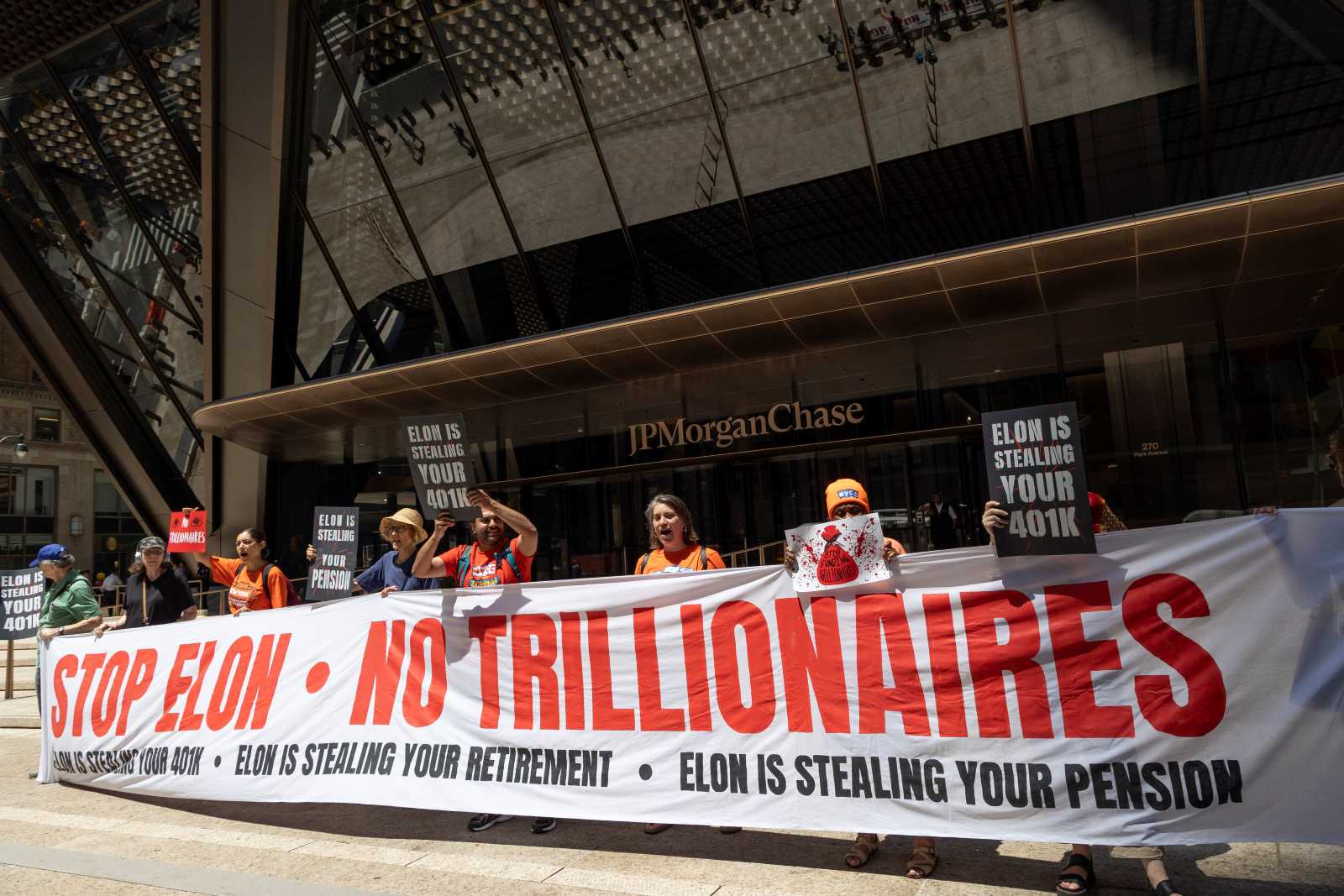
The IPO made Musk much richer on 12 June – to the detriment of smallholder investors. As Nobel laureate Paul Krugman argued on his Substack, the event was designed like a “Ponzi scheme”, which is another term for pyramid scheme. That was the case because major stock market indices changed their rules – to Musk’s benefit and as he had demanded.
In the past, indices only included new shares several months after an IPO, when the share price had stabilised so its future development had become more easily assessable. By contrast, the NASDAQ 100 and the FTSE Russell included SpaceX soon, giving the share a strong boost. After all, major financial companies which run index-tracking funds need SpaceX shares, and that drives up the price. That, in turn, attracted retail investors who feard they might miss out on a historic opportunity. That fear was delusional, as Krugman warned as early as 17 June, and by 22 June, the share was indeed trading below the initial price it had had only 10 days before.
Those who believed in Musk’s unfailing business talent thus lost money. At the same time, risk-averse investors who prefer index trackers to specific shares were ripped off too. Their portfolios now include SpaceX as part of their index funds. The plutocrat benefited considerably from long-standing rules having been abandoned, even though, at the time of writing, his fortune is now worth a little less than $ 1 trillion due to the lower share price. As other tech share prices dropped too, other Silicon Valley plutocrats saw small declines in their fortunes as well.