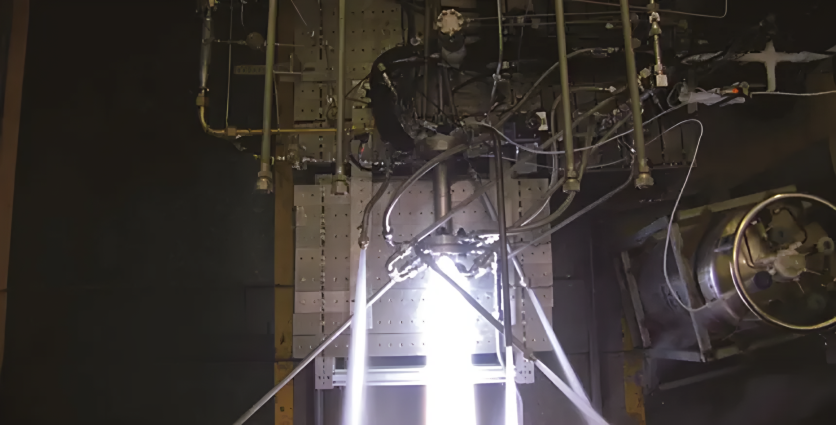

A Chinese research team has done something no team outside the United States had ever done before: launched a rocket powered by aluminum-ice propellant, and in doing so erased a world altitude record that had stood for 17 years. The “Ice-Flame Flying Shuttle” (冰焰飞梭, bīng yàn fēi suō) sounding rocket, developed by Beihang University’s Space Power Laboratory and commercial spaceflight startup Bēnyì Space Technology (奔熠科技), lifted off from Bayannur (巴彦淖尔) in Inner Mongolia and climbed to a peak altitude of 5,276 meters (17,310 feet). The previous publicly recorded altitude for a rocket powered by aluminum-ice (ALICE) propellant was approximately 400 meters (1,300 feet) — set in 2009 by researchers at Purdue University with support from NASA. The Chinese flight was reported on August 30, 2026, by the Chinese-language technology outlet Kuai Ke Ji (快科技).
What makes this more than a national record is what the propellant itself is. ALICE — aluminum plus water ice — is not merely a greener rocket fuel. It is, in principle, a fuel that can be manufactured on the Moon from raw materials already there. The reason this matters is that the cost of space exploration is fundamentally a logistics problem, and any propellant that can be made at the destination rather than launched from Earth could reshape those logistics profoundly.
What ALICE Is and Why It Fires
ALICE — short for Aluminum-ICE — is a solid rocket propellant consisting of a frozen mixture of nanoscale aluminum powder and water. Its driving chemistry is straightforward: aluminum reacts with water in an exothermic process, releasing heat and producing two products — aluminum oxide and hydrogen gas. The balanced reaction is 2Al + 3H₂O → Al₂O₃ + 3H₂. The hydrogen, being a low-molecular-mass gas at high temperature, is the working fluid that translates the heat of combustion into thrust as it expands through the nozzle. The foundational science was documented in Pourpoint et al.’s aluminum-ice propellant feasibility study published in the International Journal of Aerospace Engineering in 2012.
The reason bulk aluminum does not ignite easily in water is that a durable oxide coating forms on each particle’s surface and must be overcome before combustion can begin. Nanoscale particles — typically 80 nanometers in diameter, roughly 500 times smaller than a human hair — solve this problem because their oxide layer (2 to 5 nanometers thick) is proportionally far thinner and much easier to breach, according to the Grokipedia ALICE propellant entry. Once ignited at around 600°C (1,112°F), the reaction becomes self-sustaining: heat from the initial combustion vaporizes surrounding ice, continuously supplying reactants to the aluminum particles and propagating the burn.
The propellant has the consistency of toothpaste when freshly mixed. It is then cast into molds and cooled to approximately -30°C (-22°F) before flight, where it solidifies into a stable grain. At those temperatures it is insensitive to accidental ignition from electrostatic discharge (above a 1.5-joule threshold), impact, and shock — a safety profile that makes it practical to handle, as NASA and AFOSR confirmed in their 2009 propellant test.
Record That Had Stood Since the Bush Administration
On August 7, 2009, a team from Purdue University and Pennsylvania State University — funded by NASA and the Air Force Office of Scientific Research — launched a nine-foot-tall, all-carbon-fiber sounding rocket from Scholer Farm, near West Lafayette, Indiana. According to the Purdue University news release and AFOSR test documentation, the vehicle climbed to 1,300 feet (approximately 396 meters), accelerating to 205 miles per hour, with a peak thrust of 650 pounds-force (approximately 2.89 kN) and a combustion efficiency of roughly 70%.
Steven Son, then an associate professor of mechanical engineering at Purdue, described the flight as proof of concept. “It could be improved and turned into a practical propellant. Theoretically, it also could be manufactured in distant places like the moon or Mars instead of being transported at high cost,” he said, according to the Purdue press release from October 2009. His research partner Timothée Pourpoint emphasized the material science underpinning the result, noting the centrality of nano-scale aluminum to the system’s viability, as ScienceDaily’s October 2009 report documents.
For the next 17 years, no team publicly exceeded or matched that 400-meter mark. Research on ALICE continued — on burn rates, propellant stability, slag accumulation, ignition control — but the technology matured in academic papers without a new rocket reaching the sky.
Two Years of Engineering to Close the Gap
The joint Beihang-Bēnyì team did not arrive at this result quickly. According to the Kuai Ke Ji report, the team spent more than two years resolving the engineering problems that separate laboratory combustion experiments from a flight vehicle. Those challenges spanned propellant formulation, manufacturing process, ignition and combustion control, and engine structural design — each requiring original technical work before integration could begin.
The team then completed multiple rounds of ground-based static fire tests, verifying engine performance against models before advancing to an integrated vehicle test campaign. The complete arc from laboratory-scale research to live flight was traversed in sequence, with each phase validating the next before it was attempted. The result was the “Ice-Flame Flying Shuttle,” whose Chinese name evokes both its propellant — ice — and its character in flight: a flame moving like a shuttle. Telemetry data confirmed a maximum altitude of 5,276 meters (17,310 feet) — more than 13 times the 2009 mark, and the first flight validation of ALICE propulsion anywhere in Asia, per the Kuai Ke Ji report.
Beihang University — formally the Beijing University of Aeronautics and Astronautics, a Ministry of Industry-affiliated university and part of China’s elite “Double First-Class” research university designation — has produced aerospace milestones for decades and is consistently ranked among the world’s top institutions for aeronautical and astronautical engineering. Its institutional affiliation places it squarely within China’s military-civil fusion framework, meaning advances from its Space Power Laboratory serve both civilian and defense aerospace development simultaneously.
Why Aluminum and Ice Point Toward the Moon
The strategic significance of ALICE as a propellant technology is inseparable from where its ingredients are found. The Moon’s surface contains two of them in quantity: aluminum, locked inside anorthosite rock that makes up much of the highland crust; and water ice, confirmed in permanently shadowed craters near the south pole by orbital missions including NASA’s Lunar Prospector and Lunar Reconnaissance Orbiter, as documented in the Wikipedia entry on in-situ resource utilization.
In-situ resource utilization (ISRU) — the practice of manufacturing what a mission needs from locally available materials rather than importing it from Earth — is widely regarded as a prerequisite for long-duration lunar habitation. The central problem in lunar logistics is weight: every kilogram of propellant launched from Earth adds cost and risk to a mission. If propellant can instead be made at the destination, the mass and expense of each resupply drops dramatically. China’s Chang’e-8 mission, planned for launch around 2029, is specifically designed to test ISRU technologies on the lunar surface, according to CNSA‘s April 2025 announcement.
The hydrogen liberated during ALICE combustion has a secondary application beyond thrust: it can feed hydrogen fuel cells for power generation at a lunar outpost, providing an additional energy source from the same propellant stock.
The International Lunar Research Station (ILRS) — the China-led program to build a permanent lunar base targeting basic operational capability by 2035 — is being designed with eventual resource self-sufficiency as a long-term goal, as detailed in the Wikipedia article on the ILRS program. The Ice-Flame Flying Shuttle’s flight represents the first Chinese flight demonstration of a propulsion technology architected for exactly that vision.
A contextual note on China’s lunar program: Chang’e-7, China’s water-hunting robotic mission to the lunar south pole, had been preparing to launch in August 2026 to begin resource surveys. That launch was scrubbed on August 23, 2026, when Chinese authorities announced the spacecraft “does not meet the conditions for launch” — the delay attributed to weather conditions related to Tropical Storm Narra, with the mission now expected no earlier than 2027, according to Scientific American and SpaceNews Chang’e-7 coverage. The ALICE flight milestone and the Chang’e-7 delay are unrelated events, but together they illustrate the gap between China’s propulsion technology advances and the operational lunar mission timeline.
Is the Moon Really Capable of Manufacturing ALICE Propellant?
Celebrating the altitude record should not obscure the engineering gap between a sounding rocket milestone and an operational lunar propellant system. That gap is significant.
The most immediate challenge is nano-aluminum production. ALICE requires aluminum powder with particle diameters around 80 nanometers. On the Moon, aluminum is available in anorthosite (aluminum silicate) rock — but extracting it requires industrial-scale electrolytic reduction, followed by nano-particle synthesis in a vacuum environment. Neither process has been demonstrated at meaningful scale in space, as the Grokipedia ALICE entry documents.
The propellant also faces performance tradeoffs. ALICE’s specific impulse (Isp) — the measure of propellant efficiency — runs approximately 210 seconds in practical tests, against a theoretical vacuum ceiling near 300 seconds. That compares unfavorably with liquid oxygen/liquid hydrogen systems, which achieve around 450 seconds, per the Grokipedia ALICE analysis. Additionally, 20 to 43 percent of the propellant mass ends up as solid alumina slag that accumulates in the combustion chamber and reduces nozzle efficiency, a problem that worsens at larger motor scales.
Research published in the Journal of Propulsion and Power in March 2025 continued exploring computational models of ALICE motor performance, and additives including ammonium perchlorate and ammonium nitrate are under investigation to improve combustion efficiency — but no major breakthrough in Isp or slag reduction had been reported as of 2025.
What the Ice-Flame Flying Shuttle proves is that a non-US team has now mastered the foundational engineering — formulation, manufacturing, combustion control, structural design — necessary to fly ALICE at scale. That is a genuine and substantial milestone, even if the road from sounding rocket to lunar propellant plant stretches further than a single flight measurement suggests.
How Does ALICE Compare to What We Know?
The specific impulse deficit matters less for a lunar ascent vehicle than it would on Earth, because the Moon’s surface gravity is about one-sixth of Earth’s. An ISRU propellant with relatively modest Isp that can be manufactured locally still outperforms a high-Isp propellant that must be shipped from Earth at enormous cost. The economics of ISRU propulsion are not primarily about performance per kilogram — they are about eliminating the need to launch that kilogram from a gravity well in the first place.
Conventional high-performance rocket propellants — liquid hydrogen, liquid oxygen, or hypergolic combinations — require either cryogenic storage systems that leak and sublimate over time, or toxic compounds that demand careful handling. ALICE, stored as a frozen solid at -30°C (-22°F), is mechanically stable, non-hypergolic, and relatively safe to handle. On most bodies in the solar system, maintaining that temperature requires no active refrigeration, as both Wikipedia’s ALICE article and Grokipedia’s ALICE entry note. That simplicity has engineering value in environments where active cryogenic management would be extremely difficult.
Frequently Asked Questions
What is ALICE propellant, and how does it work?
ALICE stands for Aluminum-ICE — a frozen mixture of nanoscale aluminum powder and water. When ignited, aluminum reacts with the water to produce aluminum oxide and hydrogen gas (2Al + 3H₂O → Al₂O₃ + 3H₂). The hydrogen, heated to high temperature by the exothermic reaction, expands through a nozzle to generate thrust. Using particles around 80 nanometers in diameter — 500 times smaller than a human hair — allows the reaction to ignite and sustain itself reliably, because the thin oxide layer on nano-sized particles is far easier to overcome than on larger grains, as documented in the aluminum-ice propellant feasibility study published by Pourpoint et al. in 2012.
Can rocket propellant actually be made on the Moon from lunar materials?
In principle, yes — but only after multiple unsolved engineering challenges are addressed. The Moon’s crust contains aluminum in anorthosite rock, and water ice exists in permanently shadowed craters near the south pole. To produce ALICE on the Moon, those materials would need to be extracted, the aluminum reduced and processed into nano-scale powder, and the water purified and frozen — all in a lunar environment with no atmosphere and extreme temperatures. None of these steps has been demonstrated at operational scale in space. China’s Chang’e-8 mission, planned for launch around 2029, is specifically designed to test ISRU technologies on the lunar surface, which could eventually lay the groundwork for in-situ propellant production, according to CNSA.
What are ALICE propellant’s main limitations compared to conventional rocket fuels?
Two limitations stand out. First, specific impulse: ALICE achieves around 210 seconds of Isp in practice (versus around 450 seconds for liquid hydrogen/liquid oxygen), meaning it produces less thrust per unit of propellant mass. Second, slag accumulation: 20 to 43 percent of the propellant mass ends as solid aluminum oxide residue inside the combustion chamber, reducing efficiency and complicating design at larger scales. Researchers are investigating additives to improve both issues, but as of 2025 no major breakthrough has been confirmed, according to the Grokipedia ALICE analysis. The lower performance matters less for lunar surface applications, where local manufacturing advantage outweighs the Isp deficit, than it would for high-performance Earth-to-orbit missions.
What would have to happen before ALICE could actually power a Moon-based rocket?
Three main engineering hurdles remain. First, nano-aluminum production from lunar regolith at meaningful scale has not been demonstrated anywhere. Second, ALICE’s combustion efficiency and slag problem need further improvement for larger, higher-thrust motors. Third, the full ISRU chain — mining, refining, nano-processing, and propellant manufacturing — would need to be validated on the lunar surface under actual mission conditions, not just in simulation. China’s ILRS roadmap envisions basic ISRU capability by the early 2030s as a prerequisite for the permanent lunar station it targets by 2035, per ILRS program documentation. The Ice-Flame Flying Shuttle establishes that a Chinese team can build and fly an ALICE rocket. Building a Moon-based factory to supply those rockets is a different — and much longer — engineering project.