A 2025 Swedish study found that coffee from most of the office machines examined had much higher cafestol concentrations than paper-filtered coffee. This matters because cafestol can raise LDL—the so-called “bad” cholesterol. However, the Swedish study measured compounds in coffee, not changes in people’s cholesterol, so its findings cannot be used to make direct predictions about everyone who drinks coffee.
What the researchers found in Swedish office coffee machines

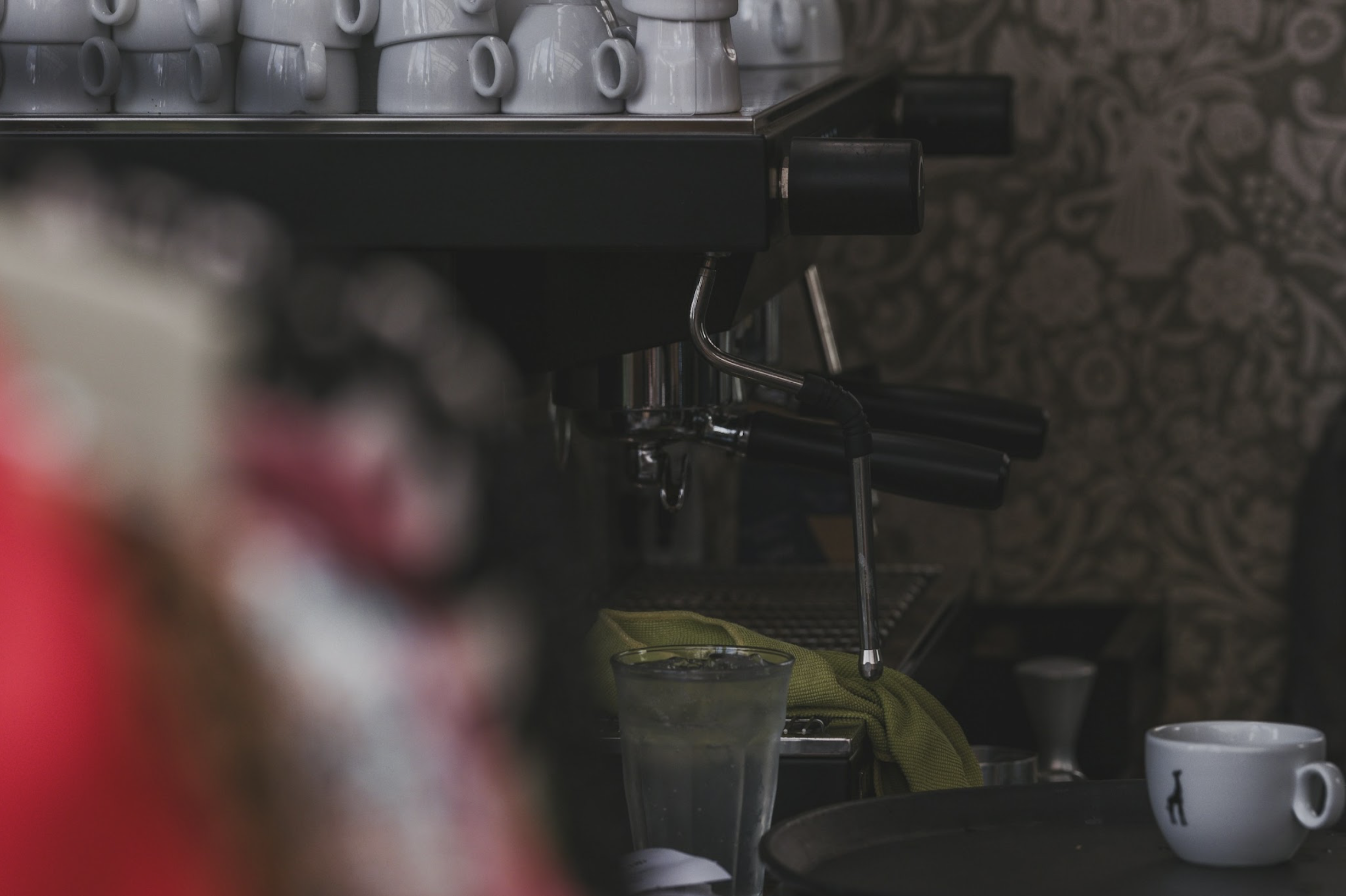
Photo: coffee machine and cups, illustrative image. Source: Haberdoedas / Unsplash, Unsplash License.
In 2025, researchers from Uppsala University and Chalmers University of Technology published a study on the levels of two coffee diterpenes—cafestol and kahweol—in drinks from workplace coffee machines. They analyzed 14 machines in Swedish offices: 11 brewing machines and three machines that made coffee from liquid concentrate.
They took two samples from each machine, two to three weeks apart, and measured the compounds using liquid chromatography–mass spectrometry. In coffee from the 11 brewing machines, the median cafestol concentration was 176 mg/L, while the median kahweol concentration was 142 mg/L. For home-brewed paper-filtered coffee, the figures were approximately 12 and 8 mg/L, respectively.
The difference was substantial, but the machines themselves also produced highly variable results. The researchers specifically point out that office machines are not all alike, and diterpene levels can vary over time even in the same machine.
For comparison, the authors also tested other brewing methods. Boiled coffee had a cafestol concentration of 939 mg/L, while coffee brewed through a cloth filter had 28 mg/L. French press and percolator coffee contained approximately 90 mg/L of cafestol. In some espresso samples, the concentration reached 2,447 mg/L, but here it is especially important to account for the much smaller serving size.
Why paper filters matter

Photo: coffee being brewed using the V60 method during the bloom stage, illustrative image. Source: Indigo.udm / Wikimedia Commons, CC BY 4.0.
The idea that paper filters change more than just the taste of coffee is not new. Cafestol and kahweol are fat-soluble compounds. During brewing, some of them pass into the drink along with the lipid fraction and fine coffee particles.
In a controlled study published in 1991, 20 healthy volunteers drank strong boiled coffee and the same coffee after it had passed through a paper filter during separate periods. While they were drinking unfiltered coffee, total cholesterol and LDL were higher. Filtering removed more than 80% of the fat-soluble fraction that the researchers linked to the cholesterol-raising effect.
Another study from the same period, involving 64 healthy volunteers, found an LDL difference of about 0.41 mmol/L between the group drinking boiled, unfiltered coffee and the group drinking the same coffee after it had passed through a paper filter. In the filtered-coffee group, there was no significant worsening of the lipid profile compared with avoiding coffee.
In other words, a paper filter does not “neutralize” coffee. It simply greatly reduces the amount of certain fat-soluble compounds that may affect cholesterol levels.
What cafestol does to “bad” cholesterol

Photo: French press with coffee, illustrative image. Source: Arthur Charles Pratt / Unsplash, Unsplash License.
LDL stands for low-density lipoproteins, which carry cholesterol in the blood. The U.S. National Heart, Lung, and Blood Institute calls LDL “bad” cholesterol because high levels contribute to plaque buildup in artery walls.
A controlled clinical study showed that pure cafestol can raise LDL. In a randomized, double-blind, crossover study published in 1997, ten healthy men received 61–64 mg of pure cafestol per day for 28 days. Their average LDL level rose by 0.57 mmol/L, while total cholesterol rose by 0.79 mmol/L.
This shows that cafestol itself can raise LDL under controlled conditions. But it does not mean that every cup of a particular type of coffee will have the same effect. The clinical experiment used a defined dose of purified compound, whereas the dose in a real drink depends on the beans, recipe, volume, grind, filter, and specific machine.
That is why it is incorrect to translate the cafestol concentration in coffee directly into a guaranteed cholesterol increase for a specific person.
Espresso, French press, and office machines: concentration is not the same as dose

Photo: espresso being brewed, illustrative image. Source: Jakub Żerdzicki / Unsplash, Unsplash License.
A figure in mg/L indicates concentration, not how much of a compound a person actually gets in a single serving. This is especially clear with espresso: some samples in the Swedish study had very high cafestol concentrations, but a standard espresso serving is much smaller than a cup of filter coffee.
With French press coffee or a large serving from a machine, the situation is different: the concentration may be lower, but the drink’s volume is greater. So the practical effect depends not only on the brewing method, but also on the total dose.
The authors of the Swedish study explicitly note that a separate controlled study in people is needed to determine precisely how much coffee from specific machines changes LDL levels. Their study shows what is in the drink, not what the clinical outcome will be.
This conclusion is consistent with the Nordic Nutrition Recommendations 2023. They consider moderate consumption of filtered coffee—approximately 1–4 cups a day—compatible with a healthy diet, while recommending limiting unfiltered coffee because it can raise LDL.
What about the roast level?

Photo: roasted coffee beans, illustrative image. Source: Alex Gudino / Unsplash, Unsplash License.
Roast level may also affect the amount of cafestol, but the evidence here is much weaker than it is for the brewing method.
A 2017 study found higher cafestol levels in lighter-roasted beans. The same study showed that most of the cafestol remained in the used coffee grounds after brewing, with only a small proportion passing into the finished drink.
So, in practical terms, roast level should not be used as the main way to control cafestol. The better-supported factor is the brewing method and whether an effective paper filter is used.
The practical takeaway is simple: There is no such thing as “bad coffee” as a category, and these findings are not a reason to give up coffee altogether. But the brewing method really does change what is in the drink. If someone drinks several cups every day and wants to minimize the effect of coffee diterpenes on LDL, using a paper filter is supported by far stronger evidence than trying to guess which drink is safer based on its strength, roast, or brewing-method name.