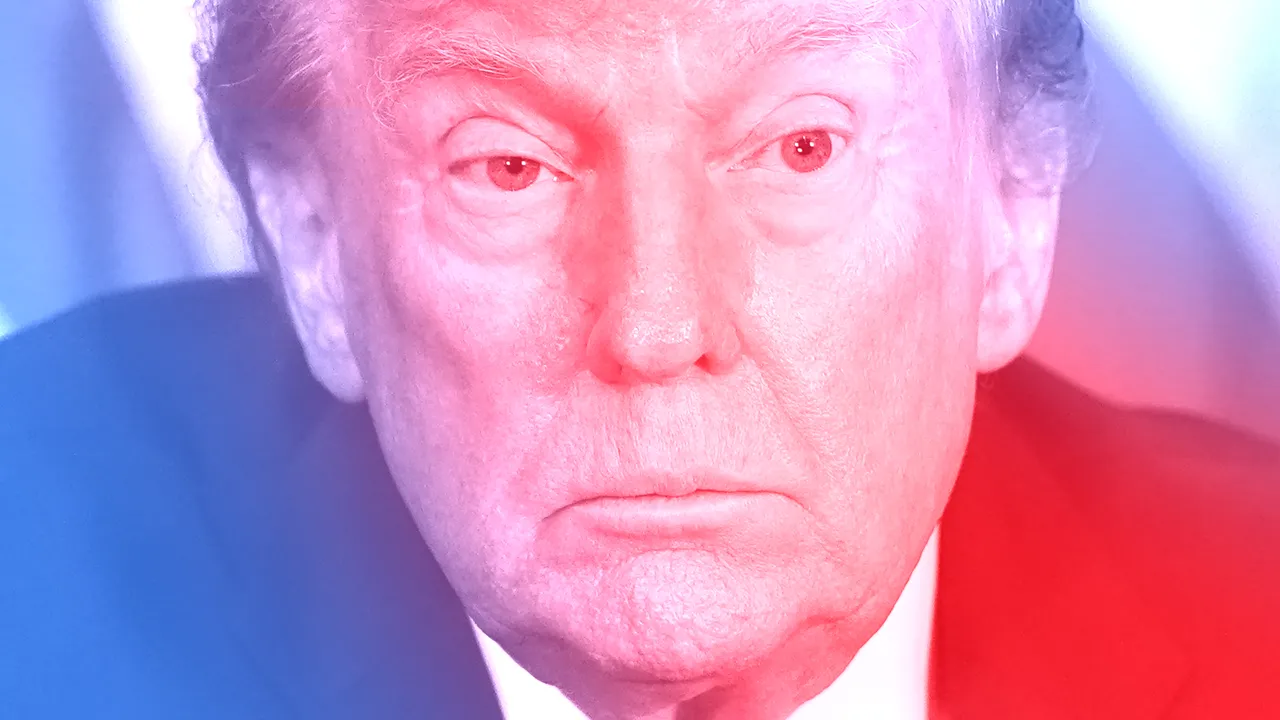
Few are flatly predicting yet that Democrats will seize control of both the Senate and the House of Representatives—in the Senate, they would need to flip a net of four seats to win the chamber—but, by just about every metric except the vast sums of campaign cash that Trump has drummed up, this election looks increasingly likely to produce an outright repudiation of the President’s party, after a campaign season in which Trump’s own reckless politics and persona have defined the political landscape. No modern President, in fact, has ever gone into a midterm election this unpopular. Trump’s standing with the American public is currently twice as low as it was at this point in 2018, when Republicans lost forty-one seats in the House.
“Since early September, there has been a noticeable shift toward Democrats,” Doug Sosnik, who served as the political director of the Clinton White House, wrote on Thursday, in one of his closely followed election analyses. The movement of voters away from Republicans “hit a tipping point in recent weeks,” Sosnick concluded, with “Democrats now positioned for gains that looked unimaginable at the beginning of the year,” an outcome largely attributable to voters’ rejection of “the increasingly erratic behavior of an out of touch Commander in Chief.” This assessment is not all that different from what Republicans—both privately and, in some cases, publicly—are saying. “Republicans are running out of runway,” Dave Winston, a longtime G.O.P. pollster, warned this week in an op-ed in Roll Call, blaming this development on the fact that Trump’s economic message has been “falling on deaf ears.” The phrase “ringing alarm bells” was used.
The political class has responded accordingly. “The Republican abandonment of Donald Trump begins,” the conservative National Review wrote on Wednesday. That same day, Punchbowl News said this was the week that Republicans were hitting the “panic button.” That afternoon, the right-wing Christian radio host Steve Deace posted a screed on X complaining that Trump’s failed war with Iran risks becoming a “2020 Covid lockdown level of political albatross” that could cost the G.O.P., even in Trump bulwarks such as Deace’s home state of Iowa, where Democrats now look like they could take both the governorship and an open U.S. Senate seat. Just two years ago, Trump won the state by thirteen points.
So many Republican candidates in recent days have broken with Trump that it’s as if a secret memo went out announcing that the floodgates were officially open. (Newsweek even started a tracker of “Republicans breaking with Trump ahead of midterms.”) Among the more notable defections were Republican Senate nominees in Iowa and Michigan, both of whom pleaded with Trump to end the war with Iran, now. “Michigan families are struggling with the price of everyday life,” Mike Rogers, a former congressman who is the G.O.P. nominee in Michigan, says in a new ad, itself a rebuke to Trump’s line that the affordability crisis is just another Democratic hoax. “Groceries cost too much. We have to bring prices down. The war with Iran needs to end and end quickly. When it does, energy costs will plummet.” Representative Ashley Hinson, the nominee in Iowa, echoed that language. “The war needs to be brought to a successful and immediate end,” she said. Democrats quickly pointed out that, so far, Hinson had voted multiple times against resolutions in Congress to stop the conflict.
A Republican congresswoman in Florida, meanwhile, released an ad this week chiding the President for unleashing such a harsh crackdown on immigration. “Mr. President, some of your immigration-enforcement efforts have gone too far,” Representative Maria Elvira Salazar said. “The same Hispanics who helped you get to the White House in 2024 feel betrayed today.” What was notable was not just Salazar’s tough language toward Trump but the fact that she felt she needed to say it at all: in 2024, she secured reëlection by twenty points in a district that Trump won with fifty-seven per cent of the vote.
This is all reflective of a swiftly deteriorating political environment for Republican candidates, who are getting clobbered not only by the President’s unpopularity but by his record—from the economy and health care to housing and immigration, a signature issue that helped him win the White House in both 2016 and 2024. As for the war with Iran, a CNN survey this week found that just a quarter of Americans now back the President’s handling of the conflict—down from a third of the country that did so when the President first launched the war, last winter, claiming that it would be a few weeks, at most, before he had brought down the leadership of the Islamic Republic and ended any ability it might have to threaten the world. “I just believe that we should be exiting Iran, that it’s time to move on,” Tom Tiffany, a Republican congressman running for governor in Wisconsin, told a reporter. Until this week, he and many other G.O.P. officeholders largely kept such opinions to themselves.