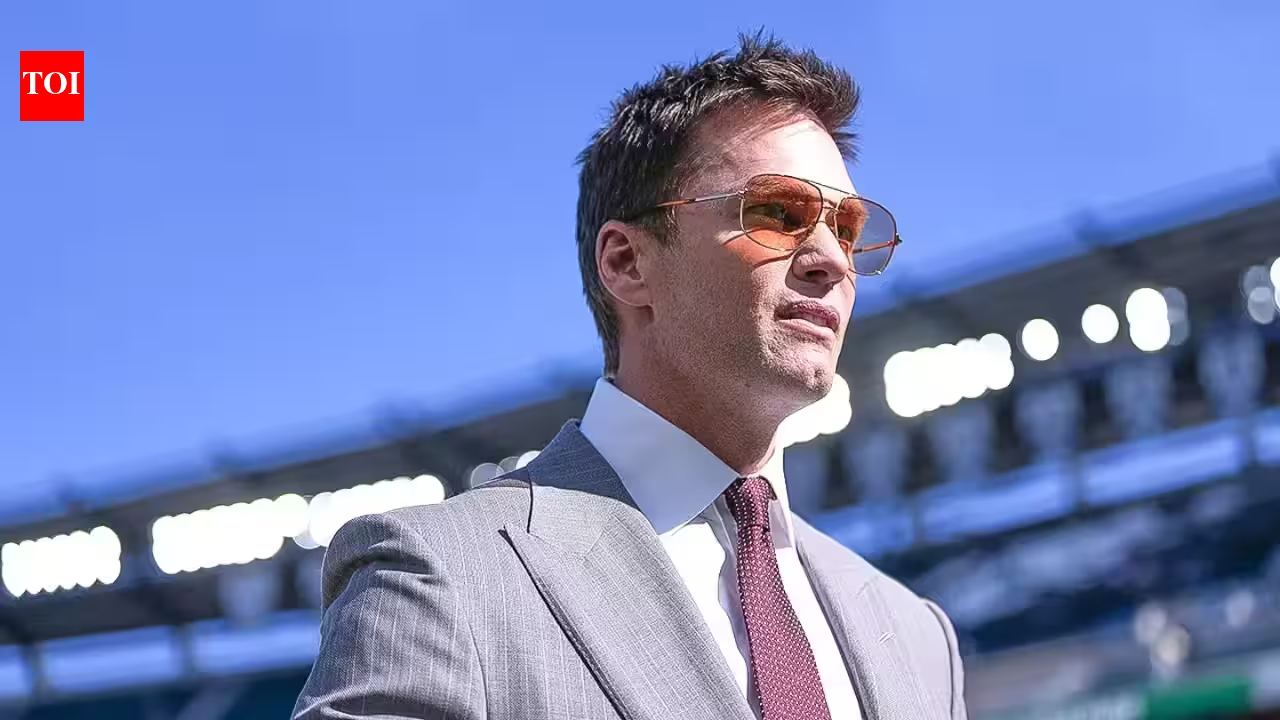
Tom Brady built a career on clutch plays, championship wins and a reputation that made him one of the most recognisable figures in American football. But his name also became linked to one of the biggest financial collapses in cryptocurrency history. In November 2022, FTX filed for bankruptcy, leaving customers unable to access billions of dollars. Brady, who had promoted the exchange, was among the celebrities named in an investor lawsuit. Years later, most claims against the endorsers have been dismissed, but some securities-law claims survived, keeping the legal questions alive.
Tom Brady’s FTX partnership began before the crypto exchange collapsed
Brady’s connection with FTX grew during the cryptocurrency boom, when digital asset companies competed for public attention. The exchange wanted to reach people beyond the world of crypto trading. A familiar face from the NFL offered a direct route to millions of potential customers.In 2021, Brady and his then-wife, Gisele Bündchen, became FTX ambassadors and took equity stakes in the company, according to the lawsuit filed after its collapse. They also appeared in a $20 million advertising campaign. One commercial showed Brady reaching out to people in his contact list, urging them to join the platform with the tagline, “FTX. You In?”The campaign arrived at a time when FTX was expanding its presence across sports and entertainment. Its branding appeared in major sporting partnerships, including the Miami Heat arena and Major League Baseball. Celebrity endorsements helped make crypto feel more familiar to people who might otherwise have been wary of the market.That visibility also created a difficult question after the company failed: what responsibility, if any, should public figures bear when they promote a financial platform that later collapses?For investors who trusted the brand, the celebrity connection was more than a marketing detail. It formed part of the public image that made FTX appear established and credible. However, an endorsement alone does not prove that a celebrity knew about wrongdoing inside a company. That distinction would become central to the legal battle.
FTX’s $8 billion collapse left customers searching for answers
FTX’s downfall came swiftly in November 2022. Once one of the world’s largest cryptocurrency exchanges, it filed for bankruptcy after a liquidity crisis. Customers found themselves unable to withdraw funds, while the company’s finances came under intense scrutiny.The collapse triggered investigations and legal action against founder Sam Bankman-Fried. Prosecutors accused him of fraud involving customer funds. He was later convicted and sentenced to 25 years in prison. The case exposed the risks of placing trust in a fast-growing financial platform without clear safeguards.For many customers, the losses were not abstract figures on a balance sheet. They represented savings, investments and money set aside for major life expenses. Some had moved funds to FTX after seeing its public promotions or believing the company was a safe place to trade crypto.The crisis also raised questions about the role of celebrity marketing in financial products. When a famous athlete appears to support a company, audiences may interpret that visibility as a sign of trustworthiness. Yet celebrity status is not the same as financial due diligence, and investors still face risks when choosing where to put their money.FTX’s collapse turned those concerns into a legal issue, with investors arguing that the people who promoted the platform should also face scrutiny.
Tom Brady and other FTX celebrities faced an investor lawsuit
In November 2022, investors filed a proposed class-action lawsuit in federal court in Miami, naming Brady, Bündchen, Stephen Curry, Larry David and other high-profile FTX endorsers. The complaint alleged that the celebrities helped promote FTX’s yield-bearing accounts, which the plaintiffs claimed were unregistered securities.The lawsuit argued that the endorsements helped attract customers to the platform. Plaintiffs also alleged that the celebrities failed to disclose important details about their compensation and had not carried out proper checks before promoting FTX products. These were allegations, not established findings of wrongdoing.The case sought to hold the promoters financially responsible for investor losses. It also raised a broader legal question: can a celebrity be held liable for promoting a financial product that later turns out to be part of a major fraud?Brady’s involvement drew particular attention because of his enormous profile in American sports. For years, he had been associated with success, discipline and leadership. His FTX partnership placed that public image alongside a company whose collapse would leave customers facing substantial losses.Still, being named in a lawsuit does not mean a person is guilty or liable. The plaintiffs had to establish that the celebrity endorsements met the legal standards required for their claims to proceed. That challenge would shape the case as it moved through court.
FTX lawsuit update: Some claims survived the court’s ruling
The legal battle did not end with the initial filing. In May 2025, a federal judge narrowed the investor lawsuit against Brady and other celebrity endorsers, dismissing 12 of the 14 claims. The court found that investors had not shown the celebrities knew FTX was fraudulent, and that receiving promotional payments alone did not establish a conspiracy.However, the ruling did not dismiss the entire case. The judge allowed claims under Florida law concerning the alleged sale of unregistered securities to proceed, along with a claim under Oklahoma law. The court found it plausible that FTX had relied on influencers to market its products.That distinction matters. The surviving claims did not establish that Brady or the other celebrities committed fraud. Instead, they left unresolved legal questions about whether the endorsements could create liability under state securities laws.Other public figures named in the case included Bündchen, Curry, Shohei Ohtani, Naomi Osaka, David Ortiz, Kevin O’Leary and Larry David. Some defendants, including Shaquille O’Neal and Trevor Lawrence, reached settlements. Those agreements were separate from the claims involving Brady.The ruling marked a significant change in the scope of the lawsuit, but it did not provide a final resolution for every defendant. For Brady, the distinction between dismissed allegations and surviving claims remains essential to understanding the case.The FTX case has become part of a wider debate about the influence of famous athletes in financial advertising. Sports stars can introduce a brand to millions of people in seconds. But when a company sells investment products, that reach can carry consequences beyond ordinary product marketing.For fans, the controversy also raises a personal question: how much trust should a celebrity endorsement inspire? A familiar face may make a platform seem approachable, but it cannot replace independent research into how a financial company operates.The legal proceedings also highlight the difference between public criticism and legal responsibility. Brady’s association with FTX attracted scrutiny after the collapse, but the court’s rulings did not establish that he knew about the exchange’s fraud. The surviving claims concern specific securities-law questions, not a finding that every celebrity promoter participated in wrongdoing.As of mid-2026, the broader FTX celebrity litigation remained active, with no trial date reported. The case continues to test how existing laws apply when public figures promote financial products to large audiences.For Brady, the FTX chapter stands apart from his achievements on the football field. His partnership with the exchange began during a period of crypto optimism, but its collapse turned that endorsement into a lasting part of his public story. For investors, the central concern remains accountability and the recovery of losses. And for the sports world, the case offers a reminder that a celebrity’s influence can extend far beyond the game.