Honor just dropped MagicOS 11 at its Global Developer Conference, and the biggest headline isn’t a single feature — it’s a complete visual overhaul paired with AI that actually does things instead of just suggesting them. The update lands on Magic9 series phones later this month. Here’s what’s changing, who gets it first, and whether it matters for the 100 million-plus Honor users worldwide.
What “Liquid Glass” Actually Looks Like
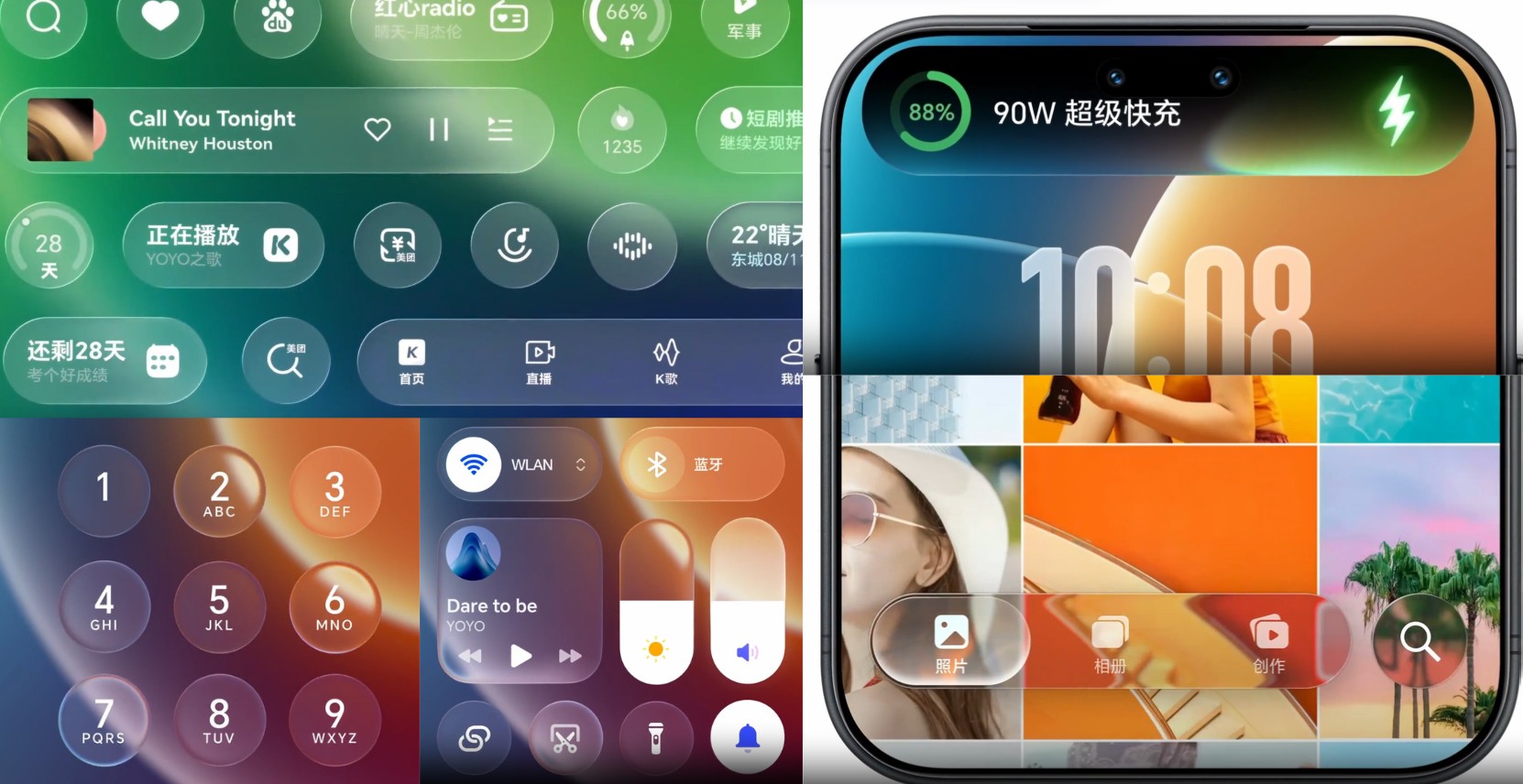
Let’s get the obvious comparison out of the way: yes, Honor’s liquid glass design looks a lot like Apple’s iOS approach. Translucent layers, frosted backgrounds, rounded corners with soft reflections — the influence is clear. But Honor didn’t just copy a stylesheet. The company built the aesthetic on two proprietary engines — Luminous (for visual rendering) and Hummingbird (for animation fluidity) — that make the whole thing run 20% faster than MagicOS 10’s animations.
What that means in practice: every swipe, transition, and app launch has a glass-like ripple effect that responds to your touch position. Pull down the notification shade, and it refracts slightly, as if light were bending through actual glass. Widgets got the same treatment — they sit on translucent cards that shift color depending on your wallpaper.

It’s a bold design decision. Android OEMs have historically competed on features, not aesthetics. Honor is betting that look and feel matter just as much as spec sheets — and honestly, after spending years watching Android skins try to be “different” for the sake of being different, a cohesive visual language is refreshing.
The home screen also introduces customizable tinting. You can shift the overall color temperature of the UI to match your preference — warmer tones, cooler blues, or neutral. As Huawei Central noted in their coverage, the system animations are “noticeably smoother” than MagicOS 10 in side-by-side testing. It’s a small detail, but it’s the kind of personalization that makes a phone feel yours in a way that changing wallpapers alone never does.
Yoyo AI: 1,000 Scenarios, but a Big Caveat
Honor’s Yoyo AI assistant received the biggest functional upgrade. It now covers 1,000+ task scenarios — up from roughly 300 in MagicOS 10 — and integrates with over 10,000 third-party AI services.

The headline feature is long-sequence task execution. Honor claims Yoyo can handle up to 100 steps in a single chain of commands. In their demo, a user asked the assistant to “book a restaurant near my office for Friday, invite my team via group chat, add it to my calendar, and set a reminder for Thursday to confirm.” Yoyo handled all four steps without the user touching the screen between commands.
That’s genuinely impressive if it works as shown. The catch? Most of those 10,000 third-party AI integrations are currently China-only. Honor’s approach to AI agents mirrors a broader trend among Chinese manufacturers — building AI ecosystems that are deeply integrated with domestic apps like WeChat, Alipay, and Douyin, but less useful outside that market.

For global users, Yoyo’s capabilities will depend on how quickly Honor opens the platform to international developers. The core AI features — smart suggestions, photo editing, text rewriting — work everywhere. But the 100-step agentic task chains? You’ll need apps that support Honor’s API, and that list is thin outside China right now.

I think this is the pattern we’ll see from every Android manufacturer in 2026. Build the AI framework first, then fill in the ecosystem. The question isn’t whether Yoyo is good — it’s whether Honor can attract enough global app developers to make it useful in London, Lagos, and Los Angeles, not just Shanghai.
Storage Space 2.0: The Feature Nobody Talks About (But Everyone Needs)
This might be MagicOS 11’s most practical improvement. Storage Space 2.0 uses lossless compression to free up to 60GB of space on your device — without deleting a single photo, app, or file.
The system identifies files that aren’t being actively used — old downloads, cached data, duplicate photos, redundant app resources — and compresses them in the background. When you need them, they decompress instantly. Honor says the process is invisible to the user: files open at the same speed, with no visible quality loss.
For anyone who’s ever stared at a “Storage Full” notification while trying to take a photo, this is a genuine quality-of-life improvement. 60GB is meaningful — that’s roughly 15,000 photos, 60 hours of HD video, or 120 apps you don’t have to delete.
It’s worth noting that Apple and Samsung both offer cloud-based storage optimization, but those require active internet connections and subscription fees. Honor’s approach works entirely on-device, for free. It’s a smart positioning move for a brand that competes heavily on value in markets where cloud storage costs are a real concern.
Cross-Brand Sharing: Playing Nice With Everyone
MagicOS 11 introduces file sharing that works across brand lines — including Apple devices. You can beam files to iPhones, Oppo, Vivo, and Xiaomi phones without installing a separate app.

This is a bigger deal than it sounds. In markets like India, Southeast Asia, and parts of Europe, friend groups regularly mix Android brands and iPhones. AirDrop only works Apple-to-Apple. Samsung’s Quick Share recently expanded but still has friction with non-Samsung Androids. Honor is positioning itself as the brand that doesn’t force you into an ecosystem prison.
The protocol uses a combination of Bluetooth LE for discovery and Wi-Fi Direct for transfer, so speeds should be comparable to AirDrop — much faster than Bluetooth alone.
For Honor, this is a strategic play. If your Honor phone is the one device that talks to everyone else’s, you’re less likely to switch away from it. It’s ecosystem lock-in through compatibility, not exclusion. Clever.
Which Devices Get It — and When
MagicOS 11 launches on the Magic9 series later in September 2026. Public beta enrollment opened immediately after the developer conference, covering 18+ devices, including:
- Magic8 series (Magic8, Magic8 Pro)
- Magic V6 (the foldable)
- Honor 600 series (600, 600 Pro)
Additional devices will join the beta through October and November 2026. If past Honor update cycles are any indication, stable rollouts for non-flagship devices will stretch into early 2027.

To check whether your phone qualifies, head to Settings > System > Software Updates and look for a beta enrollment banner. Honor typically requires at least 50% battery and a recent backup before installation.
One important note: beta software is beta software. Expect occasional app crashes, battery drain fluctuations, and the odd visual glitch in the first few weeks. If your Honor phone is your only device, you might want to wait for the stable release unless you’re comfortable troubleshooting.
How MagicOS 11 Stacks Up Against the Competition
The Android 17 skin race is heating up. Samsung’s One UI 9 prioritizes AI integration and refined aesthetics. Google’s Pixel experience focuses on clean software and rapid updates. Xiaomi’s HyperOS 3 goes all-in on cross-device connectivity.
Honor’s angle with MagicOS 11 is trying to do all three at once — good design, useful AI, and cross-brand compatibility. Whether they pull it off depends on execution in the coming months, particularly around international AI service availability.
What I find most interesting is Honor’s willingness to let users share with Apple devices — something no other Android OEM has fully embraced. It signals confidence in the product rather than fear of the competition, and that’s a mindset shift worth watching.
The liquid glass design is gorgeous. The AI upgrades are ambitious. The storage compression is genuinely useful. Whether MagicOS 11 sticks the landing globally will come down to one thing: app developer support for Yoyo’s agentic capabilities outside China. If Honor cracks that, they’ve got a serious contender.
FAQs
Does MagicOS 11 work with Google Play Services outside China?
Yes. Honor’s global devices ship with full Google Mobile Services (GMS), including Play Store, Gmail, and Maps. MagicOS 11 doesn’t change this — it layers Honor’s own features on top of Android 17 with Google services intact.
Can I roll back to MagicOS 10 if I don’t like the beta?
Honor allows rollbacks during the beta period, but the process erases all data on your device. You’ll need to back up everything before installing the beta and keep that backup accessible in case you want to revert.
Will MagicOS 11’s AI features use my personal data for training?
Honor states that Yoyo processes most AI tasks on-device. For cloud-based tasks, data is encrypted in transit and not used for model training. However, third-party AI integrations may have their own privacy policies — check each app’s terms individually.
How does the 60GB storage savings compare to cloud storage subscriptions?
At roughly $1/GB per year on most cloud platforms, 60GB of free on-device recovery is equivalent to saving around $12–$36 annually in cloud fees. It won’t replace cloud backup entirely, but it eliminates the most common “storage full” frustrations for many users.
Is MagicOS 11 available for Honor foldable phones?
Yes. The Magic V6 is on the beta list. Honor typically prioritizes foldable updates because the larger screen benefits most from UI redesigns — more space for liquid glass widgets, split-screen multitasking, and the new tinting system.