
What we love
- Smart software changes
- Nano-texture finish on the internal display feels great
What could be improved
- Very expensive
- Cameras not on par with Apple’s Pro iPhones
Over a long enough period of time, even the most exciting new tech becomes kind of boring. I tried my first foldable phone over seven years ago. The original Samsung Galaxy Fold, back at a Berlin a trade show in 2019. At the time, there was nothing like it. It had very obvious compromises, but it was undeniably exciting.
Since then, I’ve tested multiple phones each year. I’ve slowly seen them improve and become undeniably better products, but also less exciting. Part of this is the nature of reviewing, but it’s also the kind of normalisation you expect when a category has been around for seven years.
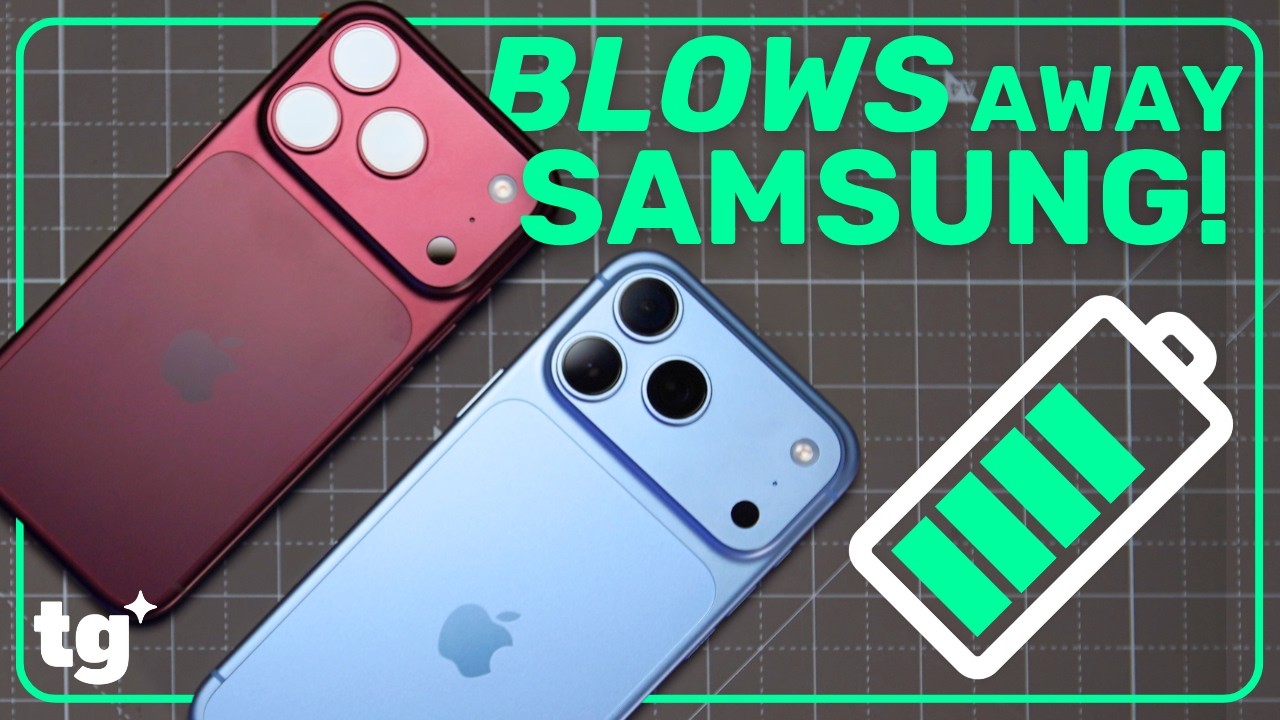
Enter the iPhone Duo. I got a chance to spend a short amount of time with Apple’s first foldable ahead of its launch in late October, and it brought back that exciting feel. Not because it folds, but because of how Apple’s approached software for a folding phone.

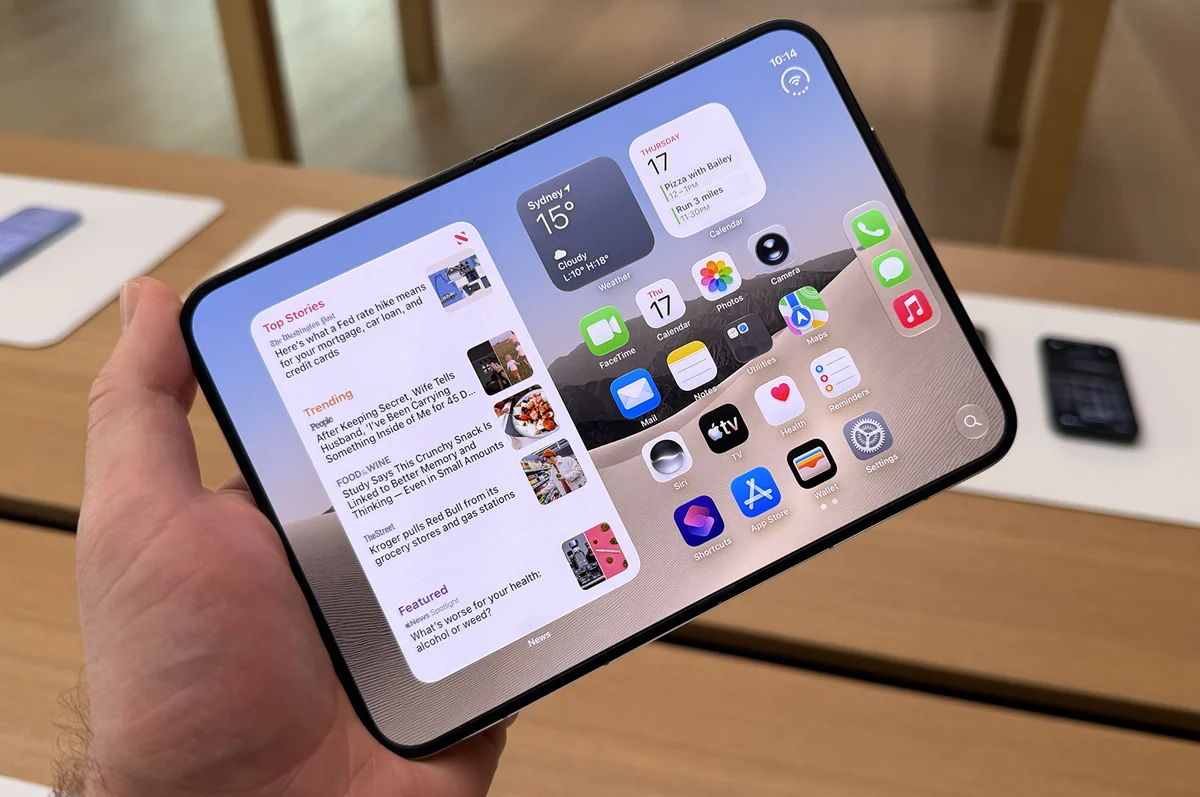
Apple has rethought iOS for the iPhone Duo in a way that feels considered, fresh, and surprisingly intuitive. The big change is that the dock and primary controls for apps now sit on the right of the screen. On the external display, this neatly addresses the fact the phone is asymmetrical by not extending the rest of the display into that section on the screen. On the internal display, having key functions where you’re already holding the phone is a win for usability.
If you’ve got two apps open in split-screen, you’ll get controls for the app on your left hand on the left of the phone. Multitasking is also super natural if you’ve ever used an iPad. Dragging an app from the dock when you’ve already got one open will open it on the other part of the display. If you want to full-screen an app again, you can drag out from the centre. The main caveat here is it doesn’t seem like you can adjust the sizing of the app – they’re either only full screen or half-screen; there’s no in between.
I’m also cautiously optimistic about developers properly supporting the iPhone Duo. Apple has a way of getting developers onboard with new ideas that isn’t as common with Android. As my colleague Fergus wrote earlier this year, there are very few games optimised for Android foldables. While we can’t take a few high-profile demos – like the redesigned Netflix and Zoom – as confirmation that more developers will go as far, past precedent gives me hope.

The iPhone Duo’s hardware is nice too, and feels like Apple’s usual high-end fare. It’s heavier than other foldables, but lighter than iPad mini (and has significantly less bezel). The Galaxy Z Fold 8 already convinced me the passport-style form-factor is objectively correct for foldables, and my time with the iPhone Duo reinforced that.
The matte nano-texture finish on the internal display is really nice, and feels appropriately premium for a display that isn’t traditional glass. You can’t feel the crease at all, but you can see it at aggressively off-axis angles. This shouldn’t be an issue for day-to-day use. The iPhone Duo is also up to snuff on durability credentials: it is rated IP68 for dust and scratch resistance, putting it on par with the Pixel 11 Pro Fold, and ahead of Samsung’s foldables, which are only IP48.

Of course, Apple hasn’t escaped some of the usual caveats that come with foldable phones. While I didn’t get to properly test the iPhone Duo’s cameras, the configuration has just two main lenses: a primary and an ultra-wide. You miss out on the telephoto lens you get on Apple’s Pro iPhone models. And even though the ultra-wide is the same as what you get on the iPhone 18 Pro, specs suggest the primary is closer to what Apple uses in the iPhone 17e.
A $3,499 starting price also makes the iPhone Duo the most expensive phone on the Australian market when it comes to base models. Not only is it more expensive than rival foldables, that kind of money buys you an iPhone 18 Pro and iPad mini with change to spare.
Like other foldables, the iPhone Duo becomes a question of if you’re willing to pay a premium to replace two devices with a single one. While it won’t be the correct choice for everyone, Apple’s classic approach of tightly integrated hardware and software feels like it will be enough to convince some
Alex Choros

Read full bio