
In January last year, China’s generative artificial intelligence model DeepSeek stunned the world. Despite strong U.S. sanctions that barred it from using Nvidia’s high-end chips, the model delivered performance on par with ChatGPT. Chinese memory chipmaker CXMT vaulted to the top of China’s market capitalization rankings on its first day of trading in July this year. Backed by state support, China is emerging as a new power threatening South Korea, Taiwan and the United States in advanced industries such as semiconductors.
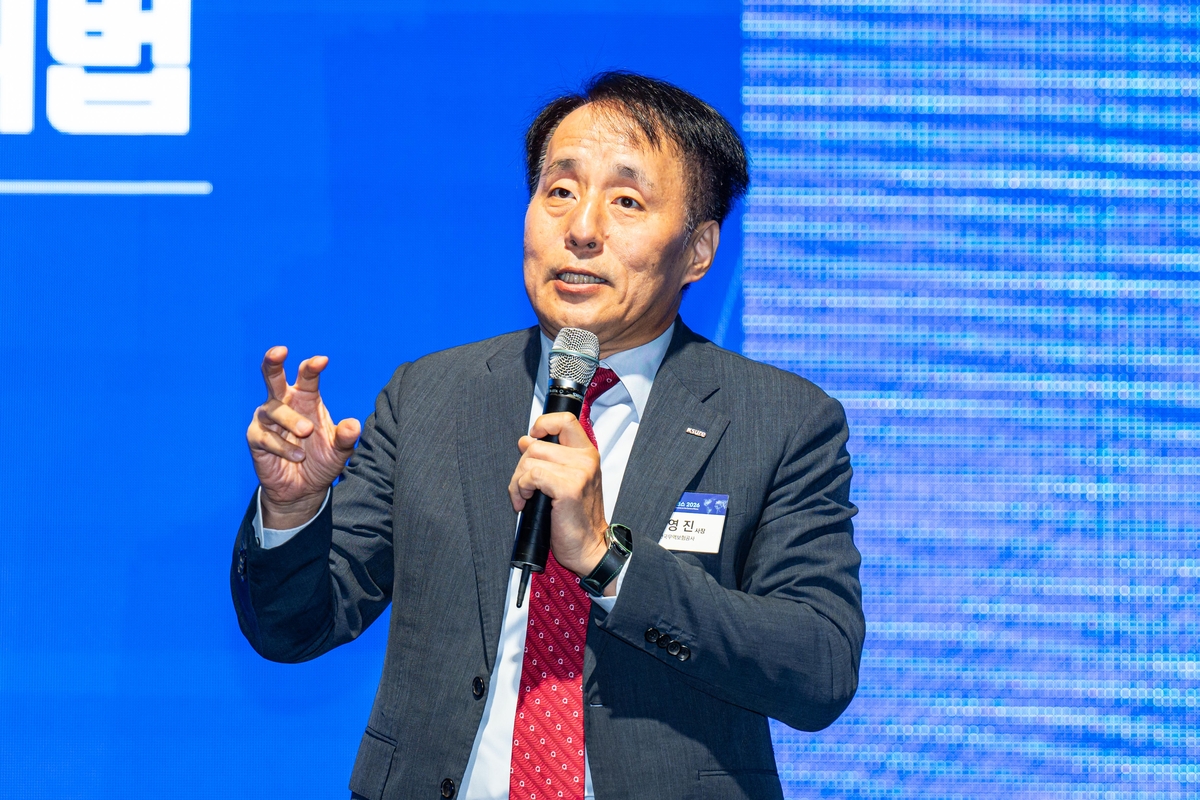
At the Future Conference 2026, hosted by Seoul Economic Daily on the 17th, speakers agreed that Korea should treat the U.S.-China technology rivalry and Korean investment in the United States as an opportunity to raise the qualitative competitiveness of its industries. In a keynote address, Jang Young-jin, president of the Korea Trade Insurance Corporation, said, “Right now, U.S.-China competition is holding off China’s pursuit,” adding that “following the United States, Europe is also showing moves to check China’s technological advances and market entry.” But he projected that within five to 10 years, China’s level of science and technology will surpass that of the United States. In other words, little time remains in the window to build up Korea’s industrial competitiveness.
Another speaker urged Korea to use its investment in the United States as a chance to accumulate capabilities that upgrade its manufacturing and financial industries. Kim Se-jin, head of the Trade and Industrial Policy Center at Shin & Kim, said, “If our companies expand their production base into the United States, a larger window of opportunity opens,” and added, “Rather than looking only at the financial returns of the investment, we must consider how to leave it behind as an asset of our own industry.”
As these speakers advised, the government should turn the U.S.-China contest for supremacy and the $350 billion investment in the United States into a chance to lift the competitiveness of Korean companies and the country itself. Large investment projects, such as acquiring a stake in U.S. nuclear power company Westinghouse, could become a turning point for securing exclusive advanced technology and a large customer base. Rather than being dragged along one-sidedly by U.S. pressure to invest, Korea needs a shift in thinking. At home, it must ease regulations that constrain businesses, including the so-called yellow envelope law on labor disputes. Only then can companies pursue overseas mergers and acquisitions or large-scale investment. With China mounting an all-out push in future industries, hesitating as it does now leaves the future of the Korean economy far from assured.