![[News] China Makes Breakthrough in Chip Technology, Paving the Way for Lithography Advancements](https://news.charm-retirement.com/wp-content/uploads/2025/11/China-chipmaking-FREEPIK-20250108-624x350.jpg)
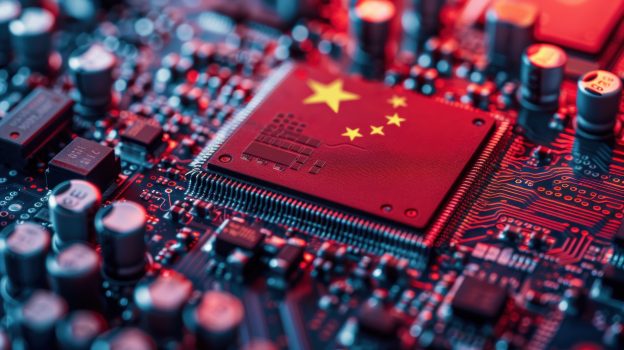
China is making further inroads into a critical semiconductor materials supply chain, with domestically produced high-purity quartz now qualifying for use in chip production. According to Tom’s Hardware, Jiangsu Pacific Quartz, a Chinese high-purity quartz (HPQ) producer, says quartz products made from its own high-purity quartz sand have passed qualification at a leading Chinese DRAM manufacturer for use in 300mm wafer production. Analysts cited by the report believe the customer could be Chinese DRAM maker CXMT.
The qualification is particularly significant because it marks further progress in localizing a key part of China’s semiconductor materials supply chain. As the report notes, the chain starts with Pacific Quartz’s purified high-purity quartz sand, which is then processed into semiconductor furnace-tube materials for use in DRAM wafer production.
Pacific Quartz has already established a presence in the semiconductor equipment supply chain. According to the report, the company has supplied Lam Research and Tokyo Electron with ultra-high-purity quartz consumables since 2019–2020, including LPCVD diffusion tubes, wafer boats, quartz ingots, quartz plates, and high-purity quartz tubes. Quartz used in semiconductor process equipment typically has a purity of around 4N5 to 5N, or approximately 99.995% to 99.999% SiO₂, indicating that Pacific Quartz’s products can meet the requirements of semiconductor manufacturing tools.
The purity of these quartz components is critical to semiconductor production. As the report explains, furnace tubes are typically made from roughly 5N-class high-purity fused quartz, with stringent limits on electrically active and mobile contaminants. Such impurities can migrate onto or into hot silicon wafers, altering transistor characteristics, creating defects, and ultimately lowering yield.
China Looks to Close Its Remaining High-Purity Quartz Gap
Still, the report points out an important limitation. Pacific Quartz’s qualified components are used in semiconductor production equipment after the silicon wafer itself has been made. Producing the wafer requires another type of high-purity quartz application: silicon ingots are grown in crucibles made from high-purity fused quartz, typically exceeding 99.999% SiO₂, with much tighter limits on individual critical contaminants.
While Pacific Quartz can produce quartz components for semiconductor manufacturing equipment, the report notes that its high-purity quartz is still not suitable for crucibles used to grow the 9N–11N-purity silicon required for semiconductor wafers. For now, quartz of the required quality can only be obtained in significant volumes from Sibelco and The Quartz Corp., which operate in Spruce Pine, North Carolina, while Russian Quartz LLC can produce more modest volumes.
Meanwhile, China is also exploring synthetic quartz as another route to reduce its reliance on imported high-purity raw materials. According to Jimu News, a Wuhan University of Technology research team has completed pilot-scale validation of a hydrothermal process that produces synthetic quartz at a stable purity of 5N7, or 99.9997%, with yields exceeding 85%. The material’s key impurity levels reportedly meet requirements for advanced IC packaging and optical-fiber preforms, though most synthetic quartz projects in China have yet to achieve large-scale, low-cost industrial production.
Read more
(Photo credit: FREEPIK)