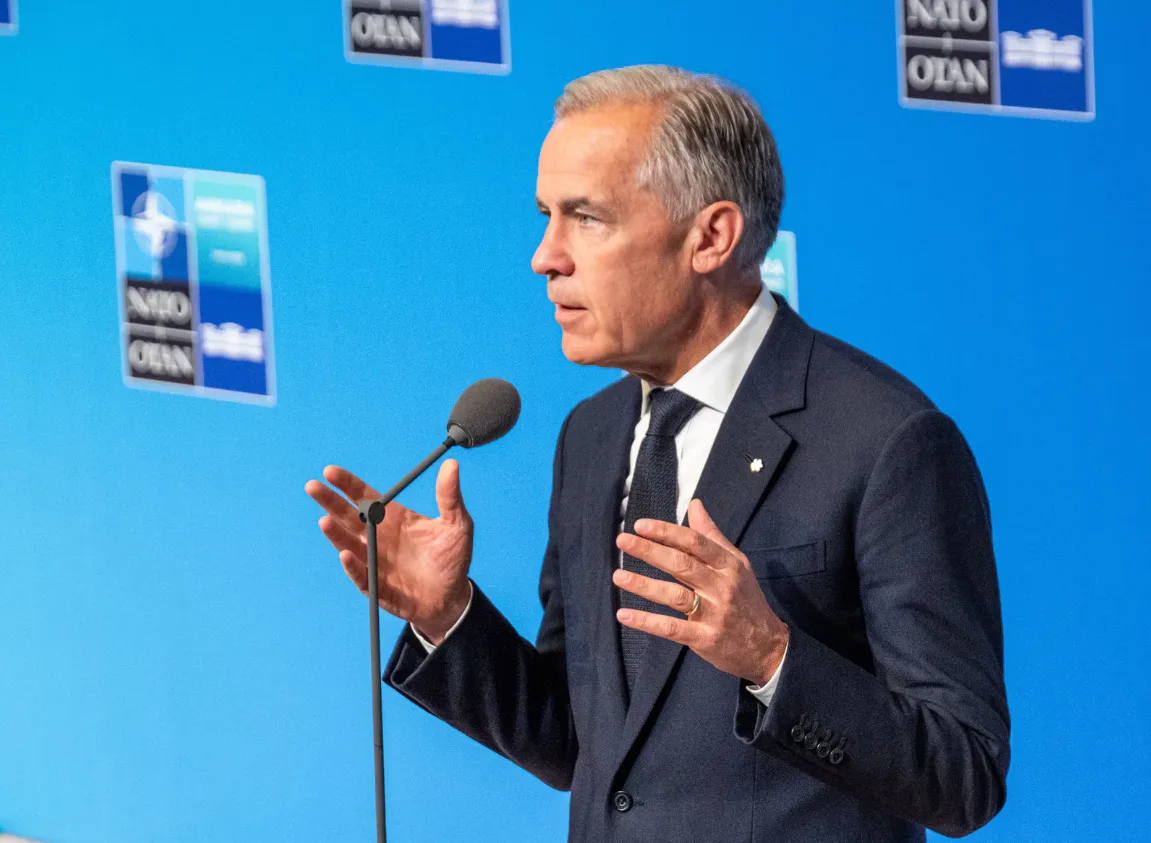
Canadian Prime Minister Mark Carney is seeking closer ties with the European Union and is exploring the possibility of Canada acquiring the status of an “associate member” of the bloc, UNN reports, citing The Wall Street Journal and Reuters.
Details
The EU, which previously showed no flexibility on membership rules, is prepared to consider the idea of granting Canada associate-member status — a format that still needs to be developed, WSJ writes, citing unnamed EU and Canadian officials.
The Embassy of Canada in Brussels and representatives of the European Commission did not respond to separate requests for comment.
Canada’s escalating trade war with the United States has given additional urgency to the country’s strategic pivot toward other trading partners.
Relations between Ottawa and Washington deteriorated sharply after Donald Trump returned to the White House last year due to disagreements over trade and other issues. The trade dispute led to the imposition of tariffs affecting tens of billions of dollars’ worth of cross-border trade.
Canada and the EU are discussing measures that would allow the free movement of Canadian goods, services and professionals involved in strategic supply chains — in areas such as energy, artificial intelligence, defense and critical-mineral extraction — which would effectively mean expanding the EU’s borders, WSJ notes.
The parties are also negotiating the laying of undersea cables, the joint construction of data centers, the creation of cloud storage facilities and new satellite networks, as well as infrastructure for supplying Canadian energy resources to the EU, the newspaper reports.
Carney regularly discusses with a number of EU leaders, including French President Emmanuel Macron, the possibility of granting Canadians the right to live and work in the European Union without visas, WSJ writes, citing two unnamed officials familiar with the situation.
Macron’s press service did not respond to a request for comment.
At the same time, the French president’s administration confirmed that on September 20, Macron will meet with Carney in the French territory of Saint Pierre and Miquelon — a group of islands off Canada’s Atlantic coast.
The visit will be the Canadian prime minister’s first official trip to the archipelago and “symbolizes the strength of the ties that bind our two countries,” the Élysée Palace said. However, any initiatives to strengthen ties between Canada and the EU will likely face difficulties — as demonstrated by the experience of implementing a more modest trade agreement, which met fierce resistance in Europe.
More than ten years have passed since this agreement was concluded, and nine since its provisional entry into force, yet a number of EU countries have still not ratified it.