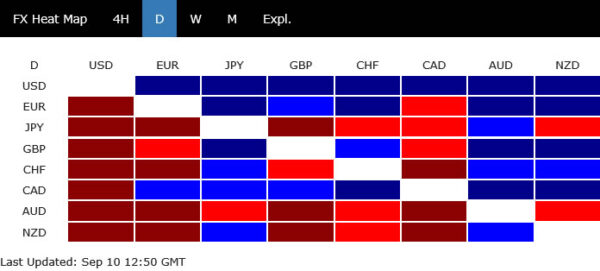
Dollar is finally rallying against every major even as Yen, Aussie and Euro all carry their own hawkish domestic stories this week
What’s happening: Dollar is rising against every major currency tracked on the daily Heat Map as the US 10-year Treasury yield breaks 4.9% and Brent climbs above $105, after Houthi militants seized Yemen’s port city of Mocha and advanced toward the Hanish islands, putting Bab el-Mandeb, a second strategic oil chokepoint, into focus alongside the already-impaired Strait of Hormuz.
Why it matters: Yesterday’s question was why Dollar couldn’t rally even as the 10-year broke to a three-year high. Today, Yen (a sharply repriced hawkish BoJ outlook), Aussie (more than 70% odds of a September RBA hike) and Euro (a hawkish ECB hike to 2.50% with upgraded inflation and growth forecasts) all carried their own reasons to strengthen this week, yet all three weakened against Dollar. That pattern shows the common US yield/oil factor now dominates the bilateral narratives, though one session isn’t enough to say the conventional relationship has fully reasserted itself.
Houthi Advance Brings a Second Chokepoint Into Focus
Iran-aligned Houthi militants seized Yemen’s port city of Mocha on Thursday, according to Yemeni government military sources, while fighting also spread toward the strategic Hanish islands. The development increases the threat around Bab el-Mandeb, the southern entrance to the Red Sea.
The significance extends beyond another escalation in the Middle East conflict. With the Strait of Hormuz already severely impaired and having previously carried about a fifth of global oil supplies, Saudi Arabia has been relying more heavily on Red Sea export routes as an alternative. Greater Houthi leverage around Bab el-Mandeb therefore puts another important shipping route under pressure.
The fighting remains unresolved. Yemeni government forces are relocating toward Dhubab, opposite the island of Perim, while control of the surrounding coastline and islands remains contested. The next question is whether the escalation translates from higher geopolitical risk into actual disruption of Red Sea shipping.
Diplomacy is also becoming more complicated. Pakistan conveyed a Saudi warning to Iran to restrain the Houthis, while Tehran responded that “Iran does not control the Houthis.” That could reflect genuinely limited Iranian leverage or an effort to distance Tehran from the escalation. Either interpretation raises questions over whether a de-escalation process centered on Iran would be enough to contain the Red Sea threat.
Yemen Escalation at a Glance
- Houthi militants seized Mocha Thursday and advanced toward the Hanish islands, per Yemeni government military sources.
- Threat is rising around Bab el-Mandeb, the Red Sea’s southern entrance.
- Saudi Arabia has leaned more heavily on Red Sea export routes since Hormuz, which previously carried about a fifth of global oil supplies, was already impaired.
- Yemeni government forces are relocating toward Dhubab, opposite the island of Perim; control of the coastline and islands remains contested.
- Pakistan conveyed a Saudi warning to Iran; Tehran responded that “Iran does not control the Houthis.”
Brent Above $105 Adds to Treasury Pressure
The latest escalation pushed Brent above $105, while WTI broke through $100. But oil is adding to a Treasury selloff already in progress rather than creating it.
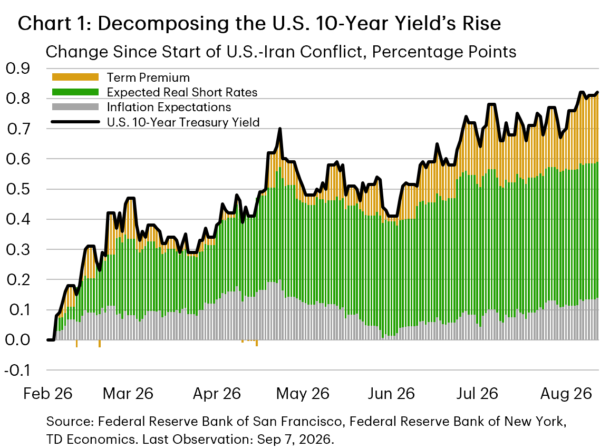
The US 10-year yield has now broken 4.9%, extending the breakout from earlier this week. The 2-year is above 4.5%, while the 30-year is trading near levels not seen for roughly two decades. Wednesday’s Treasury buyback announcement failed to provide the relief some investors had expected, keeping attention on Treasury supply and the compensation investors are demanding to hold longer-duration debt.
The oil surge adds another inflation impulse on top of those pressures. If higher energy prices persist, investors have an additional reason to demand inflation compensation just as long-end yields are already pushing through major resistance.
For Dollar, that matters because the response has changed from Wednesday. Higher yields initially failed to produce the conventional currency reaction. Today, Dollar is finally moving in the same direction.
Thursday’s Yield & Oil Levels
- Brent: above $105; WTI: above $100.
- US 10-year yield: broke 4.9%.
- US 2-year yield: above 4.5%.
- US 30-year yield: near levels not seen for roughly two decades.
- Wednesday’s Treasury buyback announcement failed to provide relief.
Dollar Strength Overrides Hawkish JPY and AUD Stories
The breadth of Dollar’s rebound is notable. USD is stronger against Euro, Yen, Sterling, Swiss Franc, Canadian Dollar, Aussie and Kiwi on the daily Currency Heat Map.
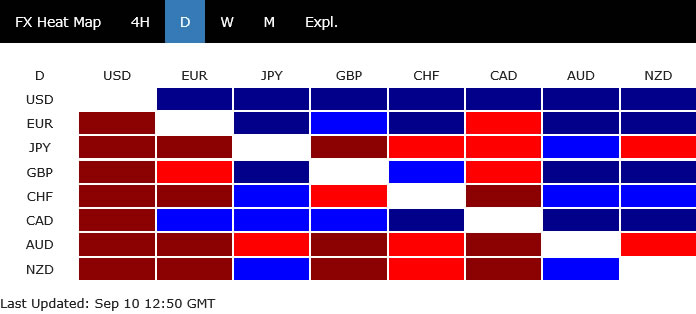
Yen offers particularly useful evidence. It entered Thursday with one of the strongest domestic policy stories of the week after markets sharply repriced the BoJ outlook. Yet Yen reversed broadly, including against Dollar.
Aussie tells a similar story. Markets now assign more than 70% probability to a September RBA hike, while the forecasters discussed earlier this week have converged on another increase even though they disagree over September or November. AUD nevertheless weakened against Dollar and most of the other majors tracked.
When currencies carrying two of the week’s strongest domestic tightening stories both lose to Dollar, the common US factor deserves greater weight than the bilateral narratives. The yield-Dollar divergence has narrowed, though one session is not enough to establish that the conventional relationship has fully reasserted itself.
Hawkish ECB Outcome Still Fails to Lift Euro
The ECB decision reinforces the same hierarchy. The Governing Council raised the deposit rate by 25bp to 2.50%, while its September projections revised headline and core inflation higher for 2027 and 2028. Growth forecasts for 2026 and 2027 were also upgraded.
That was a hawkish outcome in its own right. Yet Euro still weakened against Dollar.
The reaction should not be interpreted as evidence that the ECB decision was dovish or irrelevant. Rather, it shows that today’s Dollar and US yield move was strong enough to dominate a policy development that would otherwise have provided support for Euro. Attention now turns to the details from ECB President Christine Lagarde’s press conference and how markets reassess the rate path after the new projections.
Hawkish Domestic Stories vs. Thursday’s Dollar Reaction
| Currency | This Week’s Domestic Story | Reaction vs. Dollar |
|---|---|---|
| JPY | BoJ outlook sharply repriced hawkish | Reversed broadly, weaker vs. Dollar |
| AUD | More than 70% probability of a September RBA hike | Weakened against Dollar and most other majors |
| EUR | ECB hiked 25bp to 2.50%, upgraded inflation and growth forecasts | Weakened against Dollar |
Related Coverage
US Data Deep Dive
US PPI Rises 0.4% M/M as Energy Pressure Builds — producer prices accelerated to 5.4% y/y with energy driving most of the goods increase, though underlying monthly inflation eased slightly.
US Jobless Claims Edge Lower to 206k, Showing Little Sign of Labor-Market Deterioration — both claims figures and their four-week averages declined, showing little evidence of unemployment-benefit demand deteriorating.
Central Bank Deep Dives
ECB Hikes to 2.50% as Higher Inflation Meets Stronger Eurozone Growth — the full policy statement, with inflation described as “well above target for an extended period.”
BoJ’s Masu Says Further Hikes Are Needed to Avoid Being Forced Into Rapid Tightening Later — the case for pre-emptive BoJ tightening, with energy, Yen and AI-related pressures all adding to the risk.
FX & Rates Context
Markets Now Put RBA September Hike Above 70% — How Far Can AUD/NZD Run? — the background to today’s AUD divergence, with AUD/NZD having broken its May high on a widening Australia-New Zealand policy gap.
US 10-Year Yield Breaks Three-Year High — Why Can’t the Dollar Rally? — yesterday’s piece on the divergence that today’s session is now testing.
FAQ
Why is Dollar suddenly rallying against every major currency?
The common US yield and oil factor, the 10-year breaking 4.9% and Brent above $105, is dominating bilateral currency narratives. Yen, Aussie and Euro all carry their own hawkish domestic stories this week, yet all three still weakened against Dollar, suggesting the US-wide factor currently matters more than any single central bank’s story.
Does the ECB’s hawkish hike mean the decision was a dud for Euro?
No. The reaction shows today’s Dollar and US yield move was strong enough to override a policy backdrop that would otherwise have supported Euro, not that the ECB outcome was dovish or irrelevant. Watch Lagarde’s press conference for how markets reassess the rate path after the upgraded inflation and growth forecasts.
Has the yield-Dollar divergence from earlier this week been resolved?
Only partially. Thursday’s broad Dollar strength narrows the divergence questioned in Wednesday’s report, but one session isn’t enough to confirm the conventional yield-Dollar relationship has fully reasserted itself. Whether Brent, the 10-year and Dollar keep moving together is the next test.
Key Takeaways
- Dollar rose against every major currency tracked Thursday as the US 10-year Treasury yield broke 4.9% and Brent climbed above $105.
- Houthi militants seized Yemen’s Mocha and advanced toward the Hanish islands, raising the threat to Bab el-Mandeb as a second oil-shipping chokepoint alongside the already-impaired Strait of Hormuz.
- Yen, Aussie and Euro all carried hawkish domestic stories this week, a repriced BoJ outlook, more than 70% odds of a September RBA hike, and a 25bp ECB hike to 2.50% with upgraded forecasts, yet all three weakened against Dollar.
- Wednesday’s Treasury buyback announcement failed to relieve the selloff, with the 2-year above 4.5% and the 30-year near two-decade highs alongside the 10-year’s break above 4.9%.
- One session of broad Dollar strength narrows but does not resolve the yield-Dollar divergence questioned earlier this week; sustained follow-through is still needed.
What to Watch Next
Three tests now stand out. First is whether Brent can sustain its break above $105, particularly if the Houthi advance starts affecting actual Red Sea shipping rather than only risk pricing. Second is whether the 10-year can hold above 4.9% and challenge 5%, extending the Treasury breakout. Third is whether Dollar can follow through on Thursday’s broad rebound.
If yields remain at multi-year highs and Dollar continues strengthening, the relationship questioned earlier this week will look more conventional again. If Brent and Treasury yields extend higher while Dollar stalls, the divergence will quickly return to focus.
For now, Thursday has produced a much clearer cross-market alignment: oil risk has expanded, Treasury yields have broken further higher, and Dollar is finally responding across the board.