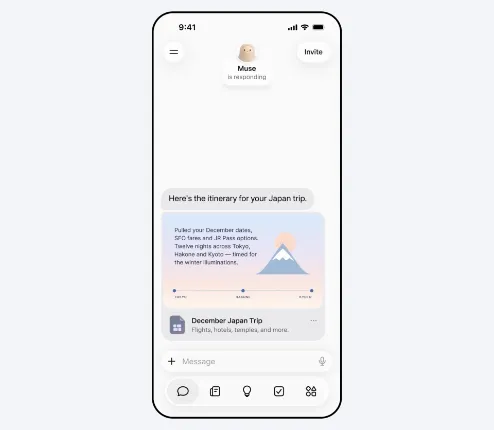
Meta has introduced Muse, a personal AI agent designed to help users manage tasks, work toward goals, and receive suggestions based on their preferences. Muse runs on Muse Secure VM, a dedicated virtual machine that houses the agent and a user’s data.
The agent is designed to work through conversational interactions in the Muse app and WhatsApp. Users can give Muse tasks such as sending emails or booking travel. For larger goals, it can create a personalised plan, coordinate time and resources, open a browser, fill out forms and negotiate on a user’s behalf.
Muse can continue working on longer tasks after the app is closed and return when a change occurs or when user approval is required, such as before sending an email or completing a purchase.
For payments, the agent can use Link, built by Stripe. It is the first AI agent covered by Link’s purchase protections, which include coverage for damaged or lost items, price drops, no-fee returns, and a return guarantee on eligible purchases. Link’s wallet for agents generates a one-time-use card to keep a user’s actual card details hidden during online purchases. Support for Shop Pay is planned, along with 1Password integration to allow Muse to use existing logins.
/socialsamosa/media/post_attachments/322fc9c1-037.png)
Muse can also retain information that users have shared with it and use that context for future suggestions. For example, it can turn a recipe saved on Instagram into a grocery list, suggest a menu for a dinner party, and account for guests’ dietary restrictions when preparing invitations.
/socialsamosa/media/post_attachments/92e1b660-19e.png)
The agent runs on a dedicated computer in the cloud through Muse Secure VM, which stores the agent, user data, and credentials for connected services.
A separate Sentinel agent operates on the same machine at the system level. Muse cannot access the internet unless Sentinel approves the activity, and it can request user permission when required.
The agent does not have visibility into users’ passwords or payment details. Credentials shared by users are stored securely so Muse can use them without seeing them, including passwords entered by users directly in a browser.
The agent asks for user approval before sensitive actions such as sending emails or making purchases. It also provides an audit trail showing actions it has completed and plans to take.
Users can choose which apps Muse connects to and define the level of access for each service. For email, for example, they can decide whether Muse can only read messages or can also send emails on their behalf. Access can be changed or a service can be disconnected at any time.
Users can also opt out of having their Muse interactions used to train Meta’s AI models. Conversations with the agent and data stored in the VM are not shared with its advertising systems. Users can also ask the agent to forget specific information it has retained.
Later this year, the company plans to introduce Muse Confidential VM. Under the system, the entire virtual machine, including user data and conversations with the agent, will be encrypted using a key held only by the user, preventing Meta from accessing the contents.
Muse is rolling out in the US on iOS, Android and muse.ai, with support for AI glasses planned. The service will be free for most use cases, with subscription plans for users who want additional capabilities.