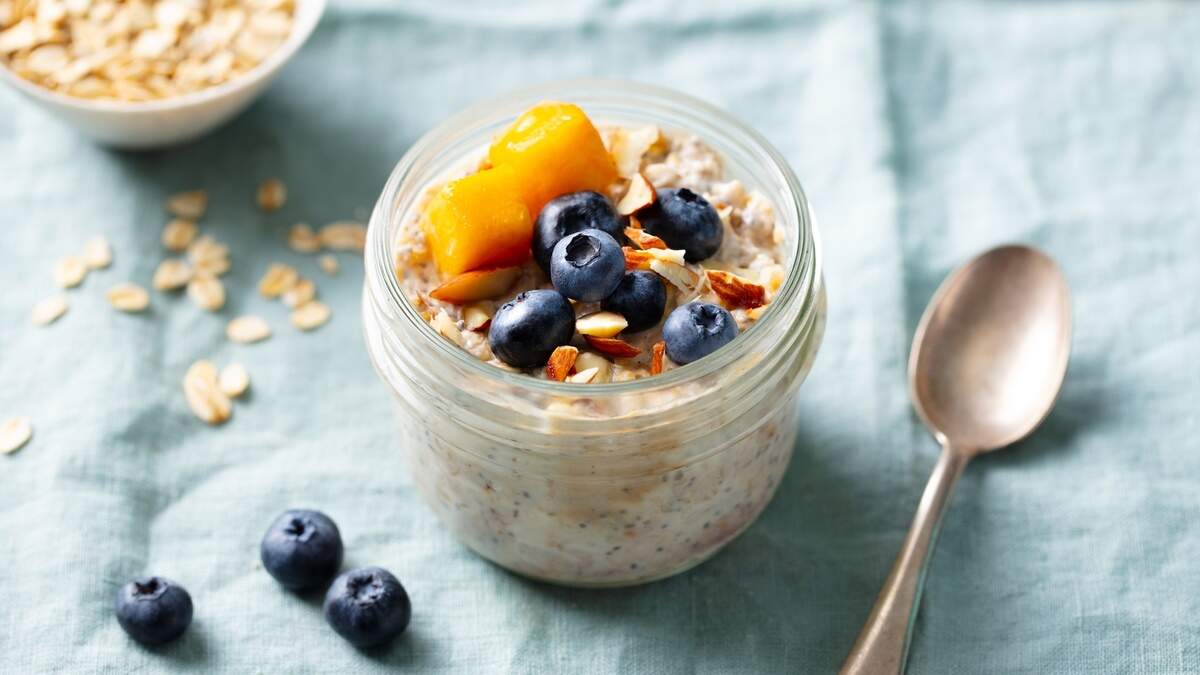
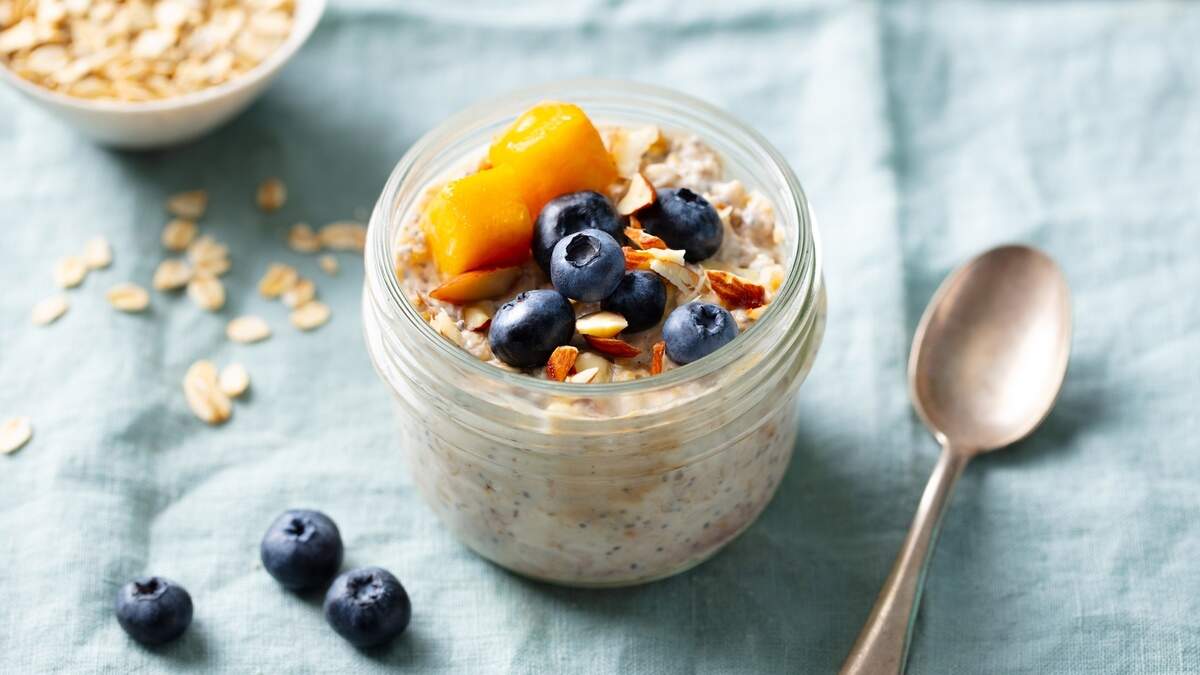
Healthy breakfast. Overnight oats with fresh berries and fruits in glass jars. Blue textile background. Close up.
Getty Images
For readers looking to stay fuller between meals and steady their morning energy, the 30-30-30 method has moved out of fitness feeds and into mainstream nutrition coverage. The formula calls for 30 grams of protein within 30 minutes of waking, followed by 30 minutes of low-intensity movement, and the recipes are getting more ambitious. What started as protein shakes is becoming steak and eggs, breakfast tacos and savory oatmeal. Expect the shift toward front-loaded protein to keep pulling breakfast away from cereal, pastries and sugar-heavy smoothies over the next year.
What’s Happening
Major health and food outlets are publishing 30-gram-protein breakfast recipes designed to be made in under 30 minutes. Cleveland Clinic is promoting cottage cheese pancakes topped with maple-sweetened berries. Delish is running a bacon-egg-cheese biscuit casserole and a savory oatmeal built on bacon, mushrooms and cheddar. GQ is pushing breakfast tacos with black beans, eggs and grilled halloumi.
The MyFitnessPal blog lists its high-protein breakfast quesadilla, made with bacon, eggs, black beans, jalapeño, cheddar and arugula, at an estimated 31 grams of protein. Dr. Michael Ruscio’s practice site lists Turkish-inspired eggs with chickpeas and yogurt at 30 to 44 grams per serving. Registered dietitian Julia Zumpano told Cleveland Clinic that protein “helps you feel full and satiated, which may make it easier to avoid overeating or snacking later in the day.”
Why It’s Happening
Three forces are driving the pattern.
The satiety and blood-sugar argument keeps getting louder from clinicians. Zumpano told Cleveland Clinic that protein “has a very little impact on your blood sugar, which can aid in better blood sugar management and fewer cravings for carbs and sugar,” the exact selling point that has pulled cereal and pastry eaters toward eggs and yogurt.
The recipes themselves are also being engineered for macro balance, not just protein totals. MyFitnessPal advises pairing a 20-30 gram protein breakfast with “complex carbs and healthy fats for a balanced diet.” Sasha Watkins, head of health at Mindful Chef, told GQ that eggs, halloumi and black beans work together because “eggs and halloumi contain plenty of amino acids, while the beans help bring fiber and slower-digesting carbohydrates into the mix, helping balance energy levels throughout the morning.”
And the post-workout crowd is reshaping what “breakfast” looks like. Farren Morgan, military veteran and founder of the Tactical Athlete training method, told GQ that “a small steak with two eggs will comfortably take you past 30 grams of protein before you’ve left the house,” a framing that has moved bodybuilder breakfasts into general audience food coverage.
“Find a few options you enjoy, and make them part of your morning routine.”
Julia Zumpano, RD, LD, Cleveland Clinic
What Could Be Next
The 30-30-30 template is likely to keep spreading, but the interesting movement is in what displaces what. Three shifts to watch, each with a decision you can put into practice this week.
Savory breakfasts will keep gaining ground on sweet ones. Zumpano told Cleveland Clinic there are “so many ways to add protein to your breakfast, whether you’re looking for something sweet or savory,” and the recipe pipeline is tilting savory, with quesadillas, tacos, casseroles, shakshuka-style eggs, and oatmeal built on cheddar and bacon. To act on this, pick one savory swap you’ll actually eat on a weekday. Dr. Sammie Gill’s short list for Women’s Health, which includes omelettes or scrambled eggs, plain or Greek yogurt with nuts and seeds, bean-based shakshuka, porridge made with milk, or wholegrain toast with nut butter, is a practical starting menu.
Store-bought smoothies face a credibility problem. Frances Largeman-Roth, R.D.N., told Men’s Health that “a store needs to make sure their customers come back again, so they’re more focused on the flavor of their smoothies, instead of avoiding added sugars, or keeping them super balanced.” As protein-focused consumers get more label-literate, expect friction between “healthy” smoothie marketing and actual sugar content. Try this today. Check the added-sugar line on any grab-and-go smoothie and default to home-blended recipes, like the Orange Creamsicle (32 grams protein) or Matcha Madness Smoothie (35 grams protein) that Men’s Health lists.
Batch cooking will become the practical backbone of the trend. Hitting 30 grams before 30 minutes have passed is hard from a cold start, and most people don’t want to cook halloumi at 6:45 a.m. Dr. Michael Ruscio’s Protein-Packed Overnight Oats, made with rolled oats, milk, chia seeds, full-fat yogurt, maple syrup, whey protein powder, pecans and apples, is designed for the fridge. Ruscio writes, “Make multiple servings at once by making this recipe in bulk. You can store the extras in the fridge for up to five days for quick grab-and-go breakfasts.” A realistic move is to choose one make-ahead format, whether overnight oats, an egg-and-cheese casserole, or a batch of Turkish eggs, and prep on Sunday. The routine, not the recipe, is what makes 30-30-30 stick.
The takeaway is straightforward. You don’t need a chalky shake and you don’t need a plan built around a single hero recipe. Build a short rotation of two or three high-protein breakfasts you’ll actually eat, prep them ahead, and the 30-gram number stops being a project.
THREE SIGNALS TO WATCH 1. Sustained publishing volume of 30-gram-protein breakfast recipes from mainstream health publications (Cleveland Clinic, Delish, GQ, MyFitnessPal), a durable signal the trend has moved past fitness media. 2. Cottage cheese, Greek yogurt and halloumi appearing as headline ingredients in breakfast recipes, not just add-ins. 3. Added-sugar disclosures or reformulations at national smoothie chains, the clearest test of whether protein-first consumers will force menu change.
This article was created by content specialists using various tools, including AI.

Samantha Agate is a content specialist working with McClatchy Media’s Trend Hunter and national content specialists team.