Imagine Warren Buffett participating in your fantasy draft.
I doubt he’d ever scream an expletive because someone took his sleeper right before him.
I can’t imagine him ever staring mournfully at a crossed-out name on his draft list.
And I’m certain he’s not drafting the ninth running back in Round 3 after the previous eight picks were running backs.
Buffett famously advised investors to be fearful when others are greedy and greedy when others are fearful. Another of his central principles is even more useful here: Price and value are not the same thing.
So while everyone else is knee-deep in panic and shotgunning a second beer, Buffett is probably looking at the price.
More specifically, he’s looking for the player whose market price has drifted furthest below his actual value.
Fantasy football has a phrase for that: winning your league.
Buffett built one of the world’s great fortunes by exploiting market inefficiencies — finding assets whose price didn’t reflect their value. Fantasy football requires less capital and considerably more faith in backup running backs, but the principle transfers.
Think of it this way: Your draft picks are currency. Average Draft Position is the market price, and Expert Consensus Rankings are analyst valuations. Tiers tell you where supply begins to disappear.
And the fantasy market has already reached a fairly strong consensus in 2026.
Running backs matter again.
The decline in passing efficiency and resurgence of elite, dual-threat backs have pushed the position back toward the front of drafts.
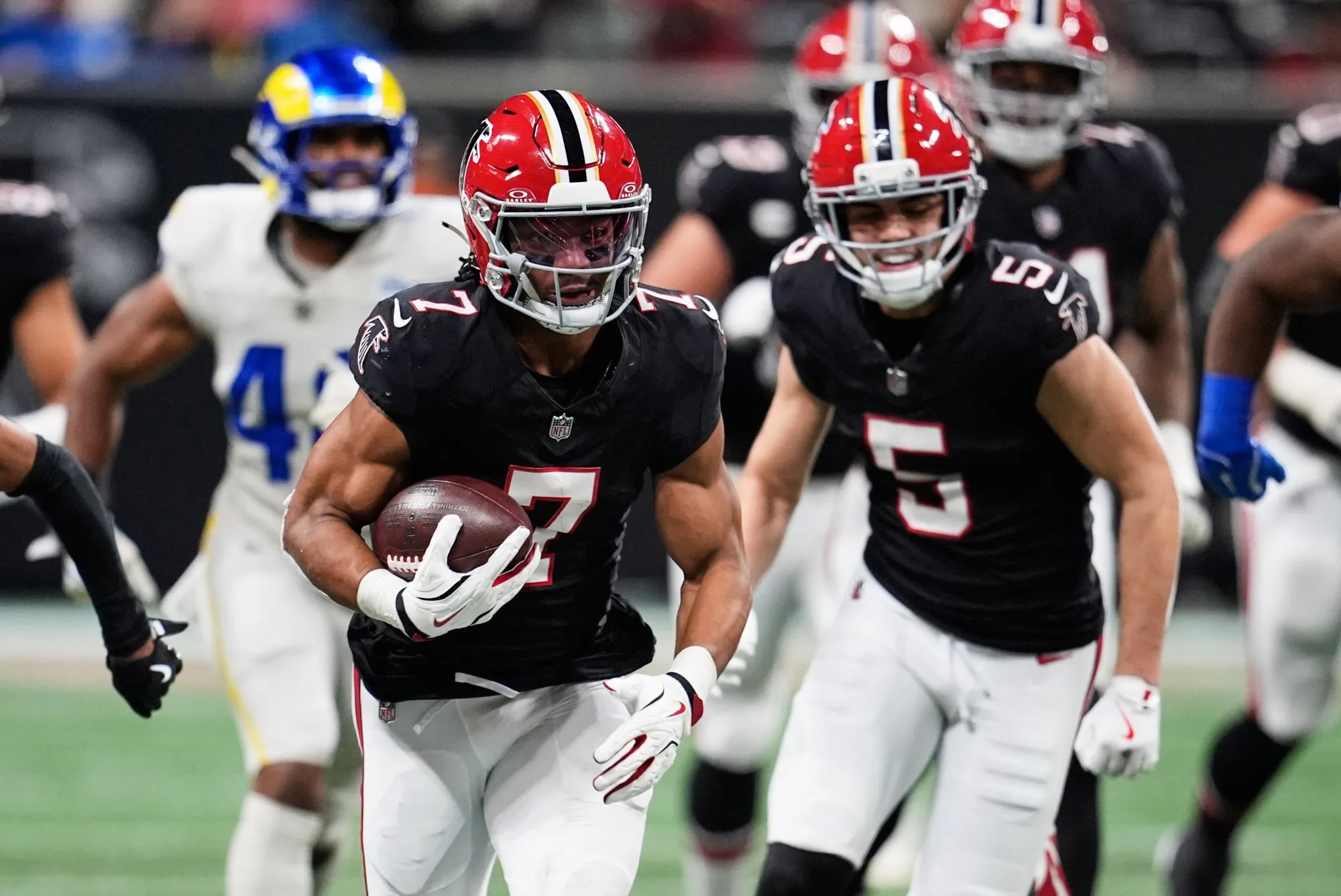
Bijan Robinson and Jahmyr Gibbs headline the premium tier, with Jonathan Taylor, Christian McCaffrey and James Cook among the high-volume options making an early anchor increasingly attractive.
That has helped make “Hero RB” — one premium back followed by aggressive investment at wide receiver — perhaps the most common blueprint.
If you draft later and the elite receivers disappear, taking two strong running backs can work, too. Quarterback and tight end generally offer enough depth to wait.
This is all useful information, but don’t confuse consensus with instructions.
BUY SCARCITY (UNTIL EVERYONE ELSE DOES)
Elite running-back volume has become one of fantasy’s scarcer commodities. If you can secure a true difference-maker at a fair first-round price, do it.
Then dive into the deeper receiver pool.
But if your league mates spend the opening rounds hoarding running backs, the economics change. Suddenly an elite receiver falling six picks below expectation may represent a better investment.
“Zero RB” — intentionally avoiding running backs through the early rounds — is less attractive as a predetermined strategy in 2026. It becomes much more interesting when everybody else makes it cheap.
What would Warren Buffett do? Buy scarcity at a fair price, not at any price. The moment everyone agrees an asset is indispensable is usually when you should check the price tag.
DRAFT TIERS, NOT A SHOPPING LIST
A flat ranking tells you Player No. 27 is better than Player No. 28.
A tier tells you whether the difference actually matters.
Suppose five similar running backs remain in one tier but only one receiver remains before a major drop-off. You should take the receiver. The running-back inventory can survive another round.
The same principle prevents panic reaches. If several comparable players remain at one position, you have options. If one quarterback remains before the position falls off a cliff, scarcity may justify acting.
Tiers also simplify Best Player Available. A Tier 2 receiver is usually a better investment than drafting a Tier 3 running back simply because your roster feels incomplete.
What would Warren Buffett do? Watch the drop-offs. If comparable assets remain plentiful, wait. When quality supply is about to disappear, buy.
FIND THE GAP BETWEEN PRICE AND VALUE
ADP tells you what fantasy managers are paying. ECR provides a rough estimate of what informed analysts believe players are worth.
The difference is your opportunity.
If experts rank a player 40th but he typically gets drafted 55th, taking him at 40 can erase the very advantage you identified. Wait and let the discount work for you.
The reverse matters, too. If the market consistently drafts someone 25th whom analysts value closer to 45th, you should have a compelling reason to pay that premium.
Your platform’s default rankings can amplify those gaps because plenty of managers will draft directly from whatever names appear next on the screen.
What would Warren Buffett do? Separate a good asset from a good investment. A great player can still be a terrible pick if you pay too much.
LET OTHER PEOPLE PANIC
Every fantasy draft eventually becomes a bank run.
Someone takes Josh Allen, and then Lamar Jackson goes. Suddenly managers who planned to wait at quarterback overdose on FOMO.
Excellent.
Position runs create artificial scarcity while pushing value somewhere else.
Use ADP to anticipate when players might disappear. Use tiers to decide whether to react. If four similar quarterbacks remain, ignore the stampede. If the final player in a meaningful tier is about to vanish, act.
What would Warren Buffett do? Probably enjoy everyone else panicking. You should, too.
KEEP INVESTING AFTER DRAFT NIGHT
The market stays inefficient once the season begins.
Players have two bad games and managers panic. A backup quietly earns more snaps and perhaps nobody in your league notices. Someone scores three touchdowns on six targets and becomes untouchable despite little changing about his role.
Rest-of-season consensus rankings can help separate signal from noise.
Use them to identify waiver-wire players gaining value before the production catches up. Buy talented players whose managers have grown impatient. Sell when public perception outruns role or opportunity.
And remember: Your bench isn’t a museum dedicated to players you once believed in.
What would Warren Buffett do? Recalculate when the underlying business changes. Loyalty to yesterday’s valuation isn’t patience. It’s stubbornness.