Hong Kong Where Old and New Coexist At the Palace Museum of Hong Kong Ancient Egyptian Civilization
At the airport, you can taste the taste of Kaitak Sports Park
Hong Kong
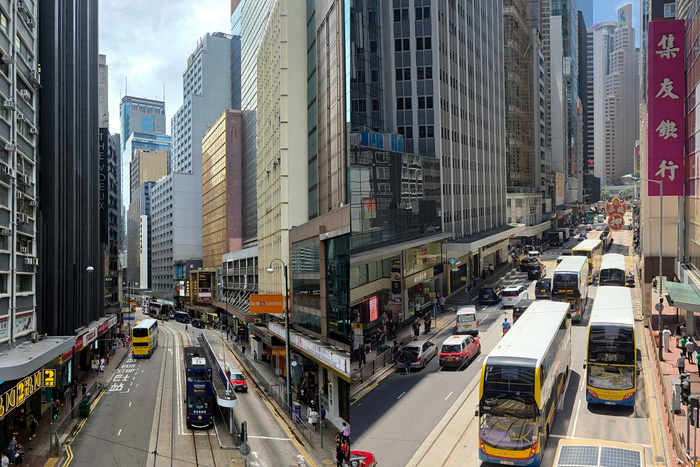
![A view of a street where trams are passing through dense high-rise buildings in Central Hong Kong. [Reporter Kim Hyejin]](https://wimg.mk.co.kr/news/cms/202608/22/news-p.v1.20260821.1ee7e646f2134239bb5404f1020650c6_P1.png)
Wang Gawi Movie, Disneyland, Midlevel Escalator, Victoria Harbour Night View. When I think of Hong Kong, I often think of these scenes. If you add trams, neon signs in alleys, and dim sum between dense high-rise buildings, the appearance of Hong Kong as we know it is quite clear.
However, the Hong Kong we encountered on this trip was a little different. It was a city where the old and the new coexisted strangely. Thousands of years ago, artifacts from civilization met visitors in modern museums, and the airport site, where planes once traveled, was transformed into a space for global sports events. The taste of old food has also become a new cocktail through the hands of a bartender.
![The Palace Museum, located in Hong Kong's Western Long Cultural District. The exhibition "The Treasure of the Egyptian Museum: Ancient Egypt, Walking the Vail of Time" will be held at the special hall until August 31. [Reporter Kim Hyejin]](https://wimg.mk.co.kr/news/cms/202608/22/news-p.v1.20260821.66d7bd0cfe844c368515325e1cbc0465_P1.png)
The Hong Kong Palace Museum is the place I visited to avoid the midday heat. It may be a bit of a surprise to meet ancient Egyptian artifacts in Hong Kong, but a special exhibition is currently being held here where you can see 5,000 years of civilization in one place.
The Egyptian Museum’s Treasure: Ancient Egypt, Walking the Vail of Time, which runs until the end of this month, shows the flow of ancient Egyptian civilization through 250 artifacts from seven major Egyptian museums and Sakara sites.
You can look at ancient Egypt’s politics, religion, art, and daily life through various artifacts such as sculptures, reliefs, stone monuments, golden ornaments, mummies, and animal mummies. Although it was daytime on weekdays, visitors, including mainland Chinese tourists, continued to visit the exhibition hall.
![The Palace Museum, located in Hong Kong's Western Long Cultural District. Visitors touring the exhibition 'Treasure of the Egyptian Museum: Ancient Egypt, Walking the Vail of Time'. [Reporter Kim Hyejin]](https://wimg.mk.co.kr/news/cms/202608/22/news-p.v1.20260821.c8c2685802db425f9c617662c8dc0347_P1.png)
What was particularly impressive was that you could see not only ancient Egyptian artifacts familiar such as mummies and gilt-bronze ornaments, but also household items that people actually used at the time.
In the space that deals with Tutankhamun’s world, you can see the story of the boy pharaoh’s rule and his tomb excavated in 1922, which is known again to the world. Secrets of Sakara introduced funeral-related artifacts and recent archaeological discoveries unearthed in Sakara, which was a key cemetery in ancient Egypt’s first capital, Memphis.
The process of ancient Egypt’s development by interacting with other civilizations was also displayed. Ancient Chinese and Egyptian artifacts were placed side by side so that cultural heritage created by different civilizations in the same era could be compared. Instead of touring Hong Kong’s representative tourist attractions, spending the midday time at the museum has become a unique travel course.
![Kaitak Sports Park, Kowloon Peninsula, Hong Kong. The site of the former Kai Tak airport has been redeveloped. [Reporter Kim Hyejin]](https://wimg.mk.co.kr/news/cms/202608/22/news-p.v1.20260821.121dfebc63fd4648a9d870d152b8fb45_P1.png)
By the end of the year, it had moved to Kaitak Sports Park. Kaitak Sports Park is a large sports and cultural complex built on the site of Hong Kong’s former Kaitak Airport.
Kai Tak Airport, which ended its operation in 1998 when Chek Lap Kok New Airport opened, was famous for landing across the city center at a low altitude, located between the city center and the sea. Now, there are sports facilities, shopping and leisure spaces, including the 50,000-seat Kaitak Stadium.
I visited the match between Chelsea and Juventus at Kaitak Stadium on the 6th. The stadium was filled with spectators early on, and fans wearing uniforms stood out everywhere. Chelsea uniforms were seen more than Juventus in the stands.
![Chelsea FC and Juventus FC played on the 6th as part of the 2026 HKFF (Hong Kong Football Festival) at Kai Tak Sports Park Sports Stadium on the Kowloon Peninsula in Hong Kong. [Reporter Kim Hyejin]](https://wimg.mk.co.kr/news/cms/202608/22/news-p.v1.20260821.71f5008e61a34923963c80e1312e8630_P1.png)
From the standpoint of cheering for Chelsea, it was nice to face the familiar blue uniform in Hong Kong, which is unfamiliar. Among the fans waiting for the start of the game were not only local spectators in Hong Kong, but also fans who came from overseas to watch the game.
“Come on, Chelsea!” The whole stadium was filled with cheering heat as the game began. The tension that had accumulated during the trip was naturally relieved as the shouting, cheering and beer in hand were added to the stadium. It looked completely different from the Hong Kong I met at the tourist attraction. It was also a moment to realize how actively Hong Kong people enjoy soccer.

At Kai Tak Sports Park, you could also see traces of the old airport. Photos and materials of past airports are displayed at Kaitak MTR Station, and facilities and sculptures reminiscent of old airports are also located around them.
The “West Bridge,” which is about 100 meters long from MTR Sungwon Toy Station to Kaitak Stadium, was also impressive. As I walked along the aisle, the ceiling showed the appearance of Kaitak Airport in the past. About two minutes of video continued, from Cathay Pacific’s early aircraft to flying over Hong Kong in the 1960s and the aircraft heading to various parts of the world in the 1980s and 1990s.
It felt like walking along the runway of the past again where the airport disappeared. Photos and videos from the past have led to the current sports stadium, showing how Kaitak has changed.
West Bridge is a space created by Cathay Pacific, the founding travel partner of kaitak sports park. A video shows the history of Cathay Pacific, which actually flew a plane at Kai Tak Airport in the past, and images of aircraft traveling to and from Hong Kong in the 1960s and 1990s appear one after the first aircraft “Betsy” in the 1940s.
![Hong Kong's Central neighborhood. Individual cocktail bars hide between narrow alleys. [Reporter Kim Hyejin]](https://wimg.mk.co.kr/news/cms/202608/22/news-p.v1.20260821.7416aeaaac3b41af8e59656c7c690456_P1.png)
At night, another culture of Hong Kong appears. It is a bar hopping culture that looks for unique cocktail bars hidden through narrow alleys. Rather than staying in one place for a long time, it is a way to experience different cocktails and atmospheres by moving around unique bars.
What was particularly noticeable about Hong Kong’s bars was the attempt to capture the taste of food in alcohol. Combine familiar food flavors and ingredients into cocktails to experience local food culture in a new way.
![Four Seasons Hotel Hong Kong's cocktail bar "ARGO"'s signature cocktail menu. [Reporter Kim Hyejin]](https://wimg.mk.co.kr/news/cms/202608/22/news-p.v1.20260821.bfb6197e75234e9fb394888a385b8598_P1.png)
Four Seasons Hotel Hong Kong’s cocktail bar “ARGO” is a representative example. Argo, which opened in 2021, ranked 37th in this year’s Asia 50 Best Bar. It presents cocktails that use ingredients from Hong Kong and Asia to unravel familiar flavors in a new way.
The most interesting menu was “Broth & Soul.” It is a hot pot-inspired cocktail that adds hot pot spice and tomatoes to Grey Goose vodka, and Amontiya also uses sherry and clear tomato juice to complete the taste. On the menu, even the appearance of beef jerky was pictured.
![Four Seasons Hotel Hong Kong's cocktail bar "ARGO" cocktail menus [Reporter Kim Hye-jin]](https://wimg.mk.co.kr/news/cms/202608/22/news-p.v1.20260821.00281bc49f5a4f5cb58c9d8005e34a93_P1.png)
Beef jerky was also put on the actual glass. When I took a sip, I felt the flavor of tomatoes and the taste of spices that reminded me of hot pot. It was a different experience as if the familiar food, hot pot, had been transferred to a glass of alcohol.
There is also a menu that changes classical cocktails to customer tastes. Argo Martini adds seasonal hydrosol to its own gin to change its aroma and flavor.
The cocktail Gokan, which I walked for about 10 minutes from the Four Seasons Hotel, presents cocktails using the seasoning used in Mapa tofu. The experience of meeting the familiar taste of Mapa tofu in a glass was strange.
At Apothecary, which comes out by taking a small elevator, you can enjoy a variety of menus from matcha-flavored cocktails to Tom Yum Goong-flavored cocktails reminiscent of Southeast Asia.
![Gokan, a cocktail located in Central Hong Kong, [Reporter Kim Hye-jin]](https://wimg.mk.co.kr/news/cms/202608/22/news-p.v1.20260821.c781e5978d7b4cb7b766ec2f2ad4a9ae_P1.png)
In the process of making cocktails, it was fun to see ingredients such as tomato sauce and chili sauce actually go into the glass. It does not stop at transferring the taste of food to alcohol, but also creates a new form of gastronomic experience. In other words, Hong Kong’s food culture is reborn as a cocktail through the hands of a bartender.
The movie ‘Junggyeong Forest’ said, “If memory is called canned, I hope there is no expiration date forever. If I have to write down the expiration date, I want to do it later in life.” If the romance we met in Hong Kong also has an expiration date, I would like to leave it a little longer. I hope it’s about ten thousand years.
Hong Kong = Kim Hye-jin, reporter for Mae-kyung Digital Newsroom