“No deal is better than a bad deal.”
This is the sentence that will define Prime Minister Mark Carney’s time in government.
Uttered last year to explain away the delays in negotiating a new trade arrangement with the United States amidst the high expectations of Carney’s election, it is now the benchmark against which he and his Liberal government are going to be measured. This time next week, we will know if he meant it. With all the consequences that ensue.
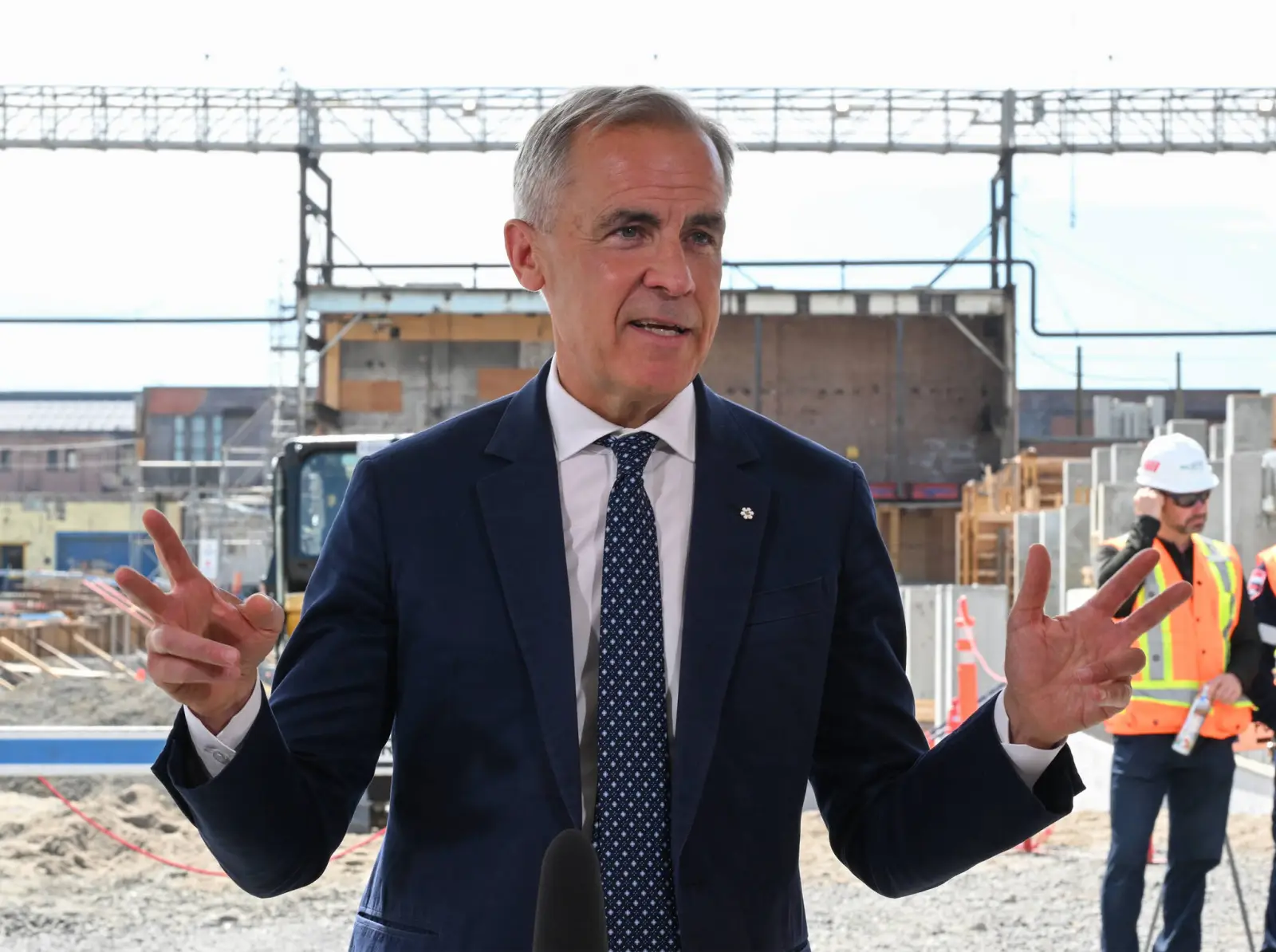
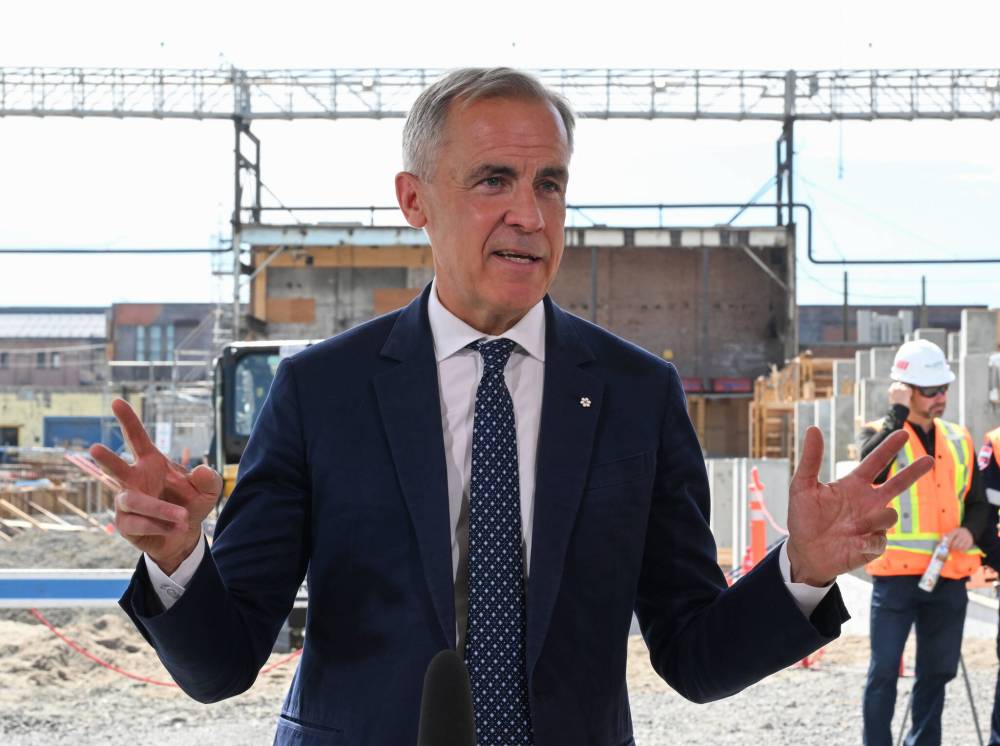
THE CANADIAN PRESS/Jacques Boissinot Prime Minister Mark Carney responds to reporters’ questions during a news conference at Rio Tinto aluminum plant in Saguenay, Quebec on Aug. 6.
By then, we will have reached President Donald Trump’s Aug. 19 deadline threat to impose new 50 per cent tariffs on a range of Canadian exports. This is not going down well with Canadians. Chief negotiator Janice Charette is reported as having called that a “cliff” in sessions with her U.S. counterparts. That means negotiations fall off and fail.
In short, Carney and Charette need to be clear and firm that Canada will walk away from talks rather than accept a sub-standard deal that subjugates us to a diminished economic relationship simply to please Trump. In turn, that would mean Canadians accepting sustained economic pain and discomfort inflicted upon us by America as the price for not signing on to a “bad deal.”
What would be a bad deal, anyway? Conservatives have a view. A changed view, but a view, nonetheless. Last year, they clamoured for a fast deal with the U.S., urging Carney to “negotiate a win” during his first face-to-face meeting with Trump. Last week, Pierre Poilievre sent a letter to Carney demanding he show “backbone” with “no more caving.” Having misread the anti-American mood in the last election he lost, the Conservative leader is taking no chances now and is correctly channelling current feelings.
Substantively, though, he’s not serious. Poilievre is demanding Carney negotiate not just a “win” but a complete backdown by Trump on all tariffs imposed on Canada. This will not happen. Donald “I’m a tariff guy” Trump sees no reason to excuse its largest and most important trading partner from his economic fetish. Setting such a high bar is a political ploy, not a negotiating one.
Two years in, Canadians are wiser and more battle-hardened about dealing with Trump. We have become, in a word, resilient. We know, even if we don’t like, that some tariffs are to be expected. But we want them lower than anyone else’s, if we are to accept them. And we don’t want any new tariffs as Trump threatens us — and only us — via a hundred-year-old trade protectionist law never utilized for this purpose. This feels targeted against us because it is.
Last year, after meeting with Trump, Carney floated the prospect of reaching a deal on a new economic and security relationship. In May, he said “Canada strong will help make America great again,” calling for a “true partnership.”
All this suggests a deal that goes beyond tariffs and brings in defence, critical minerals and investment arrangements. “Everything is on the table” stated Carney about retaliatory measures following Trump’s current tariff threat. Certainly, a nice juxtaposition to his famous Davos rupture speech in January where he said about middle powers dealing with bigger hegemonic states like the U.S., “if you’re not at the table, you’re on the menu.”
Well, we’re at the table and maybe on the menu in Washington right now. Fact is, Canadians don’t know. Negotiating in secret is to be expected, but we’ve been kept as veritable mushrooms over the last year on the reality or not of discussions between the two countries. We don’t know what’s on the table for us to give up in exchange for who knows what. A deeper economic and security partnership or a narrow, tit-for-tariff reciprocity arrangement?
Carney has been circumspect to the extreme over the past year in his dealings with the U.S. president, not wishing to antagonize. That circumspection led to Canada rescinding the digital services tax last summer as a concession explicitly to “advance broader trade negotiations with the United States.” So far, it hasn’t worked. The mood for more concessions is simply not there.

If negotiations fall apart over the “no deal is better than a bad deal” red line, then the prime minister better opt for an immediate, prime-time broadcast to Canadians to explain what gives. The conflicting messaging surrounding the Gordie Howe International Bridge side deal last month is a case study in how not to communicate. His government will be in for some heavy weather with voters if they fail to come clean, in detail.
Last year it would have been harder to walk away from a deal. Canadians were of the expectation that Carney could deliver with Trump. Now, Trump’s behaviour and comments have left Canadians simultaneously ticked off at Trump and skeptical that any deal would even be honoured by him.
For the prime minister who campaigned as best able to get a deal with Trump, he now needs to be the prime minister most able to walk away from a deal with Trump.
All because of one simple, throwaway line: No deal is better than a bad deal.
David McLaughlin is a former clerk of the executive council and cabinet secretary in the Manitoba government.

Our newsroom depends on a growing audience of readers to power our journalism. If you are not a paid reader, please consider becoming a subscriber.
Our newsroom depends on its audience of readers to power our journalism. Thank you for your support.
