It was during a yearling inspection that Alex So began to wonder whether there was a smarter way to do this.
He had jumped at the chance to learn from John Foote, the quiet man behind many of Hong Kong’s great bloodstock stories. So tagged along as the agent worked a sale lot by lot, watching him return to the same horses again and again – studying each walk, reading conformation, taking notes, then coming back to look once more.
“He is one of the hardest-working agents out there who looks at every single horse and he’ll look at them three to five times before he settles on his list,” So says. What struck him was how much of it fell on Foote’s body, and how much of the judgement lived only in Foote’s head.
“A lot of the stuff you’re doing is very tiring,” So told him. “And so I thought of ways to make it easier on his body and that’s how we started coming up with this idea of the AI.”
That question – whether technology could capture an eye like Foote’s before it disappears – became a quest, and now a product the young Hong Konger hopes can help revolutionise the game.
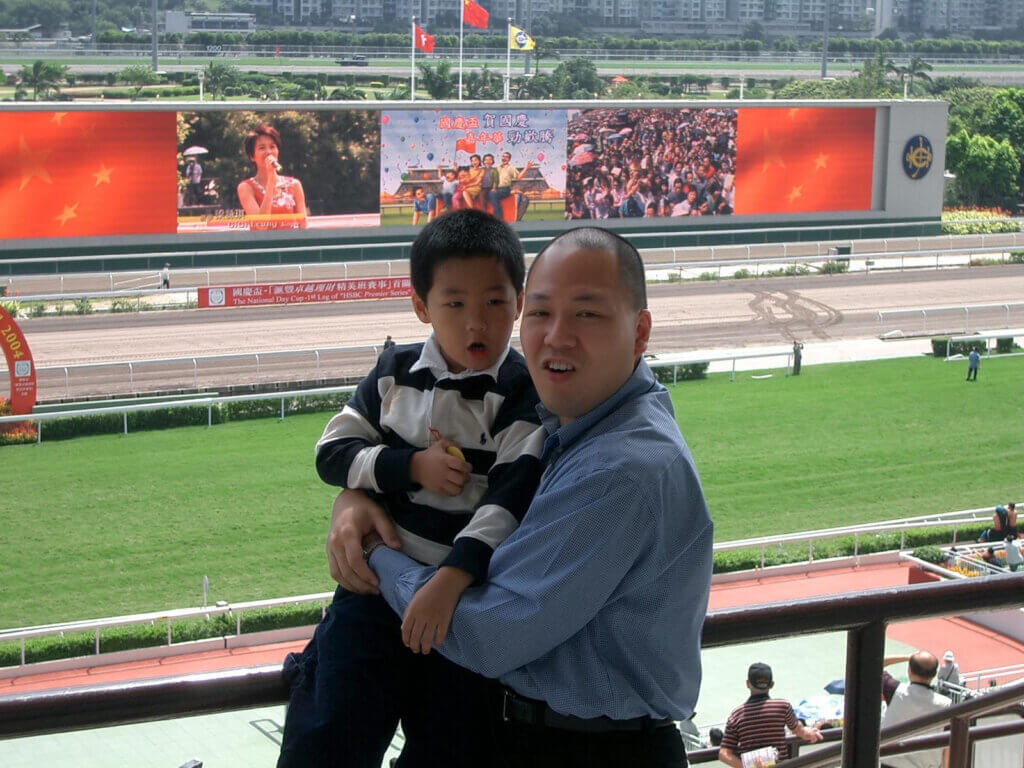
So’s family had been around Hong Kong racing for more than two decades before the idea took shape. His father, Chris, became an owner in 2004 and held a breeding right in that year’s Hong Kong Derby winner Lucky Owners. He later enjoyed greater success with Blazing Speed, the versatile four-time Group 1 winner trained by Tony Cruz, before stepping back from the sport.
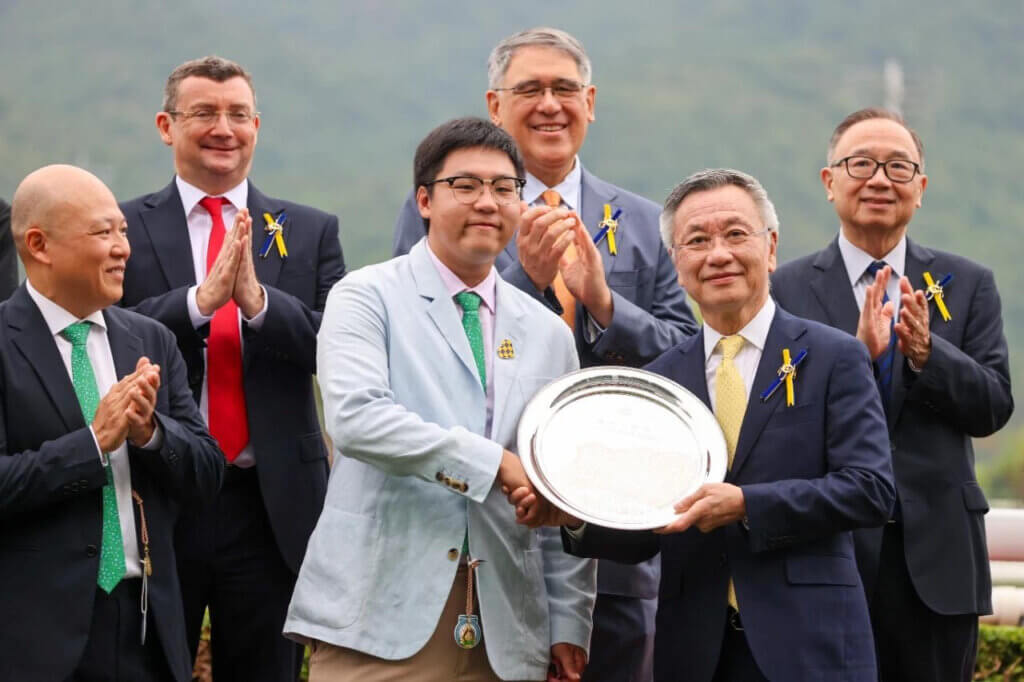
It was only years later, after Alex had finished university, that father and son looked at racing again as something to pursue together. And when they did, they went back to the man who had been there almost from the start.
“My dad started buying horses from John Foote almost 20-something years ago, and when he came back into racing my dad called John and said, ‘Could you help us buy horses and work with us?’ And then we just started working together and John took me on as a mentee.”
Both father and son worked in finance, and that shaped how they thought about buying horses. They believed the market sometimes mispriced risk, and that parts of the process could be measured better.
“It became a game of, ‘Can we try to find the best horses with the right value and build something?’” So says. “So that’s how it started: as a passion project.”
By 2023, So was attending as many sales as he could alongside Foote, starting at Karaka, learning what it takes to judge a horse. The more he watched, the more he saw a way to lighten the load – and to record what Foote knew.
“As I was building this technology with John and just learning from him, I said, ‘Why don’t we apply to Hong Kong University? I can write this as a passion project,’” So says. The dean of computer science backed the idea and helped fund it, and they set up a laboratory at HKU.
“That’s how it really got started into becoming somewhat of a business,” he says. “It was not planned. It was just a for-fun thing and then it turned into something more serious.”
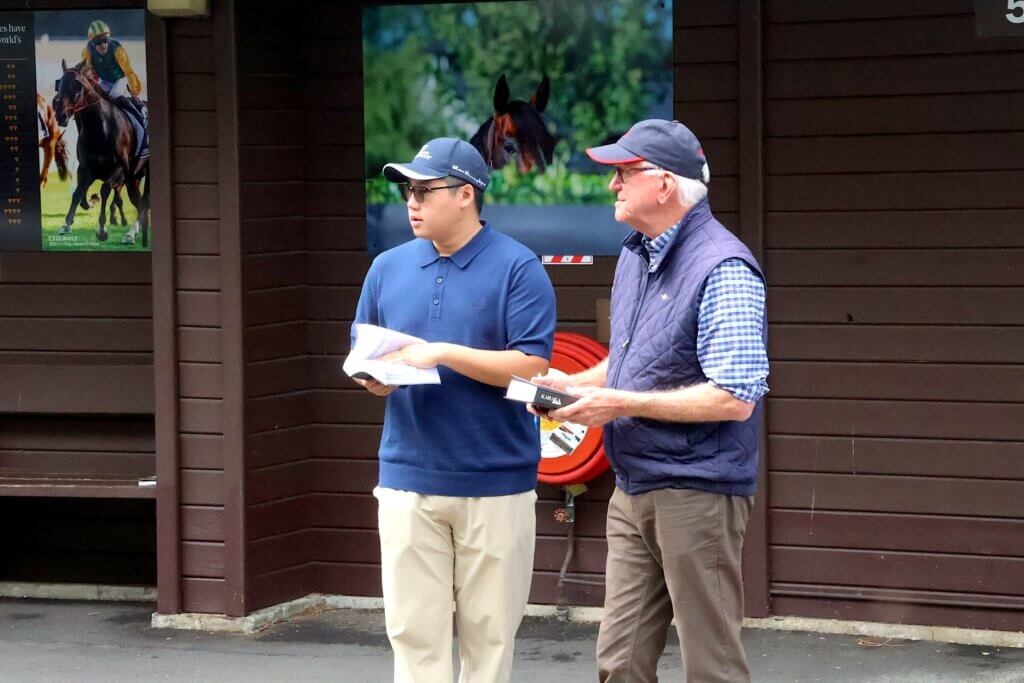
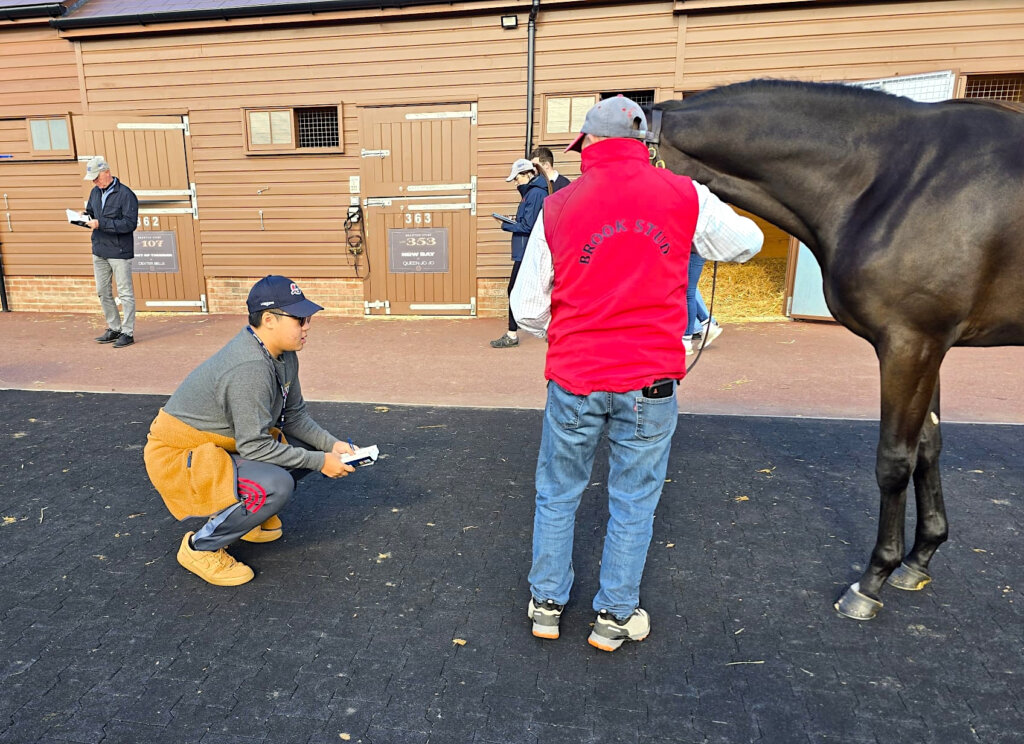
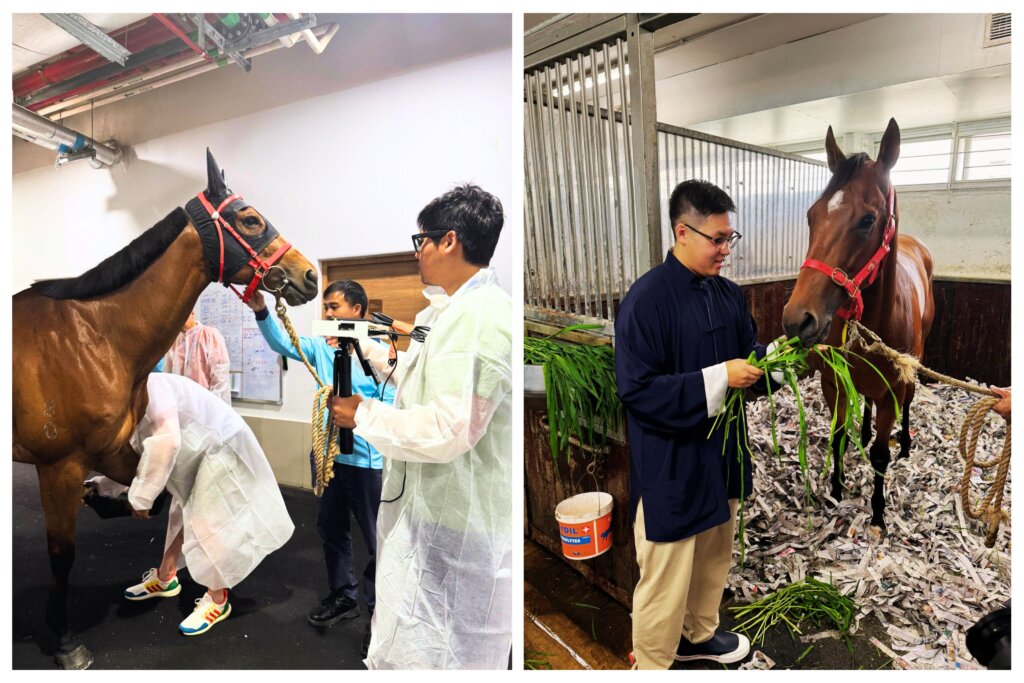
So began travelling to sales around the world to collect data – Australia and New Zealand, Argentina, Japan, Britain, Ireland and France – and worked with Inglis on a research project. The effort led to the HKU Equine Analytics and Bioinformatics Laboratory in November 2024, funded by the University of Hong Kong’s School of Computing and Data Science, focused on biomechanics, conformation, phenotyping and endoscopic analysis.
But the university structure created limits. Hong Kong-invested technology was not easily built for consumers in Hong Kong and China, and most of the bloodstock world sits outside the city anyway. Keeping it there would have meant few people using it.
“That’s why we branched off in January this year and then we started a real company,” So says. “Some of us from the university came over and started this company with us.” The spin-off became EquiTech Solutions HK, the technology arm of So Bloodstock.
EquiTech aims to make everyday equine processes more efficient, build databases that can support new discoveries and preserve knowledge that has traditionally lived in the minds of horsemen like Foote.
“The first thing that we wanted to do was, how do we automate it so that we can help people calculate their risk, for bloodstock agents and for buyers?” So says. The starting point is looking at the relatives of a possible purchase – the conformation and biomechanics of a horse set against its family.
At this year’s Hong Kong International Sale, Lot 10 gave him a useful example: a brother to 2024 New Zealand Derby winner Orchestral. The pedigree made him valuable on paper. What So wanted to know was whether or not the body matched the page.
EquiTech compares measurements, ratios and biomechanics across a family rather than treating any single feature – a neck length, a shoulder angle, a body ratio – as automatically good or bad. In this case, Lot 10 resembled Orchestral and shared similarities with last year’s Group 1 Sir Rupert Clarke Stakes winner Sepals, giving the team a clearer idea of which part of the pedigree was being expressed.
It is termed phenotyping – the process of measuring and analysing an animal’s observable physical, biochemical and behavioral traits. In this case it meant looking at how horses from the same family are built, and trying to identify inherited physical traits that may point towards ability. So’s argument is straightforward – if a buyer is going to pay a premium for a pedigree, they should have some way of judging how much of it the horse in front of them actually carries.
The same logic runs the other way. The goal is that breeders can catch patterns earlier instead of waiting years to learn whether a mare is passing on the traits that made her family valuable. “If you can catch it early and get signs that this horse does not have the genetic make-up based on physical features to the mare and its family, then it could be time to let the mare go,” So says. Trainers, too, can use scans to track how a horse is growing and assess if it is developing like its relatives.
So admits there is some resistance, especially at the sales.
“There’s two camps: the breeders and buyers want it because for them they think it is very useful, but the people who are most cautious are the vendors, the sellers, because they want to know this data … but they don’t want other people to know this information,” So says. “It’s just, who has access and the rights to see it at what time?”
So believes sales companies will eventually have a role to play. Horses at public auction are there to be inspected; a private farm visit is different. The harder question is how far inspection can go once technology can record more than the human eye.
For So, the bigger worry is the knowledge that never reaches a catalogue page. He points to figures such as Foote and Merrick Staunton, whose records rest not only on judging the horse in front of them but on remembering its family – the mother, the granddam, the relatives who did or did not make it. It is a kind of memory that is difficult to teach and harder to replace.
Younger agents can study catalogues, watch videos and work through pedigrees, but few carry decades of horses’ histories in their heads. So says his product is designed to store some of that memory before the people who hold it are gone.
“That’s why collecting this data and creating some knowledge bank is very important,” So says. “Once we lose the Andrew Seabrooks, the John Footes, the Merricks … will that knowledge just dry up and be gone forever?”
He describes the work as a mix of supervised and unsupervised learning. For conformation, angles and ratios, the experts set the rules. For body shapes, results and performance patterns, the system is left open to find correlations and, as he puts it, “tell us what works and what doesn’t.”
“You need to have a bit of both,” he says. “The whole point is you work with experts because they know what they’re doing.”
So is conscious of the boundaries in Hong Kong. His family has used the technology on its own horses, including those trained by Cody Mo, but has deliberately kept it there. Rolling it out across a whole stable would hand an edge other trainers don’t have, and scanning other owners’ horses raises questions of ownership – data that could, in theory, populate the vast databases used by betting syndicates.
“That’s why we draw a very strict line of just our own, even if other people ask us,” So says. “We just want to keep it clean and stay in the regulatory framework.”
Those limits say a lot about what So wants his product to be. Not a shortcut around horsemanship, but a way to keep alive the knowledge that shaped him through Foote – and to make it easier for the next generation to understand. ∎

David Morgan
“You Have To Go Out Of Your Way To Get Quality”: Where Are The High-Profile Hong Kong Imports?