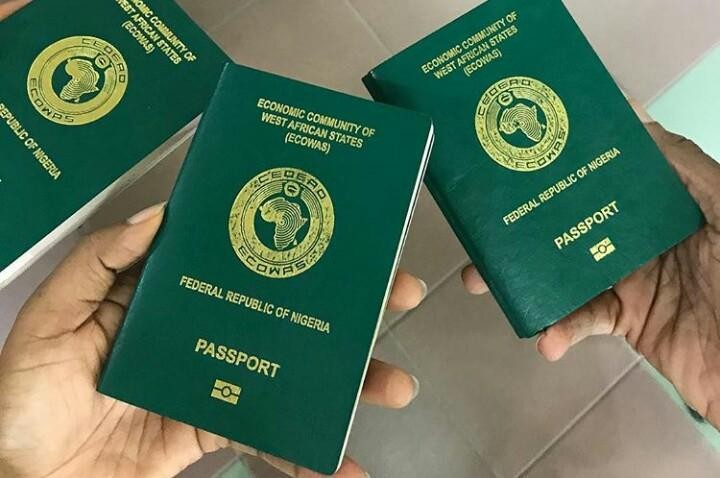
The Passport Intervention Team is scheduled to arrive in the UK on August 10 and will work with the Nigerian High Commission to process pending applications, enrol new applicants and handle renewals, according to the Nigeria Immigration Service (NIS).
Unlike conventional passport services centred largely around diplomatic missions, the team will travel to designated cities across the UK, allowing Nigerians living outside London to access enrolment and processing services closer to where they live.
The deployment was ordered by Interior Minister Olubunmi Tunji-Ojo, who directed Immigration Comptroller-General Kemi Nandap to dispatch officials from the service’s headquarters in Nigeria.
The intervention comes as Nigeria tries to overhaul a passport system long associated with processing delays and difficult access, particularly for millions of citizens living abroad.
Taking passport services beyond London
The special exercise will cover Nigerians with pending passport applications, new applicants and holders whose passports have less than one year before expiry. The NIS has yet to announce the cities the team will visit.
Applicants have been advised not to travel to any location until the Nigerian High Commission releases the full schedule covering cities, dates, venues and enrolment times.
The decision to move officials around the UK is particularly significant for Nigerians living outside London, who have traditionally faced the additional cost and time involved in travelling to access consular services.
Britain is home to one of the largest Nigerian communities outside Africa.
The UK’s 2021 census counted more than 270,000 Nigerian-born residents in England and Wales, up from about 191,000 a decade earlier.
That population expanded further during Britain’s post-pandemic migration surge, when Nigeria became one of the leading sources of international students and skilled workers entering the country.
The size and geographic spread of the community has placed increasing pressure on consular and passport services.
Nigeria’s passport system goes digital
The physical deployment comes alongside a broader attempt by Nigeria to move passport services online and reduce the need for its citizens abroad to repeatedly visit embassies and consulates.
Nigeria began rolling out a contactless passport renewal system for its diaspora in 2025, allowing eligible applicants to submit biometric information remotely rather than visiting a passport centre.
The programme was subsequently expanded to countries including the United States, Jamaica, Mexico and Brazil.
The NIS said its digital application channels, including the Contactless Passport Application System, will remain fully operational during the UK intervention.
Passport home delivery will also continue for applicants who choose the service.
That makes the UK exercise less a replacement for Nigeria’s digital passport reforms than an additional effort to deal with outstanding applications and applicants who still require physical processing.
The wider reforms are part of an attempt by President Bola Tinubu’s government to change a passport administration system that had accumulated more than 200,000 pending applications when Tunji-Ojo became interior minister in 2023.
The government said it cleared more than 200,000 of those applications within weeks before introducing additional reforms aimed at preventing another large backlog.
Nigeria has since established a central passport personalisation centre in Abuja, replacing a fragmented production structure and significantly increasing the country’s passport production capacity.
The Interior Ministry says the centralised facility can produce between 4,500 and 5,000 passports per day, compared with roughly 250 to 300 booklets per machine under the previous system.
Africa’s diaspora service challenge
Nigeria’s UK intervention also reflects a wider challenge confronting African governments as migration expands the number of citizens requiring public services far beyond national borders.
For governments with large diaspora populations, passport administration increasingly functions as an extension of domestic public services.
Nigeria is particularly exposed to that challenge.
The country has large communities across Britain, the United States, Canada and other major migration destinations, while remittances from Nigerians abroad remain an important source of foreign exchange for Africa’s most populous country.
That has pushed Abuja to experiment with a combination of digital applications, home delivery and mobile interventions rather than relying solely on traditional embassy-based services.
Rather than requiring every applicant to come to London, Nigerian officials will temporarily take passport processing to communities across Britain while digital renewal channels continue operating alongside them.
The longer-term challenge is ensuring that interventions of this kind become less necessary as Nigeria tries to build a passport system capable of serving a large and increasingly dispersed global diaspora.