Editor’s note: Dr Afshar Soleymani is a former Iranian ambassador to Azerbaijan, as well as an analyst and researcher in political and international relations. The views expressed in this article are those of the author and do not necessarily reflect the position of News.Az.
Modern conflicts are no longer decided solely by missiles, tanks and fighter jets. In today’s geopolitical environment, one of the most decisive battlefields is the information space. Nowhere is this more evident than in the Middle East, where competing narratives often shape perceptions as much as developments on the ground. Conflicting reports circulate daily, official statements are challenged by unofficial claims, and distinguishing fact from speculation has become increasingly difficult.
The recent allegations that Iran has acquired Russian-made S-400 air defence systems and other weapons from China should therefore be viewed not merely as military news, but as part of a broader information war with significant geopolitical implications.
International media recently reported that Iran had allegedly received S-400 air defence systems and other military equipment from China. Shortly afterwards, however, China’s Ministry of Foreign Affairs categorically denied the reports. Such contradictions are hardly unusual. Even if military cooperation of this nature were taking place, neither Tehran nor Beijing would be expected to acknowledge it publicly. Defence cooperation between states is often conducted behind closed doors and remains classified for strategic and security reasons.

Source: Reuters
The uncertainty surrounding these claims has been further amplified by the broader geopolitical context. In recent months, Iran has become an increasingly prominent issue in US-China relations, with reports suggesting that Washington has urged Beijing not to provide military assistance to Tehran. This shifts the discussion from a question of military procurement to one of strategic rivalry among major powers. Under such circumstances, separating verified information from politically motivated narratives becomes increasingly difficult.
At the same time, debates within China have added another dimension to the issue. Some Chinese academics and commentators have argued that Iran represents an important strategic partner for Beijing in its long-term competition with the United States and that this partnership should be demonstrated not only through diplomatic rhetoric but also through practical support. Such opinions, however, should not be mistaken for official government policy. They reflect discussions within academic and media circles rather than decisions made by the Chinese leadership.
Whether Iran has actually acquired new weapons systems therefore remains impossible to verify with certainty. Nevertheless, recent developments suggest that the country’s military capabilities have evolved, particularly following the latest regional escalation. Whether these improvements are the result of domestic production, external assistance or a combination of both remains unclear. What can be observed, however, is a gradual strengthening of Iran’s overall defence posture.
From Tehran’s perspective, efforts to reinforce its military capabilities are hardly surprising. Facing sustained pressure from both the United States and Israel, Iran naturally seeks to strengthen its deterrence and national security. Within the logic of international politics, attempts to obtain advanced military technology through available channels should not be regarded as extraordinary.
Recent conflicts provide numerous examples supporting this conclusion. For more than four years, the Russia-Ukraine war has demonstrated how modern conflicts increasingly depend on external assistance. The United States and European countries have continuously supplied Ukraine with military equipment, financial resources and intelligence support. On the other side, reports that Russia has received weapons and ammunition from North Korea, along with allegations that North Korean troops have been deployed, have remained a recurring theme in international media. More recently, reports have suggested that tens of thousands of additional North Korean soldiers could potentially be deployed to Russia.
These developments illustrate an important reality of contemporary warfare: prolonged conflicts are rarely sustained by domestic resources alone. As wars continue, states increasingly rely on political, economic and military support from allies and strategic partners.
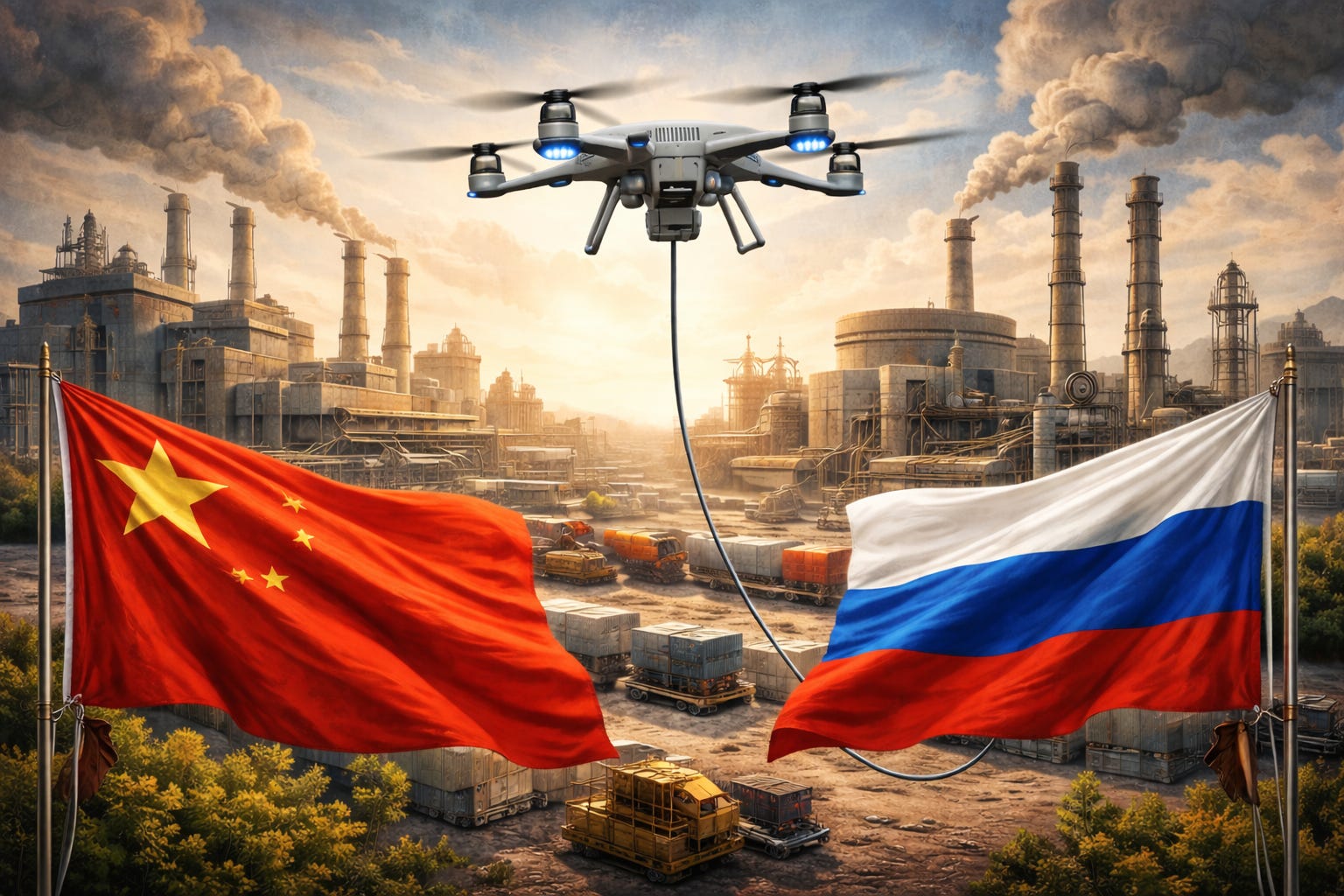
This, however, should not be interpreted as evidence that China and Russia are providing Iran with unconditional military backing. Both countries continue to prioritise their own national interests. Beijing benefits strategically when Washington’s attention is divided between multiple regions, giving China greater flexibility in relation to Taiwan and the Indo-Pacific. Moscow, meanwhile, benefits whenever international attention shifts away from Ukraine and instability in energy markets creates economic opportunities. Consequently, both Russia and China appear to be pursuing carefully calibrated balancing strategies rather than offering Tehran unlimited support.
Source: CNN
Had either power decided to fully commit its military capabilities to Iran, the regional balance of power would likely have changed dramatically. Current developments instead suggest that, while limited cooperation may exist, neither Beijing nor Moscow appears willing to become directly involved in a military confrontation with the United States or its regional allies.
The consequences of this prolonged confrontation extend well beyond military affairs. Political developments in Washington, election dynamics, fluctuations in global energy markets, inflationary pressures, the security of international shipping routes and oil prices are all directly affected by instability in the Middle East. Political announcements alone can calm markets temporarily, only for renewed tensions to trigger immediate increases in energy prices. This demonstrates that developments in the region have become one of the principal variables affecting the global economy.
Equally significant is the gradual erosion of diplomatic trust. Iran argues that previous agreements with the United States were not fully implemented and that commitments made during negotiations were not honoured. According to Tehran, military operations conducted while diplomatic talks were still under way seriously undermined confidence between the parties. Earlier frameworks envisaged Iran fulfilling certain obligations while negotiations over its nuclear programme and sanctions relief continued, with Oman serving as an intermediary. Subsequent military deployments to the region, rising tensions in the Persian Gulf and incidents involving commercial shipping effectively brought those negotiations to a standstill.
In international diplomacy, agreements derive their value not from being signed but from being implemented. When commitments are perceived to have been broken, rebuilding trust becomes significantly more difficult. This remains one of the central arguments advanced by Iran today and represents one of the principal obstacles to any future diplomatic breakthrough.
Objectively speaking, the United States enjoys overwhelming military and economic superiority over Iran. Yet recent history repeatedly demonstrates that military dominance alone does not guarantee political success. Afghanistan and Iraq remain among the clearest examples of this reality. Military campaigns may reshape battlefields, but they rarely produce lasting political settlements on their own.
The Middle East is unlikely to prove an exception. Regardless of how long the confrontation continues, diplomacy will eventually become unavoidable. The sooner meaningful negotiations resume, the greater the opportunity to prevent further humanitarian suffering, economic disruption, energy instability and further fragmentation of the international system.
Ultimately, sustainable stability in the Middle East cannot be built through military superiority alone. It depends on restoring mutual trust, honouring international commitments and maintaining continuous political dialogue. If diplomacy once again replaces military confrontation as the primary instrument of statecraft, the benefits will extend far beyond Iran and the United States, contributing to greater stability across the region and the broader international community.
(If you possess specialized knowledge and wish to contribute, please reach out to us at [email protected]).