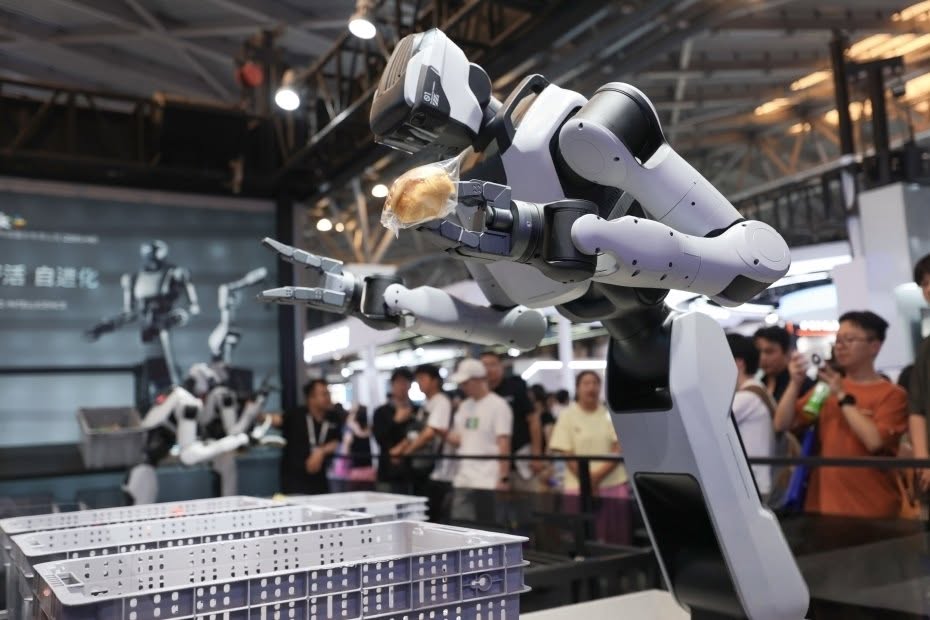
Competition in artificial intelligence is a contest across the entire industrial value chain. Only by advancing open innovation, ensuring security and trust, promoting inclusive development and strengthening global governance can AI contribute to shared global prosperity.
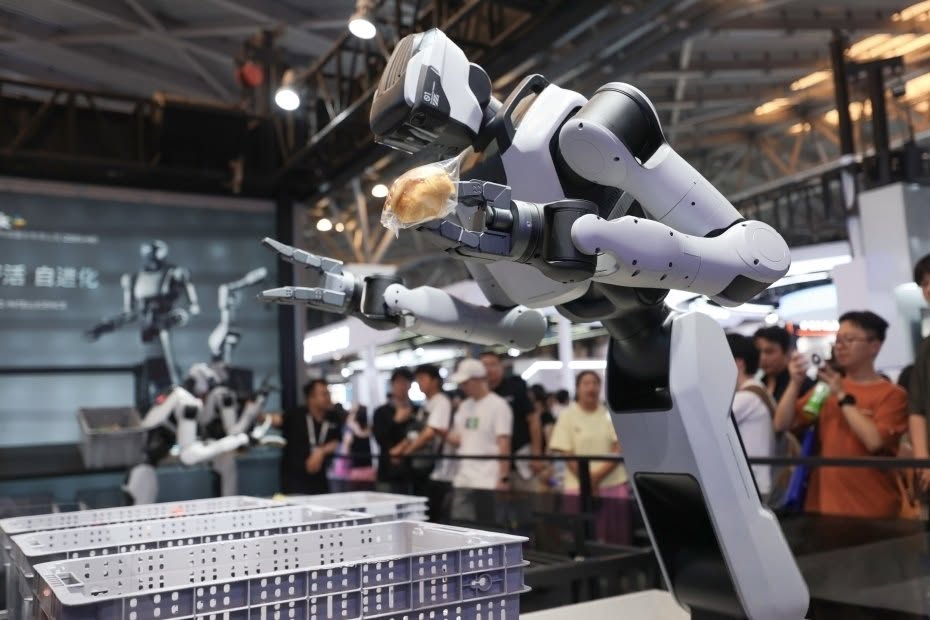
General embodied AI combines advanced intelligence with physical robots, allowing them to carry out a wide range of tasks and adapt to different environments and real-world applications. (2026 World AI Conference in Shanghai)
From July 17 to 20, the World Artificial Intelligence Conference was held in Shanghai, offering a vivid snapshot of today’s global AI revolution. In the conference halls, leading policymakers, researchers and industry experts exchanged views on the most pressing challenges facing the future of AI. Across the exhibition floor, systems moved beyond abstract algorithms into practical applications, demonstrating how rapidly the technology is being integrated into industry and everyday life. Together, the discussions and exhibitions highlighted both the immense opportunities AI presents and the complex governance questions it continues to raise.
The first issue is development. As China’s AI models continue to narrow the technological gap with global leaders, a central question is whether these advances can be translated into tangible drivers of economic growth. The wide range of applications showcased at the conference offered an encouraging answer.
For example, in manufacturing, AI-powered visual inspections, collaborative robotics and intelligent warehouse management systems are reshaping production by reducing costs and improving precision. In public services, AI-assisted medical diagnoses, smart classroom technologies and intelligent logistics networks are enhancing efficiency, lowering labor requirements and improving access to essential services.
Meanwhile, in the cultural and creative industries, innovations such as AI-generated therapeutic music and intelligent digital publishing are expanding its application frontier by supporting multilingual content creation, translation and digital distribution.
Perhaps the most striking takeaway from the conference was that many companies have established a clear innovation cycle all the way from technology development and real-world deployment to commercial value. Beyond leading technology firms, a growing number of small and medium-sized enterprises are also embracing lightweight domestic models, significantly lowering the barriers to AI adoption and enabling more tailored, application-specific deployment.
Another major topic of discussion was the contrasting paths China and the United States have taken in AI development. At first glance, the differences appear clear: The United States has maintained an edge in general large models, advanced AI chips, cloud infrastructure and core software frameworks, while China has built a distinct advantage in industrial deployment, supported by its comprehensive manufacturing ecosystem and abundant real-world application scenarios.
Yet this comparison captures only part of the picture. Even the most advanced algorithms and computing power cannot generate sustained industrial value without continuous validation and refinement through large-scale real-world applications and a strong industrial base. Conversely, manufacturing capacity alone is insufficient. Without sustained technological innovation and upgrading, industrial development cannot advance to a new stage of deep intelligent transformation.
In reality, neither the development of AI nor competition between China and the United States will be determined by technological breakthroughs alone. Rather, both are ultimately contests between innovation ecosystems spanning the entire industrial value chain. Over the long term, both countries are likely to advance on parallel fronts: strengthening foundational technologies while expanding AI deployment across a wide range of industries and application scenarios. The differences visible today are largely products of different stages of development. Ultimately, competition will hinge on comprehensive capabilities across the same technological and industrial landscape.
Beyond the question of development lies an equally fundamental challenge: security. As China’s domestically developed models expand into global markets, policymakers face the task of striking the right balance between technological openness and effective risk governance.
China has consistently embraced an open-source approach, and the conference offered a clear demonstration of that commitment. Professionals from dozens of countries attended the event, and several leading Chinese models opened their adaptation interfaces to developers worldwide, enabling overseas companies and research institutions to explore industry-specific collaboration and deployment.
At the same time, the rapid expansion of AI makes it imperative to confront the accompanying risks, including data breaches, deepfakes and the malicious use of algorithms. The conference devoted a series of parallel sessions to issues such as generative AI governance, algorithmic ethics, cross-border data security and AI risk management, underscoring an approach that combines differentiated regulation with targeted oversight.
China has sought to strike a middle course, rejecting both technological isolation and unchecked openness. The challenge is particularly acute in high-risk domains where AI is increasingly integrated into cyber operations, military systems, intelligence analysis and crisis decision-making. Preventing technological competition from escalating into dangerous confrontation has become an issue with implications far beyond the AI sector, bearing directly on global peace and stability.
Against this backdrop, the conference provided an open platform for experts from around the world to explore common principles for governing high-risk AI applications. The discussions reflected a growing recognition that while technological competition is inevitable, zero-sum confrontation serves no one’s interests.
Another defining theme of the conference was the need to bridge the AI divide by addressing the development priorities of the Global South, in line with broader efforts to strengthen inclusive global governance. Against a backdrop of widening disparities in AI development, many developing countries are reluctant to become dependent on any single country’s technological ecosystem. Instead, they are seeking AI solutions that are affordable, practical and technologically trustworthy.
This raises a broader question: What role can China play in helping countries of the Global South pursue AI development paths tailored to their own national circumstances? The demand was evident throughout the exhibitions. Visitors from Southeast Asia, Africa and Latin America showed particular interest in lightweight, affordable AI solutions that could be deployed with limited infrastructure. Products such as intelligent early-warning systems for weather, low-cost digital education platforms for rural communities and compact AI-powered industrial equipment demonstrated how China’s approach to AI can be adapted to the practical needs of developing countries.
China’s support extends well beyond technology exports. Through training programs, joint AI application centers, open technology partnerships free from exclusive restrictions and long-term assistance in talent development and local implementation, it is helping partner countries build indigenous digital capabilities and pursue AI development on their own terms rather than becoming dependent on any single major power.
By combining affordability, practicality, and technological autonomy, this model offers the Global South an alternative path for AI development—one that emphasizes capacity building and shared development instead of technological dependence.
Artificial intelligence should never be viewed as a zero-sum contest. Rather, it represents a shared opportunity for humanity to advance together and expand the benefits of technological progress. The conference underscored this vision through both thoughtful debate on AI’s future and practical demonstrations of its real-world applications. Together, they pointed in a clear direction for the next stage of AI development: Technological innovation must go hand in hand with practical deployment and be guided by the principles of openness, security, inclusiveness and global governance.
Only by balancing these priorities can AI unlock its full potential to strengthen the real economy, boost cultural exchange, improve people’s well-being across countries and foster a future in which humans and intelligent technologies develop in partnership for the common good.