Published on
July 17, 2026
By: Angana Dutta

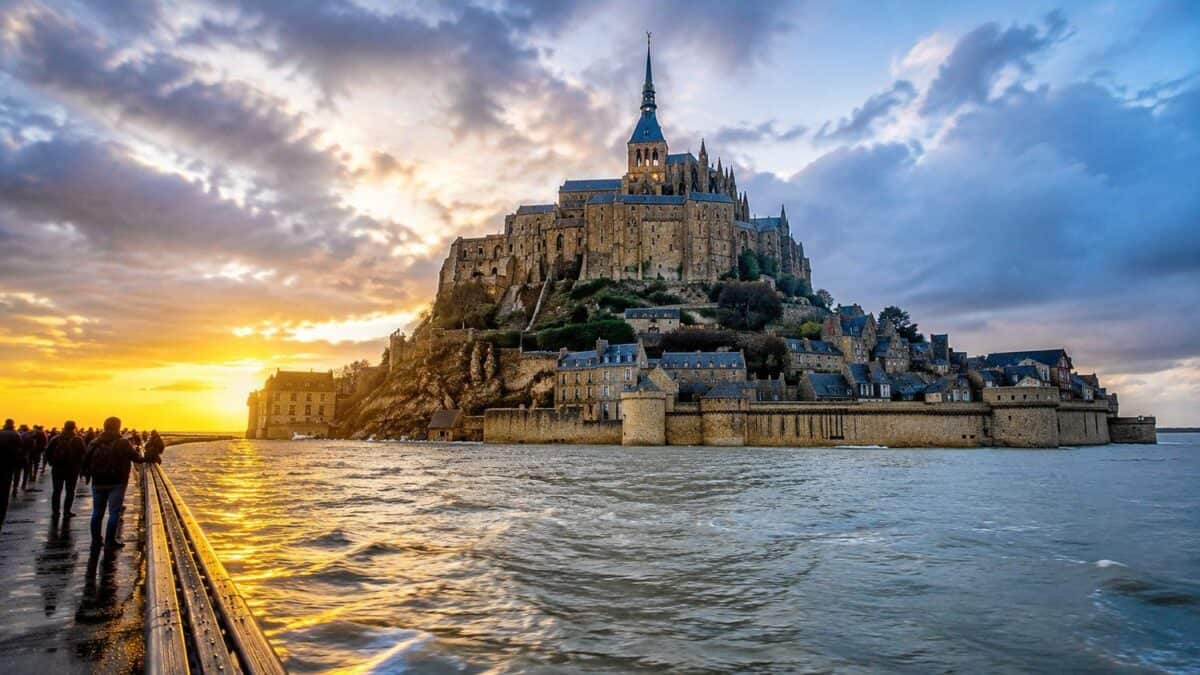
Image generated with Ai
Mont Saint-Michel tourism will be in the spotlight once again in 2026 when the world’s visitors including the United Kingdom, Germany, Spain, and Italy visit France’s famous island abbey. Authorities are emphasizing the importance of tidal safety around the UNESCO World Heritage Site. The abbey’s landmark rapidly rising 15 meter tides are now considered a major travel concern for prospective visitors looking to make the most out of their Normandy trip. Unique heritage attractions and responsible travel are now highly sought after among the growing tourism population.
France’s Mont Saint-Michel Tourism Surge Highlights UNESCO Beauty and Hidden Tidal Risks for Global Travellers
The historic island continues to represent one of France’s strongest heritage tourism assets, drawing visitors from the United Kingdom, Germany, Spain, Italy, the United States and Asian markets. Beyond its postcard appearance, Mont Saint-Michel offers a rare travel experience where architecture, nature and centuries of history meet in one destination.
The growing interest also reflects a wider shift in tourism. Travellers are increasingly searching for meaningful cultural experiences, authentic destinations and safety information before visiting famous landmarks.
Why Mont Saint-Michel Tourism Is Becoming a Global Travel Attraction Again
Mont Saint-Michel remains one of Europe’s most recognisable heritage destinations because it combines a medieval abbey, a dramatic island setting and a unique relationship with the sea.
Advertisement
Advertisement
The site is located in Normandy’s Manche department and has been recognised as a UNESCO World Heritage Site since 1979 because of its outstanding cultural landscape and historical importance.
The destination attracts approximately three million visitors every year, making it one of France’s most visited cultural landmarks.
Advertisement
Advertisement
The main reasons travellers continue to visit include:
- The medieval Mont Saint-Michel Abbey
- The historic village streets and ancient fortifications
- The spectacular bay landscape
- The extreme tidal phenomenon surrounding the island
- The connection with medieval pilgrimage routes
For modern travellers, the biggest attraction is no longer only the abbey itself. The entire experience of reaching an island surrounded by changing tides has become a major tourism draw.
Mont Saint-Michel Tides Create Europe’s Most Unique Travel Experience

Image generated with Ai
The strongest travel angle behind the destination is the relationship between tourism and nature.
Unlike traditional European landmarks, Mont Saint-Michel changes dramatically throughout the day. During low tide, visitors can see vast areas of sand surrounding the island. During high tide, the sea returns and creates the impression that the medieval fortress is floating.
The bay experiences one of the highest tidal ranges in Europe.
| Feature | Verified Information |
|---|---|
| Location | Normandy, France |
| UNESCO status | World Heritage Site since 1979 |
| Visitor volume | Around 3 million visitors annually |
| Tidal range | Up to approximately 15 metres |
| Historical origin | Religious sanctuary established in the early 8th century |
| Main attraction | Mont Saint-Michel Abbey and medieval village |
The tidal environment is also the reason authorities advise visitors to check conditions before walking across the bay.
Advertisement
Advertisement
The incoming sea can move quickly, and inexperienced visitors who underestimate the conditions may face safety risks.
France Leads Europe’s Heritage Travel Revival Through Iconic Cultural Destinations

Image generated with Ai
France continues to strengthen its position as one of the world’s leading tourism destinations through its combination of heritage sites, gastronomy, museums and cultural experiences.
Mont Saint-Michel plays an important role in this strategy because it represents the type of destination increasingly preferred by international visitors.
Travellers are moving beyond traditional city breaks and searching for:
- historic locations
- UNESCO landmarks
- authentic regional experiences
- nature-based attractions
- slower and more immersive travel
France’s heritage tourism strength is supported by a wide network of internationally recognised sites, including medieval towns, castles, museums and religious monuments.
United Kingdom Travellers Discover Normandy’s Historic Connection
The United Kingdom remains one of France’s most important international tourism markets.
Advertisement
Advertisement
British travellers have a strong connection with Normandy because of geographical proximity, historical links and easy transport connections.
Mont Saint-Michel appeals particularly to UK visitors because it offers:
- a short European cultural escape
- medieval history
- coastal landscapes
- walking experiences
- photography opportunities
Many UK travellers combine Normandy visits with other destinations such as Paris, Brittany and the Loire Valley.
Air connectivity between the UK and France continues through carriers including:
| Airline | Travel Connection Role |
|---|---|
| British Airways | UK-France international connectivity |
| Air France | French national carrier connecting global markets |
| easyJet | European leisure travel connectivity |
The strongest UK travel motivation is the ability to experience a world-famous French landmark within a relatively short European journey.
Germany Travellers Increase Interest in French Cultural Tourism
Germany remains one of Europe’s largest outbound tourism markets, with travellers showing strong interest in cultural destinations, heritage sites and nearby European escapes.
Advertisement
Advertisement
Mont Saint-Michel attracts German visitors because of its combination of:
- historic architecture
- coastal scenery
- UNESCO recognition
- road trip accessibility
German travellers often prefer multi-destination journeys, combining Normandy with other French regions.
Air connections through major European hubs support travel between Germany and France.
| Airline | Connectivity Role |
|---|---|
| Lufthansa | Germany-France network connectivity |
| Air France | International connections through France |
| Eurowings | European leisure routes |
The destination fits growing demand for experiential tourism where visitors seek stories, history and unique landscapes rather than only sightseeing.
Spain Travellers Explore France’s Medieval Heritage Attractions
Spain continues to be an important European tourism market for France.
Spanish travellers are increasingly interested in cultural journeys that combine architecture, food, history and regional identity.
Advertisement
Advertisement
Mont Saint-Michel provides a distinctive experience because it offers something different from conventional urban tourism.
The island abbey gives visitors:
- medieval heritage exploration
- coastal scenery
- religious history
- photography opportunities
Short-haul European connectivity makes France accessible for Spanish travellers throughout the year.
| Airline | Connectivity Role |
|---|---|
| Air France | France-Spain network links |
| Iberia | Spain-France connectivity |
| Vueling | European leisure travel connections |
The appeal of Mont Saint-Michel is strengthened by the rising popularity of heritage tourism across Europe.
Italy Travellers Seek France’s Unique UNESCO Experiences
Italy’s outbound tourism market has a strong interest in cultural destinations, historic architecture and European heritage routes.
Italian visitors are attracted to Mont Saint-Michel because it provides a different type of historical experience compared with Italy’s own Roman and Renaissance landmarks.
Advertisement
Advertisement
The destination offers:
- medieval religious architecture
- dramatic natural scenery
- coastal exploration
- historic storytelling
Air routes between Italy and France support year-round tourism movement.
| Airline | Connectivity Role |
|---|---|
| Air France | France-Italy connectivity |
| ITA Airways | Italian national network |
| easyJet | European leisure connections |
For Italian travellers, Mont Saint-Michel represents a rare combination of history and natural spectacle.
Why Travellers Want to Know About Mont Saint-Michel Before Visiting
The growing interest in Mont Saint-Michel is not only about beauty. Travellers are searching for practical information before arrival.
The main questions visitors want answered include:
- When is the safest time to visit?
- How do tides affect access?
- Should travellers stay overnight?
- Is the island crowded during peak hours?
- Can visitors walk across the bay independently?
The destination has become a strong example of why modern tourism requires both inspiration and preparation.
Advertisement
Advertisement
Overnight Mont Saint-Michel Tourism Grows as Travellers Search for Quieter Heritage Experiences
Mont Saint-Michel tourism is also changing as more visitors look beyond traditional day trips and explore overnight stays to experience the island after the crowds disappear. During peak daytime hours, narrow medieval streets and viewpoints can become extremely busy, especially during summer and holiday periods.
Staying overnight allows travellers to discover a different side of the destination. After most day visitors leave, the island becomes quieter, creating a more atmospheric experience with illuminated medieval buildings, peaceful streets and views across the bay.
Tourism officials and local operators have increasingly encouraged visitors to spread their visits throughout the day and consider longer stays. This approach supports more sustainable tourism by reducing pressure during peak hours.
The overnight experience allows visitors to:
- Explore the abbey with fewer crowds
- Experience sunrise and sunset views
- Discover local restaurants and accommodation
- Understand the island’s history at a slower pace
- Support local businesses beyond daytime tourism
For international travellers arriving from markets such as the United Kingdom, Germany, Spain and Italy, overnight tourism provides a deeper connection with Normandy’s cultural identity.
UNESCO Heritage and Natural Forces Make Mont Saint-Michel a Global Tourism Symbol
Mont Saint-Michel represents a rare example where human architecture and natural forces exist together.
Advertisement
Advertisement
The island abbey was built over centuries, adapting to its difficult coastal environment. The changing tides helped protect the site historically while also creating challenges for modern visitors.
The destination’s global appeal comes from the combination of:
| Tourism Element | Importance for Visitors |
|---|---|
| Medieval Abbey | One of Europe’s most important religious monuments |
| UNESCO Recognition | Global heritage status attracting international travellers |
| Bay Landscape | Unique coastal scenery shaped by tides |
| Historic Village | Preserved medieval streets and architecture |
| Pilgrimage Heritage | Connection with centuries of religious journeys |
The attraction has become a symbol of France’s ability to combine cultural preservation with tourism development.
For the travel industry, Mont Saint-Michel demonstrates how heritage destinations can create demand by offering experiences rather than only sightseeing.
France Cultural Tourism Gains Momentum Through Iconic Heritage Destinations
France cultural tourism continues to attract international visitors because travellers increasingly prioritise history, authenticity and meaningful experiences.
Beyond Paris and major cities, destinations such as Mont Saint-Michel are benefiting from growing demand for regional tourism.
Advertisement
Advertisement
Travellers are increasingly choosing:
- UNESCO World Heritage destinations
- Historic towns
- Coastal heritage locations
- Local food experiences
- Authentic cultural routes
France’s tourism strategy has focused on promoting destinations beyond traditional hotspots, encouraging visitors to discover regional attractions throughout the country.
Mont Saint-Michel fits this trend perfectly because it offers a complete travel experience combining:
- architecture
- history
- landscape
- gastronomy
- local culture
The destination also supports Normandy’s wider tourism economy, benefiting hotels, restaurants, guides and transport providers.
International Visitor Markets Continue Driving Normandy Tourism Growth
Mont Saint-Michel’s popularity is supported by a diverse international visitor base.
While France remains the core market, international travellers continue to contribute significantly to Normandy’s tourism activity.
Advertisement
Advertisement
| Country Market | Main Travel Motivation |
|---|---|
| United Kingdom | Short European breaks, history and coastal travel |
| Germany | Heritage routes and cultural tourism |
| Spain | Medieval attractions and regional exploration |
| Italy | Historic architecture and UNESCO experiences |
| United States | Iconic European landmarks and cultural travel |
| Japan | Heritage destinations and photography tourism |
The attraction benefits from France’s strong international connectivity and position as one of the world’s leading tourism destinations.
Airlines Strengthen Access to France’s Heritage Tourism Network
Although airlines are not directly involved in Mont Saint-Michel’s tidal conditions, aviation connectivity plays an important role in bringing international visitors closer to Normandy.
Travellers typically reach the region through French airports before continuing by road or rail.
| Airline | Market Connection |
|---|---|
| Air France | International access to France through major hubs |
| British Airways | United Kingdom-France connectivity |
| Lufthansa | Germany-France travel links |
| ITA Airways | Italy-France connections |
| Iberia | Spain-France connectivity |
| easyJet | European leisure travel routes |
Paris airports, including Charles de Gaulle and Orly, remain important gateways for international visitors travelling towards Normandy.
Regional transport connections then allow tourists to combine Mont Saint-Michel with wider French itineraries.
Tourism Industry Watches Mont Saint-Michel as Responsible Travel Becomes More Important
The growing attention around Mont Saint-Michel reflects a broader change across global tourism.
Advertisement
Advertisement
Travellers are becoming more aware that famous destinations require responsible planning.
The biggest lessons from Mont Saint-Michel include:
- Natural conditions can influence travel experiences
- Popular landmarks require crowd management
- Safety information is essential before adventure activities
- Longer stays can create more sustainable tourism benefits
The destination highlights the importance of balancing visitor demand with environmental protection.
As global tourism continues recovering and expanding, heritage destinations face the challenge of welcoming more visitors while protecting their cultural and natural assets.
What Travellers Should Do Before Visiting Mont Saint-Michel
Visitors planning a trip to Mont Saint-Michel should prepare carefully to enjoy the destination safely.
Check Tide Information Before Exploring
Travellers should always check official tide schedules before walking near the bay.
Advertisement
Advertisement
The tides can change conditions quickly, and visitors should avoid entering areas affected by rising water without proper guidance.
Plan Travel During Less Crowded Periods
To enjoy a better experience, visitors can consider:
- Early morning visits
- Evening exploration
- Overnight stays
- Shoulder-season travel
These options provide more peaceful access to the island.
Choose Transport Options Carefully
Travellers should plan connections between:
- Airports
- Railway stations
- Normandy towns
- Mont Saint-Michel shuttle services
Booking transport in advance during busy periods can reduce travel stress.
Follow Safety Guidance
Visitors should:
Advertisement
Advertisement
- Stay on recommended routes
- Follow local instructions
- Avoid walking across the bay without expert guidance
- Monitor weather conditions
Check Airline and Transport Updates
International travellers should:
- Confirm flight schedules before departure
- Check airport transfer times
- Allow additional time during peak tourism periods
- Understand airline change and cancellation policies
Why Mont Saint-Michel Tourism Matters for France’s Future Travel Growth
Mont Saint-Michel represents more than a historic monument. It reflects the future direction of European tourism.
Modern travellers increasingly want destinations that provide:
- emotional experiences
- cultural discovery
- natural beauty
- authentic stories
The island’s combination of medieval history and dramatic tides gives France a powerful tourism asset that continues attracting global attention.
As visitors from Europe and international markets search for unique travel experiences, Mont Saint-Michel remains one of France’s strongest examples of heritage tourism success.
Frequently Asked Questions About Mont Saint-Michel Tourism
1. Why is Mont Saint-Michel famous among travellers?
Mont Saint-Michel is famous because of its medieval abbey, UNESCO World Heritage status, unique island setting and dramatic tidal landscape. It is one of France’s most recognisable cultural attractions.
Advertisement
Advertisement
2. Are Mont Saint-Michel tides dangerous for visitors?
The tides can create challenging conditions because the water level changes significantly. Visitors should check tide schedules, follow local safety guidance and avoid unsafe areas around the bay.
3. What is the best time to visit Mont Saint-Michel?
The best time depends on visitor preferences. Early mornings, evenings and shoulder seasons usually provide fewer crowds, while high tide periods offer the most dramatic views of the island surrounded by water.
Author’s Observation Note
Mont Saint-Michel shows why modern tourism is moving beyond simple sightseeing. The destination’s power comes from the combination of history, architecture and nature. However, its popularity also proves that travellers must balance curiosity with preparation. The future of heritage tourism will depend on protecting iconic places while helping visitors experience them responsibly.
Advertisement
Advertisement