As climate change supercharges summers in Hong Kong and across Asia, pregnant women are enduring unprecedented heatwaves with virtually no warning from the medical systems designed to protect them. Despite clear clinical evidence linking rising ambient temperatures to miscarriage and preterm birth, a silence in antenatal clinics is leaving the region’s most vulnerable mothers entirely in the dark.
—
Siti is six months pregnant and riding out Hong Kong’s summer alone in a Sham Shui Po sixth-floor walk-up. In months of prenatal visits at Kwong Wah Hospital, no one mentioned heat could harm her or her baby.
“They don’t tell me about that,” said the 37-year-old former domestic worker, who asked to be identified by a pseudonym because of her asylum claim. Siti takes up to four cold showers a day, runs her AC around the clock, and avoids going out because of the slow climb back to her small rented room.
She is not an outlier. Of 29 pregnant and recently pregnant women in Hong Kong surveyed for this story, only three said a healthcare provider had warned them about heat, and the advice was limited to drinking water and staying indoors. None had been told about the risks of miscarriage, preterm birth or stillbirth. Nearly half did not know heat was a risk, yet 26 said heat had affected their pregnancy, some significantly.
The evidence on heat is clear. A 2020 meta-analysis of 70 studies found the odds of preterm birth rise as much as 16% during heatwaves. Other peer-reviewed work links heat exposure during pregnancy to miscarriage, low birth weight, birth defects, stillbirth, pre-eclampsia and gestational hypertension. Roughly 31,000 women gave birth in Hong Kong in 2025, a city where hot nights have jumped about 35-fold over the past century and “very hot days” about sixfold.
More on the topic: ‘I Can’t Sleep’: Hong Kong’s Rising Nighttime Heat Exposes Inequalities
The government flags pregnant women as vulnerable in official heat alerts and told Earth.Org it is developing a heat index that includes humidity, sunlight and wind. But advice on how to cope has not entered routine prenatal care, government health guidance or workplace protections, even as Asia warms at nearly twice the global rate.
In humid subtropical climates, preterm birth risk climbs once temperatures exceed about 25C and rises further with extreme heat, according to Professor David Bishai of the University of Hong Kong’s School of Public Health. “Pregnant women are a missing population,” he said. “Nobody’s really reaching out to inform them.”
The Clinic Has Not Caught Up
Even the specialists caring for pregnant women in Hong Kong say the message is not reaching the consultation room.
“We have all been taught about fever, or not to expose to hot springs or saunas,” said Wing-Hung Tam, an honorary clinical professor in obstetrics and gynecology at the Chinese University of Hong Kong. “But we never talk about the heat stress from the environment, from the ambient temperature.”
The risks begin on day one, Tam stressed. “Even early gestation, you need to avoid heat stress … because the effect can be delayed,” he said.
A rise in a pregnant woman’s core body temperature can damage an unborn baby, potentially causing defects in the first trimester, or preterm labor later, said Zara Chan, a specialist in obstetrics and gynecology at OT&P clinic in Hong Kong. She tells patients to stay well hydrated, keep to well-ventilated areas and watch for fainting, dehydration and dizziness. “All these risks are avoidable,” Chan said.
The conversation happens with her private patients, Chan said, often prompted by travel questions about onsens, sunbathing or hot yoga. “Unless you’re in private healthcare, you won’t be getting that information,” Chan said.
The Department of Health’s prenatal pages cover diet, smoking, sleep, exercise and dental check-ups – but not heat.
Yet the women surveyed described how severe its effects could be. One passed out twice walking to the bus during her first trimester. Another “thought I would pass out from heat stroke more than once.” A third, managing gestational diabetes with daily walks, ended up buying an indoor treadmill. Others described raging sweats, swollen limbs, hyperventilating, low blood pressure, fatigue, tachycardia and repeated fainting.
What they wanted to know was basic: what are the risks and how to avoid them, how heat affects the baby, what temperatures are dangerous and whether moving between hot streets and freezing indoors causes harm. Many doctors “won’t talk about it because they don’t know,” Bishai said.
No Agency Owns the Problem
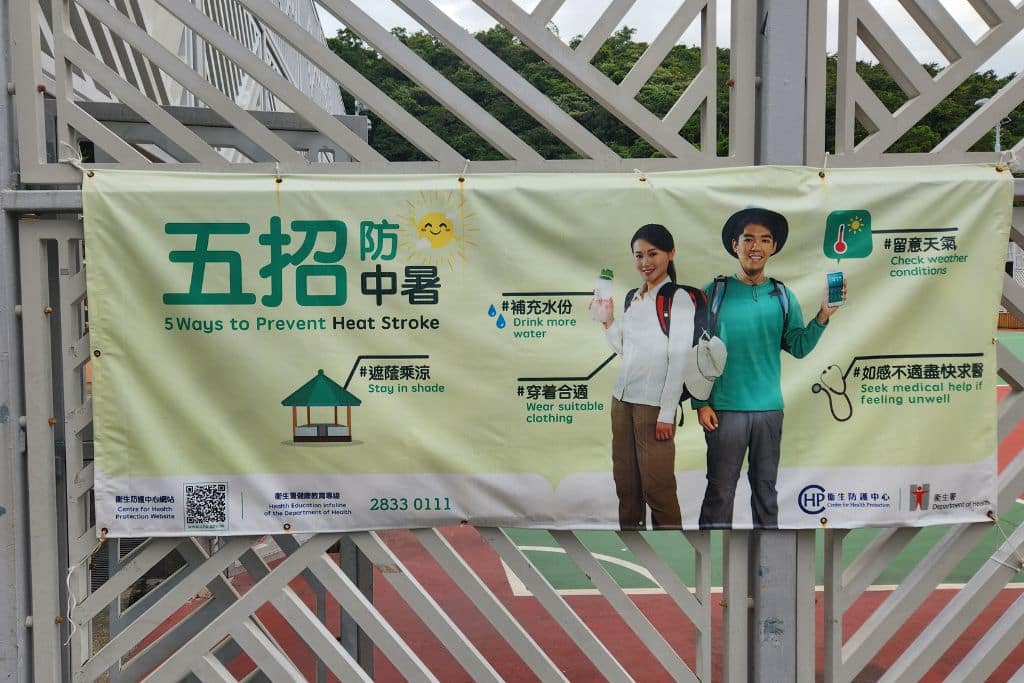
Asked why heat is not in its prenatal materials, the Department of Health told Earth.Org that it already warns “vulnerable groups including pregnant women” across press releases, social media, TV and posters, advising them to stay hydrated and keep indoor temperatures cool. It did not comment on whether the evidence linking heat to preterm birth, miscarriage and stillbirth would be added to pregnancy-specific patient education.
That matters, public health experts say, because it leaves pregnant women assuming the worst-case scenario is heatstroke – when the risks actually include miscarriage, preterm birth and labor complications.
The Hospital Authority, which delivers most of Hong Kong’s babies, told Earth.Org it had no local studies or data to share. It did not respond to questions as to whether it tracks preterm births or stillbirths during very hot weather warnings, or whether it was reviewing prenatal protocols.
The Family Planning Association said pregnant women “may be more vulnerable” to heat, but heat counseling was not a standalone part of its preconception or early pregnancy services, adding that teams monitor emerging evidence and tailor their advice. The Centre for Health Protection and the Hong Kong College of Family Physicians did not respond to Earth.Org’s inquiries.
Hottest for Those with Least Cooling
Pregnant migrant domestic workers, asylum seekers and women in poverty are among the groups most exposed to heat and least protected from it. For them, heat only surfaces informally in routine care. “It’s not something I ask in my assessments. ‘Do you have the aircon on?’” said Marcella King, senior healthcare manager at Pathfinders, a Hong Kong NGO that supports vulnerable mothers and their babies, mostly former migrant domestic workers who lost their jobs after becoming pregnant. Her clinical dashboard captures fields like blood pressure, fetal heart rate, weight and domestic violence screening.
Most of her patients are not in the public health system, and on the hottest days, “they will all comment on the heat,” King said. She suspects under-reporting. “I’m sure there are mothers that, if we did ask the question and said, ‘Is it very uncomfortable for you at night?’ they would answer and say yes.”
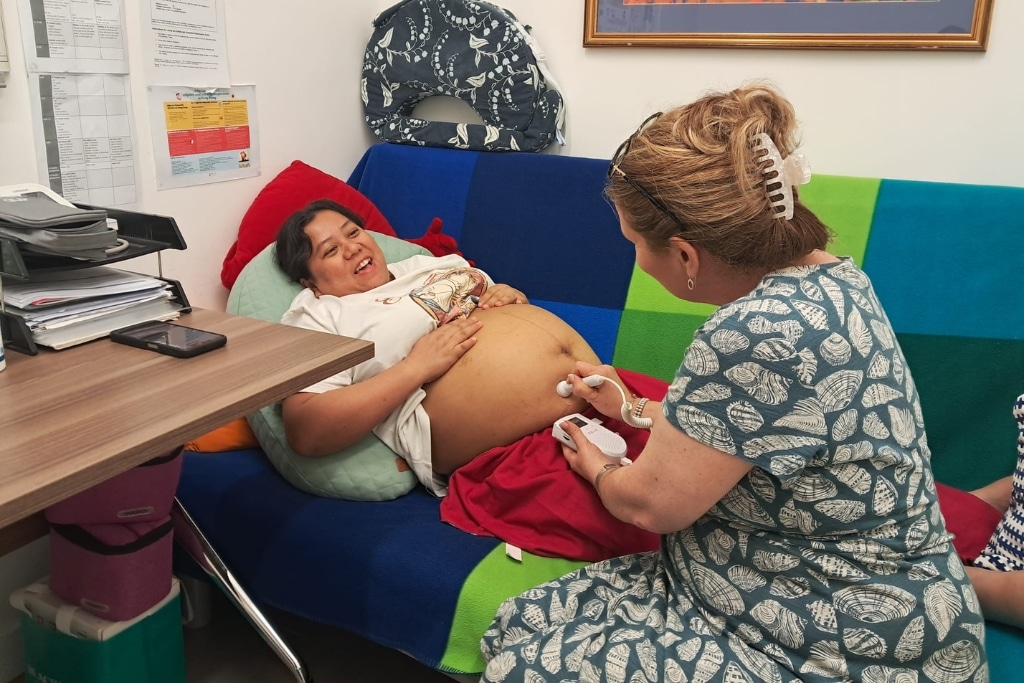
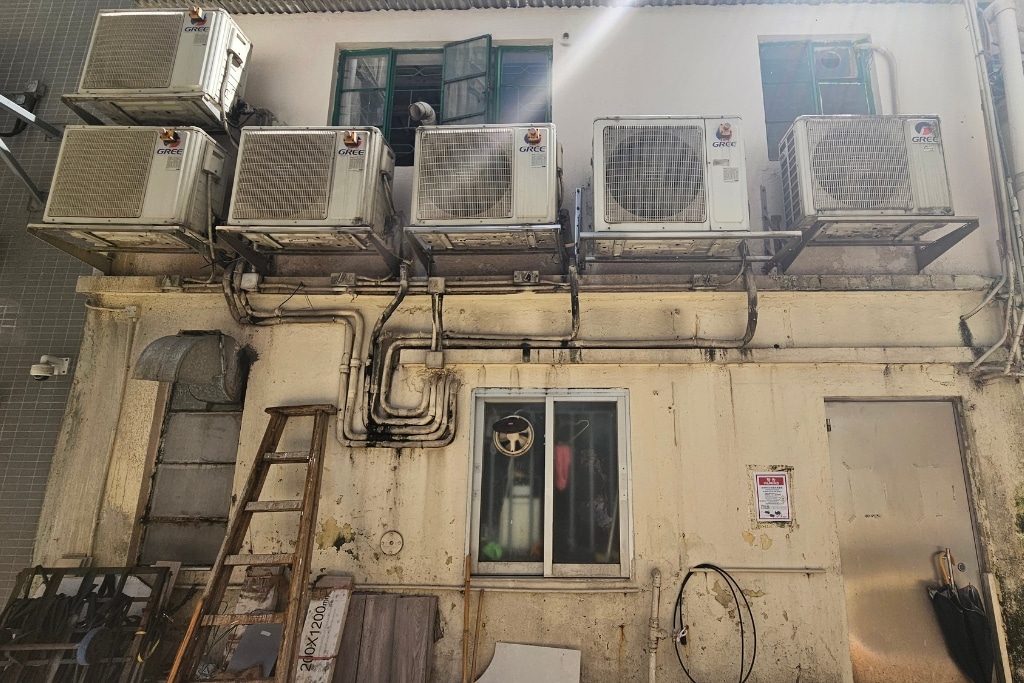
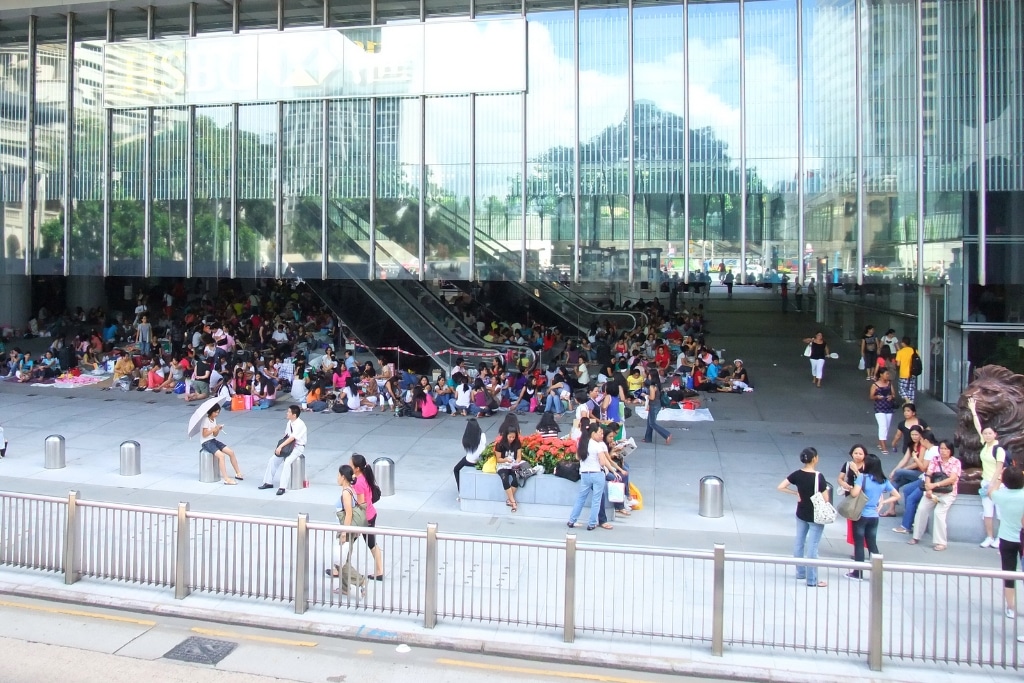
Many live in overcrowded apartments with up to ten others, surviving on vouchers and subsidies that limit how they can cope with heat, said Pathfinders crisis intervention officer Kiara Abila. Those still employed must live with their employers, and “some of them, definitely, they’re not allowed to turn on the AC.”
The Labour Department confirmed to Earth.Org that migrant domestic workers sit outside the city’s occupational safety and health ordinance. “The definition of employee does not include a domestic servant,” it said. The department does not track pregnancy-related heat complaints and declined to say whether pregnant workers can be medically exempted from outdoor duties.
What Would Need to Change
Elsewhere, the urgency is being acted upon. In January, the World Health Organization and the World Meteorological Organization convened epidemiologists, climate scientists, and public health representatives in Geneva, Switzerland, to set priority indicators for tracking how heat affects maternal, newborn and child health, warning that extreme heat poses serious risks to pregnant mothers and their babies.
More than 140 countries have heat-health action plans, according to Bishai’s research, and some, including the US and South Australia, issue specific guidance for pregnant women. Researchers in Sweden, South Africa, Zimbabwe and the UK are developing MotherHeat Alert, an app that alerts pregnant and postpartum women to heat risks and how to protect themselves and their children.
This month, the American College of Obstetricians and Gynaecologists issued a landmark statement linking climate change, heat, wildfire smoke and air pollution to preterm birth, preeclampsia, stillbirth and pregnancy loss, instructing obstetrician-gynecologists to identify environmental risks during prepregnancy counseling.
But just a few Asian countries, including India, have pregnancy-specific heat-risk campaigns. Most rely on generic heat-health messaging that only indirectly reaches pregnant women.
For Tam, a patient leaflet is not enough. The bigger gap is legal – particularly for women who work outdoors in early pregnancy, before they have disclosed their status. Hong Kong’s heat-stress guidelines for workers are voluntary and mandate only rest breaks, not exemption from outdoor work. A pregnant construction worker, surveyor or domestic helper has no formal right to refuse heat-exposed duties. “If you just give some general statement, it’s of no use. You need to have some law to protect our pregnant women,” Tam said.
Bishai said the heat message needs to reach pregnant women wherever they are; prenatal visits that ask about AC access and trigger a stay-cool plan, school health classes and senior centers where grandparents-to-be learn it too. The message should also show up on parenting websites, through influencers, and at baby showers where cool-gear becomes a standard gift.
“The unwanted superstitious advice that all pregnant moms are subjected to needs to be augmented by the serious scientific message to avoid prolonged exposure to heat,” said Bishai.
Frontline staff could quickly start incorporating the heat message, King said. With a Department of Health warning, staff could tell mothers “to be mindful during pregnancy, factors like hot temperatures could bring on labor,” she said, adding that any advisory should cover migrant domestic workers and their employers. “If your MDW is pregnant, you do need to make sure that she is keeping cool, and that she has access to rest breaks,” said King.
The principle has to be prevention rather than reaction, Tam said. “Whenever the environment temperature is higher than you expect, don’t go.”
In Sham Shui Po, Siti’s electricity bill climbs to HK$700 (US$89) in the hottest months. She covers it from her savings and from what her parents send from the family fish farm in Indonesia 3,000 kilometers away.
Asked how she would like to learn about heat risk, she said she would like to hear it from a nurse or doctor during a consultation.
“The mother must be strong, even not happy, also must be happy,” she said, resting a hand on her belly as the sounds of children in the Pathfinders office echoed outside.
Featured image: Pexels.
💡How to stay safe in extreme heat
- 💧Stay hydrated: Drink around two liters of water per day, or about eight glasses. In heat conditions, experts recommend drinking throughout the day and urinating around six to seven times a day, or every two to three hours.
- 🍉Eat nutritious food: Stick to hydrating, fresh food such as watermelon, peaches, berries, grapes, and oranges, vegetables that can be juiced, as well as liquid meals such as soups. Avoid spicy foods, known to make the body sweat. Avoid cooking at home, and opt for the microwave instead of the oven if you have to.
- 💦Exercise responsibly: If you exercise outdoors, take breaks in the shade or indoors to allow your body to cool down faster. Wear sensible attire, such as lightweight, loose-fitting clothing made of breathable fabrics, such as cotton, linen, bamboo, polyester, nylon and microfiber. Hydrate well before a workout and drinking throughout every 15-20 minutes, especially when the physical activity lasts longer than an hour.
- 🌡️Follow local weather services: Check local meteorological services or news channels regularly, as they provide real-time updates and alerts about heat advisories and warnings. Local governments and emergency management agencies often post timely updates on social media platforms as well so keep them monitored.
- 📱Use weather apps: Download reputable weather apps that provide notifications about extreme heat conditions. Many of these apps allow users to set alerts for specific weather events in their area.
- ❗Sign up for emergency alerts: Many cities have rolled out local emergency notification systems or community alert programs that citizens can easily enroll in. These services often send text or email alerts directly to residents during extreme weather events, including heatwaves.
For more tips, check out our article on this topic. To learn more about the risks of extreme heat and how the world is adapting, you can read our 3-part series on extreme heat.
This story is funded by readers like you
Our non-profit newsroom provides climate coverage free of charge and advertising. Your one-off or monthly donations play a crucial role in supporting our operations, expanding our reach, and maintaining our editorial independence.
About EO | Mission Statement | Impact & Reach | Write for us