Published on
July 13, 2026

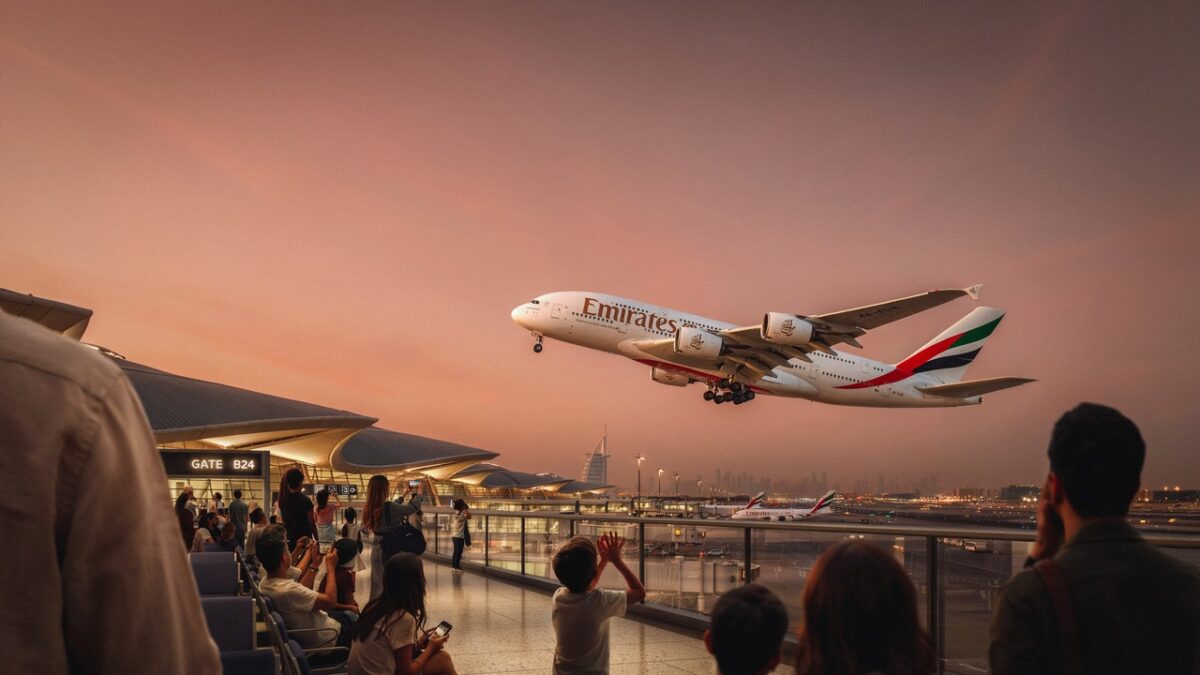
Image generated with Ai
Emirates Airbus A380 Flights Suspension Changes Summer Travel Plans Across Five Major International Routes.Emirates has delayed the planned return of its iconic Airbus A380 aircraft on five major global routes, creating new travel updates for passengers flying between Dubai and important destinations in Europe, Asia and Australia. The airline’s latest schedule adjustment means that travellers expecting the world’s largest passenger aircraft on services to Glasgow, Hong Kong, Osaka Kansai, Perth and Prague will need to check their flight details carefully before departure.
The Airbus A380 was expected to return to several of these routes in August 2026. However, Emirates has now pushed back the planned deployment until September 2026, with further changes possible depending on regional aviation conditions. The adjustment reflects the airline’s ongoing fleet management strategy during a period of operational uncertainty.
For passengers, this does not mean routes are cancelled. Emirates continues operating services to these destinations, but with different aircraft types, mainly Boeing 777 aircraft and other wide-body jets. Travellers may experience differences in cabin layout, seat capacity and onboard products compared with the double-decker A380 experience.
Emirates remains one of the world’s largest Airbus A380 operators. The airline has built a global travel network around the superjumbo, using the aircraft on high-demand routes where passenger numbers justify larger capacity. According to Emirates’ latest annual reporting, the carrier continues operating one of the largest A380 fleets in commercial aviation while expanding its wider global network.
Emirates A380 Schedule Update Shows Delayed Aircraft Return Until September 2026
The latest Emirates A380 schedule update shows that the superjumbo aircraft is now expected to return to five destinations from September 1, 2026. Earlier plans had targeted August 1 for most routes, while Perth was scheduled for an earlier July return.
The affected routes include:
Advertisement
Advertisement
- Dubai (DXB) to Glasgow (GLA)
- Dubai (DXB) to Hong Kong (HKG)
- Dubai (DXB) to Osaka Kansai (KIX)
- Dubai (DXB) to Perth (PER)
- Dubai (DXB) to Prague (PRG)
The delay is particularly important for summer travellers because August represents one of the busiest international travel periods. Families, holidaymakers and business passengers often book long-haul journeys months in advance, making aircraft changes an important factor for those selecting seats, cabin classes and travel experiences.
Travellers booked on these routes should monitor Emirates flight information before arriving at Dubai International Airport. Aircraft assignments can change even after tickets have been issued, meaning passengers should not assume that an A380 operation will continue until final confirmation.
Dubai To Glasgow A380 Route Faces Another Delay As Passenger Capacity Remains Reduced
The Dubai to Glasgow A380 route is one of the most closely watched changes because Emirates has historically operated the superjumbo on this important Scotland connection.
The Airbus A380 was scheduled to return to Glasgow in August 2026, but the relaunch has now moved to September. Until then, Emirates continues using smaller aircraft configurations, reducing the number of available seats compared with a full A380 operation.
When the A380 eventually returns, passenger capacity on the route is expected to increase significantly. The aircraft can carry more than 500 passengers depending on configuration, compared with lower-capacity wide-body aircraft currently operating the service.
For Scottish travellers, the A380 return is important because it improves seat availability during peak travel periods and strengthens connections through Dubai to Asia-Pacific destinations.
Advertisement
Advertisement
Dubai International Airport remains a crucial global transfer hub for Emirates passengers. The airport handled record passenger volumes recently, maintaining its position as the world’s busiest airport for international travel. Dubai Airports reported 95.2 million passengers in 2025, highlighting the continued demand for global connectivity through the UAE.
Dubai To Hong Kong A380 Service Changes Create New Options For Asia Travellers
Hong Kong is another major destination affected by the Emirates A380 schedule change. The airline currently operates some A380 services involving Hong Kong through Bangkok, while nonstop Dubai-Hong Kong A380 operations are expected to return later.
The Hong Kong route remains strategically important because Dubai acts as a major connecting point between Europe, the Middle East, Africa and East Asia.
For international travellers, aircraft changes can influence the overall journey experience. The Airbus A380 is known for its spacious cabin design, quieter passenger environment and premium onboard facilities. Emirates operates several A380 configurations, including different seating capacities depending on cabin arrangement.
Passengers connecting through Dubai should also consider transfer times at Dubai International Airport. During peak holiday seasons, large passenger flows can create longer queues at security, immigration and boarding areas.
Emirates A380 Network Expansion Continues Despite Temporary Operational Adjustments
While Emirates has delayed A380 operations on selected routes, the airline continues expanding and adjusting its superjumbo network. The carrier is expected to operate the aircraft across dozens of international destinations, supporting high-demand markets where passenger numbers remain strong.
Advertisement
Advertisement
Recent schedule updates show that Emirates is balancing A380 availability across different markets, increasing operations on some routes while temporarily replacing the aircraft with Boeing 777 services elsewhere.
This approach allows the airline to maintain network reliability while managing aircraft availability and changing operating conditions.
The Emirates Group reported strong financial performance for the 2025–26 financial year, with record revenue and profitability supported by global travel demand. The airline continues investing in fleet development, including new-generation aircraft alongside its existing A380 operations.
What Travellers Should Know Before Flying Emirates During Summer 2026
Passengers travelling on affected Emirates routes should take several precautions:
- Check the final aircraft type before departure.
- Confirm seat assignments after any aircraft change.
- Review baggage rules and cabin details.
- Arrive early at Dubai International Airport during peak travel periods.
- Monitor Emirates notifications for schedule updates.
The Airbus A380 aircraft change does not automatically mean flight cancellation or route disruption. Most travellers will continue flying on the same routes with different aircraft.
However, passengers who specifically selected Emirates because of the A380 experience should review their booking details and consider available options if their travel plans depend on the aircraft type.
Advertisement
Advertisement
Emirates Airbus A380 Flights Suspension Highlights Changing Global Aviation Operations
The delay of Emirates Airbus A380 flights on Glasgow, Hong Kong, Osaka Kansai, Perth and Prague routes demonstrates how global aviation networks continue adapting to changing operational conditions. The airline remains committed to maintaining international connectivity while carefully managing its flagship aircraft fleet.
For travellers, the key message is preparation. Flight schedules, aircraft types and operating patterns can change, especially during periods of regional uncertainty. Checking official flight updates before travelling remains the best way to avoid unexpected surprises.
Emirates continues to operate one of the world’s largest Airbus A380 networks, and the superjumbo remains a major symbol of international travel connectivity between Dubai and global destinations.
Advertisement
Advertisement