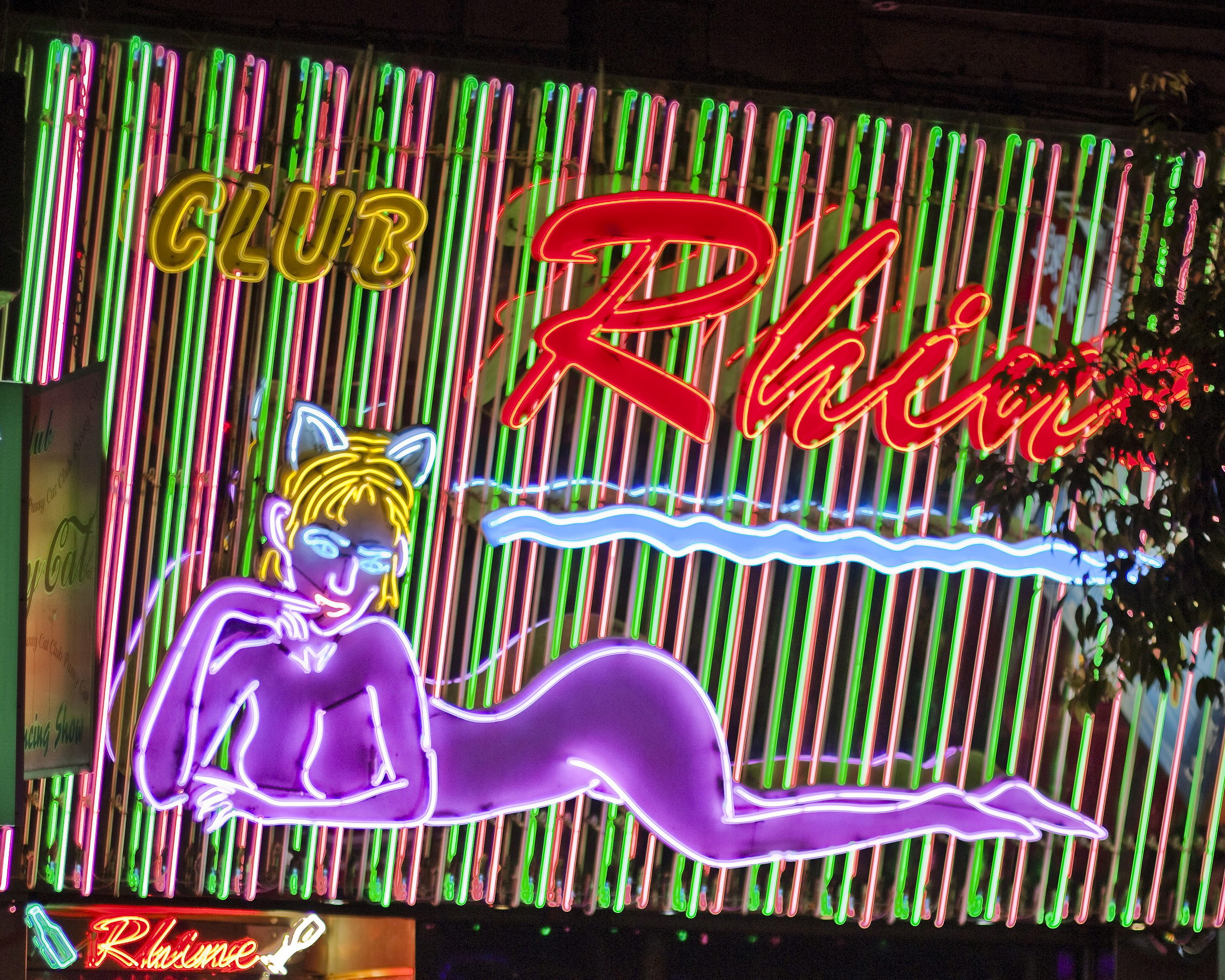
Fewer than 400 neon signs remain of the tens of thousands that once illuminated the city. Can a new generation help bring them back?
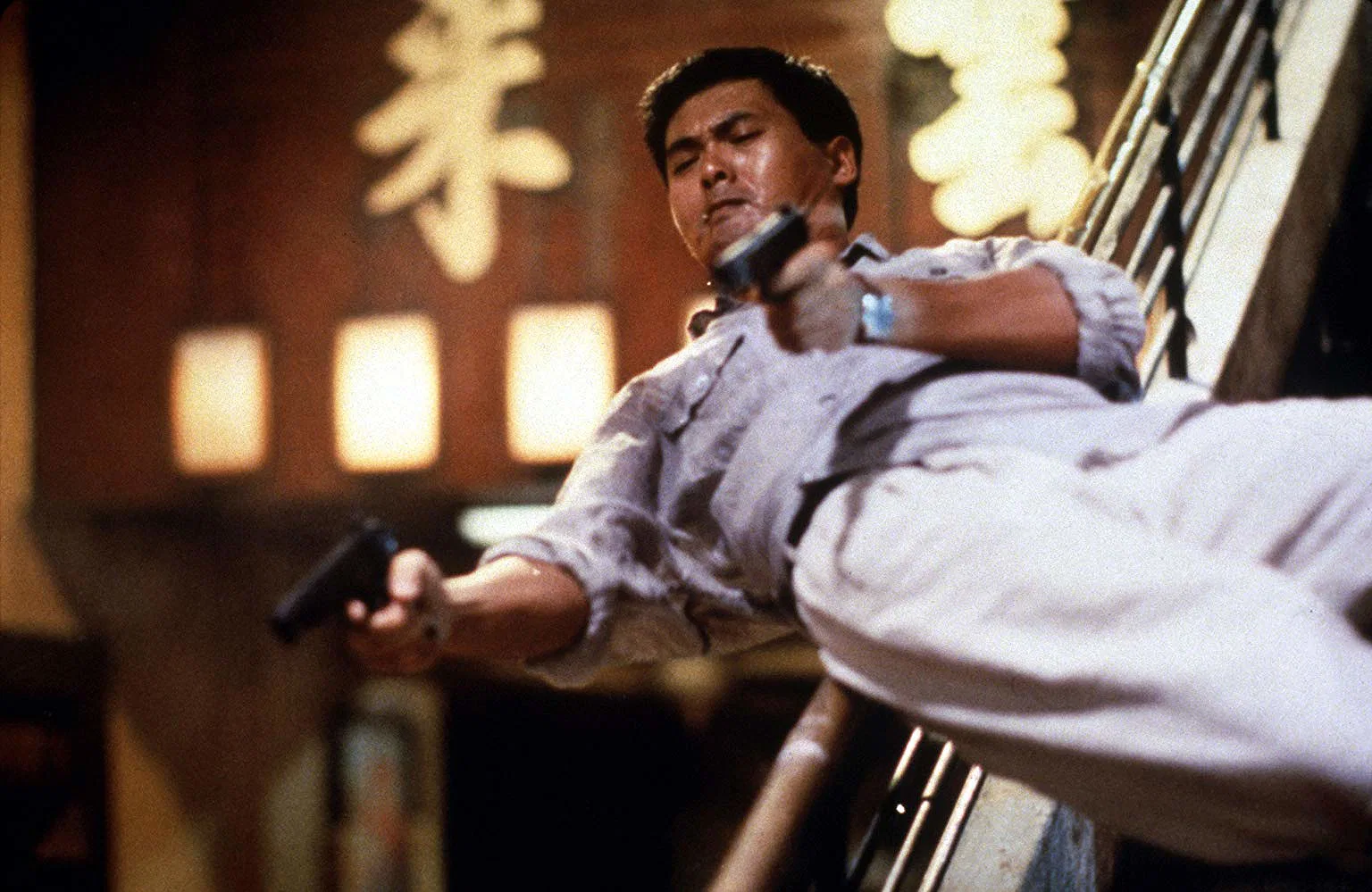
Hard Boiled, the classic 1992 John Woo movie, opens with a montage that couldn’t have been filmed anywhere but Hong Kong. As Chow Yun-fat languorously plays clarinet in a jazz club, the camera cuts to neon-drenched streets before arriving at a teahouse whose patrons are bathed in the warm glow of illuminated Chinese characters. It’s vintage Hong Kong in all its sultry glory: seedy, cinematic, alive.
But that Hong Kong doesn’t exist anymore. The city famous for its intense canopy of signage in every commercial street—perhaps the city with the most neon signs anywhere, at any time in history—has gone dark. A change of regulation in 2010 made nearly 190,000 signboards illegal overnight, including tens of thousands of neon signs. (There has never been any official distinction between neon signs and other types of signboards.)
Today, fewer than 400 are left, according to neon conservation groups. They haven’t been replaced by LED or some other type of signage. They’re just gone. How did this happen?

It’s a question I’ve been asking since 2011, when I was one of the first journalists to report on the disappearance of Hong Kong’s neon signs. To find the answer, you need to understand what neon meant to Hong Kong in the first place. When these glowing signs began to proliferate after World War II, they embodied a unique cultural mash-up that didn’t exist anywhere else: historic Chinese symbols and scripts blended with Art Deco verve, with text in Chinese, English and often other languages like Japanese. If the mad panoply of signage symbolized Hong Kong’s capitalist free-for-all, the art and craftsmanship at the heart of these painstakingly handmade signs represented something more profound.
That something was a way of inhabiting the city after dark. Neon was not simply mounted on Hong Kong’s streets; it filled them. Projecting from façades, emblazoned with restaurant names, pawn shop emblems, mahjong characters and nightclub come-ons, the signs turned corridors into glowing urban rooms. “Neon was just dripping from every street and building,” recalls photographer Greg Girard, who first arrived in Hong Kong in 1972 and spent decades documenting the city’s nightscape. Walking up Nathan Road, he was suddenly in “this totally neon setting,” he says. “It was glamorous and strange and alluring.”
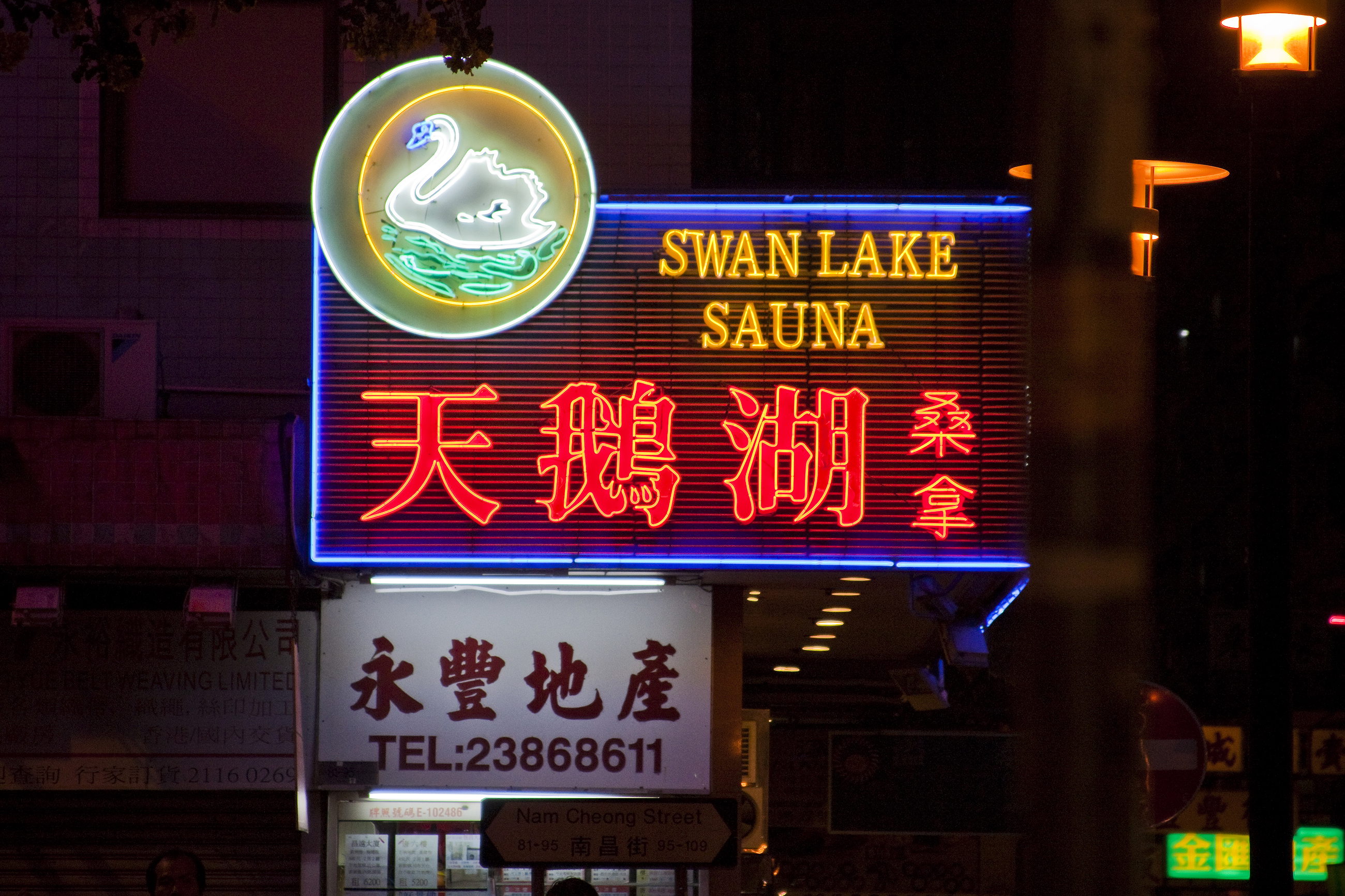
The glamor was inseparable from the craft behind it. Hong Kong neon is made by hand, in a chain of skills that stretches from calligraphers and designers to metalworkers, electricians, contractors and tube benders trained through a traditional master-apprentice system. Its look is equally hybrid. Shanghai’s Art Deco-inflected Haipai style brought machine-age geometry; Chinese calligraphy and auspicious motifs gave the signs local fluency; multilingual text reflected a city built on translation and trade. Unlike the standardised glow of LED, each neon sign carries the touch of a brush, a hand and a business owner’s ambitions.
By the late 2000s, however, those ambitions were framed as a problem. Signboards were criticised for blocking air flow, worsening roadside pollution and trapping heat; poorly maintained signs were seen as a safety risk. On December 31, 2010, the Buildings Department introduced the Signboard Control System, imposing strict limits on sign size and placement and removing those that failed to comply. Neon was not the only target, but it was the most visible casualty.
That is where a new generation of advocates stepped in. Among them are Kevin Mak and Ken Fung, architects and co-founders of @streetsignhk, who have spent years documenting, collecting and exhibiting Hong Kong’s disappearing signscape. They are just two of several people involved in neon conservation, alongside researchers, curators and organizations such as Tetra Neon Exchange.
But Mak and Fung have moved beyond rescue. Through installations such as Ne-on-Ne-on, made with artist Choi Sai-ho and neon master Wu Chi-kai, they have experimented with lightweight, mobile structures that free neon from the old sign box and imagine new ways for it to live in public space.

Jive Lau is pursuing another path. Through his studio Kowloneon, the young artist, who trained in Taiwan to bypass the old-fashioned master-apprentice system, has turned neon-making into a platform for workshops, advocacy and art. He makes creative neon installations but also, increasingly, signage for businesses that want to embrace Hong Kong’s neon heritage, but in a decidedly contemporary way.
And there are signs the glow is returning. Lau says he has seen a surge of interest over the past year. The Luminous Neon exhibition at Hong Kong’s new Design Museum brought together historic signs with new works by Lau and was so popular it was extended for nearly two months.
Whether this adds up to a full revival is still an open question. The tube benders and calligraphers who built neon’s golden age are mostly retired or gone, and no shop owner today needs neon the way one did in 1985, now that LED is cheaper, brighter, easier to permit. But something has shifted. Lau’s workshops are booked out. Business owners are calling Mak and Fung, not the other way around. And on a handful of streets in Kowloon, a sign still glows the old way: hand-bent glass, one color bleeding into the next, no two tubes quite alike.
No one is capturing a Hong Kong street the way Hard Boiled did in 1992. That city, and that light, are mostly gone. But turn down the right corner today, and for a moment, it flickers back on.