North Santa Cruz Avenue was awash with yellow and green.
Brazilians were dancing the samba, drinking, beating their drums and singing “Ole, Ole” as they filled every inch of the main street of Los Gatos. It was carnivalesque chaos. At 2am, Mayor Randy Attaway lay in bed, praying for quiet, fearful of the locals’ complaints. But they never came.
In the quaint, sleepy town of Los Gatos, the gateway to the Santa Cruz Mountains and the beaches of Monterey and Santa Cruz, California, fans of Brazil’s 1994 World Cup team had taken over.
Residents, speaking to The Athletic 32 years on, say they had never seen anything like it before and will never see anything like it again. “They lit this town on fire,” says Attaway. “In a positive way.”
Los Gatos, a once agricultural town with a population of just 27,000, was not initially on the list of the 1994 World Cup team bases.
But after stopping for lunch in the area where Silicon Valley entrepreneurs, like Apple co-founder Steve Wozniak, resided, Brazil preferred this low-key option compared to the larger cities nearby of San Francisco or San Jose.
Hotel Villa Felice, just over a mile from downtown and with a single entrance, suited the squad’s need for privacy. Before the tournament, the country’s football federation president Ricardo Teixeira invited Attaway and his wife to visit Brazil. Attaway agreed to provide the team with police protection and ensure they were well looked after.
“The mayor promised a lot of good things,” says MarLyn Rasmussen, Los Gatos’ former senior deputy clerk. But there was no budget to meet Brazil’s requirements, such as transport and security. Rasmussen recruited volunteer drivers and secured sponsorship via Santa Cruz Operation to loan a bus.
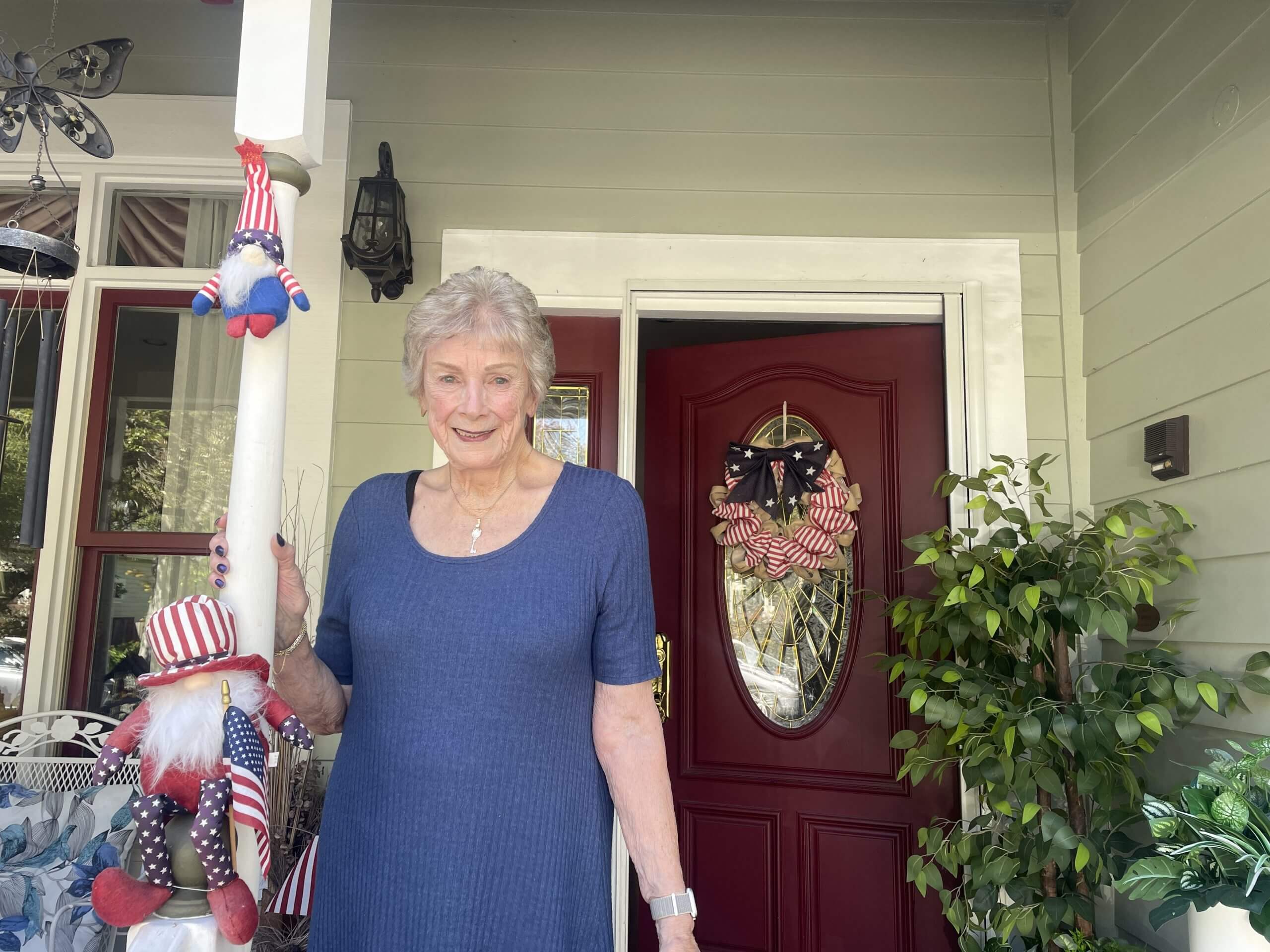
MarLyn Rasmussen at her Los Gatos home (Charlotte Harpur/The Athletic)
Upon the team’s arrival in Los Gatos, Rasmussen, now 88, recalls meeting them at the town hall to accompany them to their hotel.
She boarded the bus and welcomed them. The driver started the engine. “Stop!” said Brazil manager Carlos Alberto Parreira. He pointed at Rasmussen. “You, go! Not on my bus, not with my boys!”
“That was my first indication as to where my place was going to be,” says Rasmussen.
While the locals partied in Los Gatos, Rasmussen ensured the team’s stay ran smoothly, remaining at their beck and call at any hour of the day.
Leading the convoy in her car, flanked by two motorcycle officers loaned to the town, Rasmussen escorted two buses — one carrying the players and staff, the other their equipment — on the drive to Santa Clara University’s campus. “This is unreal,” Rasmussen, responsible for their security, thought. “I have a busload of young men worth millions of dollars.”
Driving down the highway on their return from practice one day, her phone, loaned to her by the police, rang. The team bus had broken down. “Oh my god, get back in!” came the driver’s voice down the line.
The “boys”, as Rasmussen called them, were out on the freeway, playing football. Cars honked as traffic slowed to catch a glimpse of stars including Romario and a 17-year-old Ronaldo.
A replacement vehicle came and as the players later stepped off that bus, their heads hung low.
“Are you mad?” they asked Rasmussen. “Don’t you ever do that again or I’m going to smack your butts!” she replied.
The players turned around with a smile: “OK, Los Gatos Mamma.” And that affectionate name stuck.
Meanwhile, the traditionally “socially conservative” and “uptight” town, in local Jason Sherry’s words, finally “let its hair down”.
“I’ve never seen such passion, and passion for football, in my life,” adds fellow resident Chris Verna. “It was like we were in the stadium but we were on the streets.”
Every time Brazil won, tournament fervour grew.
“It was the first time I realised I needed to pay attention to the World Cup,” says Denise Gollaher, 24 at the time. “It caught us off guard. We knew the World Cup was happening but it wasn’t part of us. We were 49ers (NFL), Giants (baseball), Sharks (ice hockey) fans.”
Streets were blocked off to cars as fans flooded restaurants and bars, dancing on the tables and chairs of Willow Street Pizza while Gardino Fresco, an Italian restaurant, sold out of food, beer and wine.

Brazil fans outside Willow Street Pizza in Los Gatos in 1994 (Attaway collection)
“It felt like all of Brazil was staying here in Los Gatos,” says Verna.
But it was not just the Brazilians. Americans joined in, too. Business boomed as crowds 10 deep queued for beer at Los Gatos Brewing Company, owned at the time by Ted Wallace.
“We just had the best time with those folks,” he says. The 91-year-old recalls swapping shirts with a Brazilian woman and getting more than he bargained for — she had no bra on.
Behind the scenes, Rasmussen was working hard to grease the wheels. Before the tournament, Attaway had agreed with the Brazilian federation’s president for the players to meet local children.
But Parreira was resistant. Every time Rasmussen brought up the subject, he ignored her. When she saw the players leave the pitch, she approached the coach while he was deep in discussion with one of his squad.
“This is the time that you’re supposed to sign the balls,” Rasmussen told him.
“No time,” he said.
“Excuse me, this is the time,” she replied. “You see that bus over there? You see these keys in my hand? That bus does not move until those balls are signed.”
It just so happened that on July 4, Independence Day in the United States, Brazil’s opponent in the round of 16 at Stanford Stadium, in the southern suburbs of San Francisco, just over 20 miles from Los Gatos, was… the United States.
Despite Leonardo being sent off in the first half, Brazil beat the hosts 1-0 thanks to a goal from Bebeto, a favourite of both the mayor’s wife Sara Attaway, and Rasmussen. “He was a real gentleman, very respectful,” says Sara.
Upon their return to the Villa Felice, the players asked Rasmussen: “Are you upset that we won?”
“No,” she said. “I couldn’t be more proud of my boys!”
That night, according to reports, around 30,000 people, twice the size of the Los Gatos population, descended on the town for the biggest party yet.
“It was the talk of the town!” says Timothy Dauber, who was 12 at the time. “They hit Los Gatos and no one was prepared. The police department was inundated. They didn’t know what to do. It was like a riot. You know how the Brazilians party.”
How a California town adopted Brazil’s team during the 1994 World Cup
Charlotte Harpur and Johnny Sweet
Throughout the festivities, Los Gatos’ chief of police was out of town, leaving his more liberal second-in-command Bob Schuster in charge.
“He allowed it to be a joyous event,” says Attaway. “As much as I highly respect our police chief, he had a more militaristic view and would not have had the same attitude to let people be free.”
But then, after Brazil’s final game at Stanford, the chief returned. “The cops shut this place down pretty hard, pretty fast,” says Daniel Schell, 79, a former cowboy who completed two tours of duty in the Vietnam War.
Officers on horseback drove people out of town. Although a report from that summer noted some residents were irritated by the incessant noise and frowned upon Brazilian women wandering about the streets in string bikinis, most people today recall a harmonious gathering with no fighting or damage. The decision to stop the partying angered many.
“We were p**sed off,” says Robert Killion, a bartender for over 45 years at Los Gatos’ oldest bar, Black Watch. “They told us to stop serving people. They weren’t doing anything wrong, no one was fighting. They were all having fun.”
Brazil were ready to leave Los Gatos and continue their World Cup journey, but there was one final piece of business. Rasmussen still needed a team photograph in front of the Santa Cruz Operation banner — the company which had provided the squad’s transport.
Once again, manager Parreira was uncooperative. “This bus isn’t leaving,” Rasmussen told him, threatening to lie in front of the bus.
Parreira stopped in his tracks. He stared at her in silence as she marched towards the bus. Then, without another word, he barked a few orders in Portuguese. When Rasmussen turned around, the Brazil team had gathered around, holding the company banner.
“I had the excitement behind the scenes,” says Rasmussen, who recalls a teenage Ronaldo being homesick. “Randy (the mayor) had the excitement of being wined and dined.”
Brazil beat the Netherlands in a Dallas quarterfinal then Sweden in Los Angeles to reach their fifth World Cup final. The Attaways were invited to attend that game, against Italy.
At the Rose Bowl in the LA suburb of Pasadena, the score was level at 0-0 after extra time. Sara, the mayor’s wife, held FIFA president Joao Havelange’s grandson’s hand as they anxiously watched the penalty shootout unfold.

The 1994 World Cup final was held at the Rose Bowl in Pasadena (Attaway collection)
She still remembers the feeling of the young boy squeezing her hand when Roberto Baggio missed his spot-kick, crowning Brazil world champions. While the celebrations had cooled in Los Gatos, the party was just getting started for the Attaways, who were invited to fly back with the team to Brazil on their private plane.
The green paint on the aircraft’s newly added fourth star — denoting their four World Cup titles — was still drying as the players took their seats in business class, tambourines and maracas in hand. The Attaways boarded among the staff, some of whom took their time to adjust to a woman being on board.

Brazil in front of their plane, with its new fourth star (Attaway collection)
The team stopped off several times to honour their fans on the way to Rio de Janeiro.
Upon arriving at the coastal city of Recife, they boarded fire trucks and paraded the streets. In Brasilia, they were welcomed by air-force jets that flew so closely to their chartered flight you could see the pilots waving Brazilian flags in their cockpits. Finally, when they landed in Rio, they boarded buses which crept through streets lined with thousands of fans.

Brazil’s victorious players board fire trucks for a parade in Recife (Attaway collection)
And still the party went on.
The team, dressed smartly in suits, met for their final dinner of the trip at Hippopotamus, a chic establishment. Some of the players were crying, knowing it was the last time that squad, half of whom played their domestic football outside of Brazil, would be together.

The Brazil team gathered one last time, at Hippopotamus, following their World Cup win – Brazil’s fourth (Attaway collection)
“It was magical just to be part of that close-knit group,” says Attaway, touched that “outsiders” had been invited to the intimate occasion. Such a whirlwind adventure does not usually happen to a small-town mayor. Brazil awarded Attaway the highest commendation in the country for foreign nationals, a signed football and shirt.
“I never expected anything like that,” he says. “All I wanted to do was a good job for our citizens and town, support the team and make them feel comfortable. It was a life experience for me but more so for our residents. That is what it was all about.”
Residential housing now stands on Winchester Road in Los Gatos, where the Villa Felice once welcomed the Brazil squad.
The town’s quiet streets are lined with upmarket shops and restaurants, houses sell for millions of dollars, and some of Silicon Valley’s biggest technology companies, including Netflix, have established themselves here.
But for a month in 1994, these streets belonged to Brazil and their jubilation lives long in the locals’ memory.
“Along with the United States, we’ll always support Brazil,” says Sara. “They have a special place in our hearts.”