By Lea Mira and Orit Naomi, HTN staff writers – 7.2.2026
China’s growing investment in robotics and artificial intelligence is extending into hospitality in a big way, with Shenzhen-based Pudu Robotics announcing plans to develop what it describes as the world’s first “full-scenario robot-serviced hotel.” Scheduled to open in 2027 following a public pilot in late 2026, the project represents one of the industry’s most ambitious attempts to create a hotel where autonomous robots perform virtually every operational role, from check-in and room service to cleaning, luggage handling and guest support.
The hotel will be located on West Artificial Island, part of the Shenzhen-Zhongshan Link, the massive bridge-and-tunnel crossing that connects Shenzhen and Zhongshan in China’s Pearl River Delta. Developed in partnership with Shenzhen Culture & Tourism Industry Development, the property is expected to become part of a broader technology and tourism destination showcasing advanced robotics and AI applications.
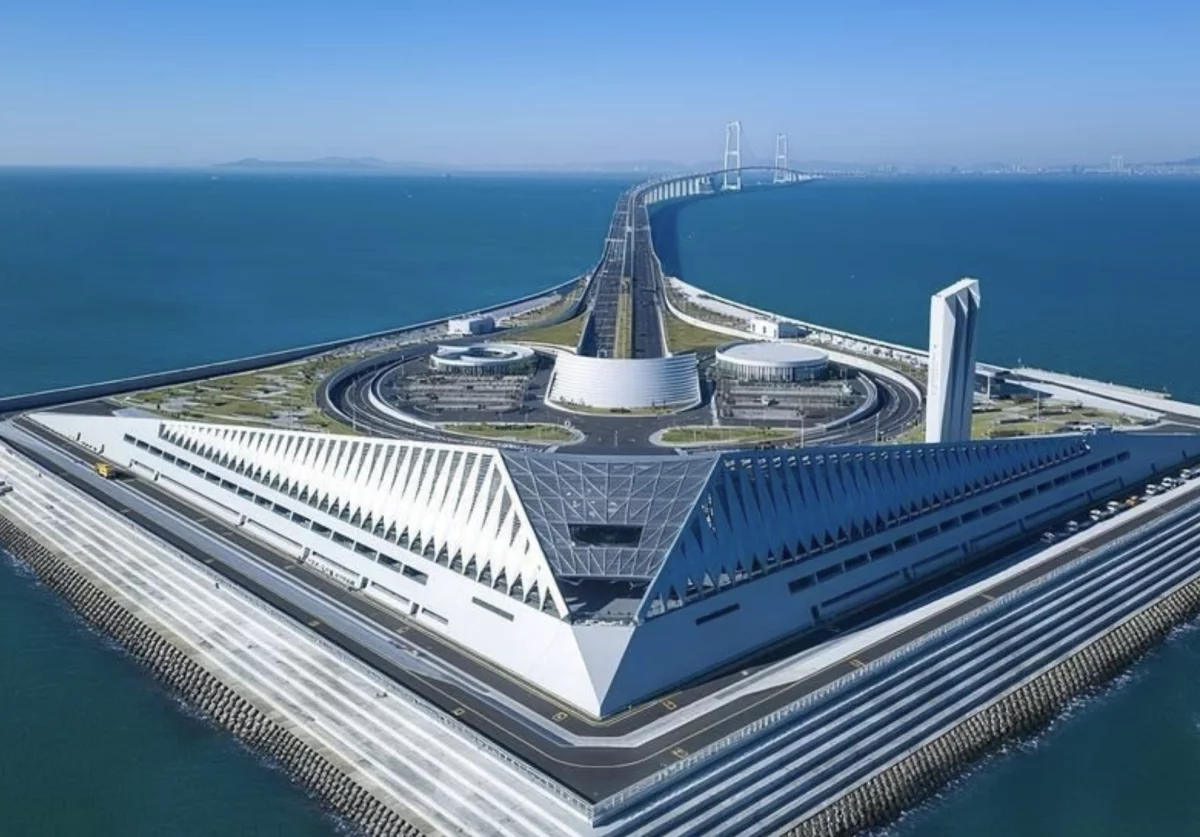
The 44-room hotel will include a restaurant, fitness center and other guest amenities, with robots serving in nearly every front-of-house and back-of-house capacity. According to Pudu Robotics, early trial operations will begin with a limited number of guestrooms and robot-powered services before expanding to full operations the following year.
Unlike many existing hotel deployments that automate individual tasks, the project is designed around a fully integrated robotics ecosystem. Multiple robot types will communicate through a shared AI platform that coordinates activities across the property rather than operating as standalone machines.
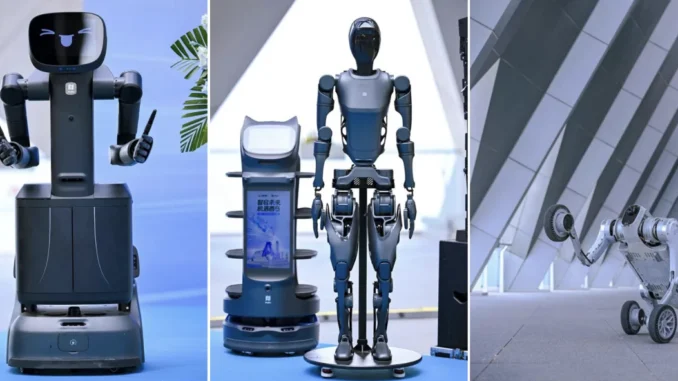
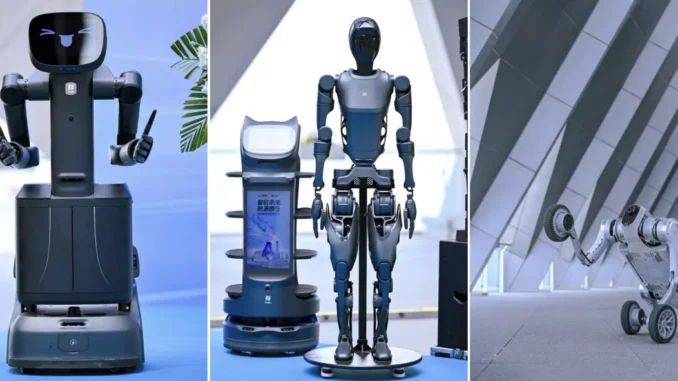
Several of Pudu’s commercial robots are expected to be deployed throughout the hotel. FlashBot will provide room deliveries and support automated retail services, the PUDU T300 will transport luggage and supplies, while the PUDU CC1 Pro and PUDU MT1 will perform autonomous cleaning. BellaBot Pro and KettyBot Pro, already deployed in restaurants and hospitality environments worldwide, will assist with food and beverage service. Underlying the operation is the company’s PuduFM 1.0 embodied AI foundation model together with PuduAgent, software designed to coordinate multiple robot platforms through a common intelligence framework.
According to the company, robots assigned to different responsibilities will share information and coordinate activities while adapting to changing operating conditions throughout the property. Reception robots will be able to interpret gestures and social interactions, delivery robots will dynamically optimize routes, and cleaning robots will adjust their work based on changing conditions, all while operating within the same AI architecture.
The announcement reflects a broader evolution taking place across hospitality automation. Hotels around the world have steadily expanded their use of robotics over the past decade, particularly for repetitive operational tasks. Delivery robots transporting amenities and meals to guestrooms have become common throughout many Asian markets, while autonomous floor-cleaning machines, robotic luggage handlers and AI-powered check-in systems are appearing in an increasing number of properties globally.
Companies including Relay Robotics, Savioke, SoftBank Robotics, LG CLOi and Pudu Robotics have each developed hospitality-focused automation platforms aimed at improving operational efficiency while allowing hotel employees to focus on higher-value guest interactions. Most deployments, however, remain limited to specific functions such as room delivery, concierge assistance, housekeeping support or food service.
Pudu’s project differs in both scale and architecture. Rather than deploying robots to automate isolated workflows, the company is attempting to orchestrate an entire hotel’s operations through a unified AI platform that coordinates multiple specialized robots working together. If successful, the project could demonstrate how autonomous systems can function collectively as part of a hotel’s operating infrastructure instead of serving as individual point solutions.
China provides a particularly favorable environment for testing that concept. Shenzhen has become one of the world’s leading centers for robotics development, while Chinese consumers have become accustomed to automated retail, robot-operated cafés, drone delivery services and app-based service experiences. Hotels throughout major Chinese cities already incorporate delivery robots and autonomous cleaning systems into daily operations, making guests generally more familiar with robotic service than in many Western markets.
The project also reflects the hospitality industry’s broader shift toward AI-enabled operational coordination. Much of the industry’s recent investment has focused on guest-facing applications such as conversational booking, digital concierges, personalized marketing and revenue optimization. Robotics adds another layer by extending AI into physical operations, allowing software to coordinate movement, logistics and service execution throughout a property.
Whether fully robot-operated hotels ultimately become common remains uncertain. Luxury hospitality continues to differentiate itself through personalized service, emotional intelligence and relationship-building, areas where human employees continue to offer clear advantages. Hotels must also manage service recovery, accessibility requirements, VIP requests and countless unexpected situations that still require human judgment and flexibility.
More likely, projects such as Pudu’s will serve as testing grounds for technologies that gradually find their way into mainstream hotel operations. Just as mobile check-in, digital room keys and AI-powered guest messaging began as early pilot projects before becoming increasingly common, coordinated fleets of service robots may eventually become another component of modern hotel operations.
For hotel executives, the significance of the project extends beyond the prospect of a fully autonomous hotel. It offers an early look at how AI may eventually coordinate multiple operational systems simultaneously, helping hotels reduce repetitive work, improve consistency and address ongoing labor challenges while allowing employees to concentrate on the guest interactions that create the greatest value. If the West Artificial Island project delivers on its objectives, it may represent an important milestone in the hospitality industry’s gradual transition from isolated automation tools to fully integrated intelligent operating environments.