Malaysia has officially implemented stricter regulations on the import of Completely Built-Up (CBU) electric vehicles (EVs), significantly narrowing the market window for Chinese automakers like BYD that have previously entered the local new energy vehicle sector, as reported by Caixin.
New import thresholds
Effective July 1, 2026, the Malaysian Ministry of Investment, Trade and Industry (MITI) has mandated that any CBU EV imported into the country must meet two primary criteria:
- Cost, Insurance, and Freight (CIF) Value: Must not be lower than 200,000 ringgit (approx. 29,400 USD).
- Motor Power: Must not be lower than 180kW (approx. 241hp).
Given that the final retail price includes additional taxes, operational costs, and profit margins, vehicles meeting these criteria are expected to have a terminal price significantly higher than 200,000 ringgit (approx. 29,400 USD). This policy directly impacts Chinese brands like BYD, which have built their market presence on cost-effective models.
Impact on Chinese brands
Data from the Malaysian Road Transport Department (JPJ) indicates that Chinese brands (excluding Geely-owned Proton) accounted for approximately 60% of Malaysia’s new energy vehicle market in 2025. However, the new rules have rendered many popular models ineligible for new imports.
For instance, BYD’s current lineup in Malaysia features seven models, all with starting prices below 200,000 ringgit (approx. 29,400 USD), and several models, such as the Dolphin and entry-level Atto 3, fall below the 180kW (approx. 241hp) power requirement. Other popular models, including the Zeekr 7X and Chery Omoda E5, are also currently unable to be imported under the new framework.
Local production hurdles
While some Chinese automakers have considered local production to bypass import restrictions, the Malaysian government has imposed stringent conditions for new manufacturing projects approved after September 1, 2025:
- Minimum vehicle price: 100,000 ringgit (approx. 14,700 USD).
- Export mandate: At least 80% of production must be exported, with local sales capped at 20%.
- High-value localisation: Mandatory completion of welding, painting, and final assembly processes within Malaysia.
BYD’s planned CKD (Completely Knocked Down) factory in Tanjung Malim, Perak – covering approximately 600,000 square meters – has reportedly stalled. Analysts quoted by Caixin suggest the 80% export requirement is unrealistic for BYD, which already maintains significant production capacity in Thailand, Indonesia, and China.
Strategic shifts
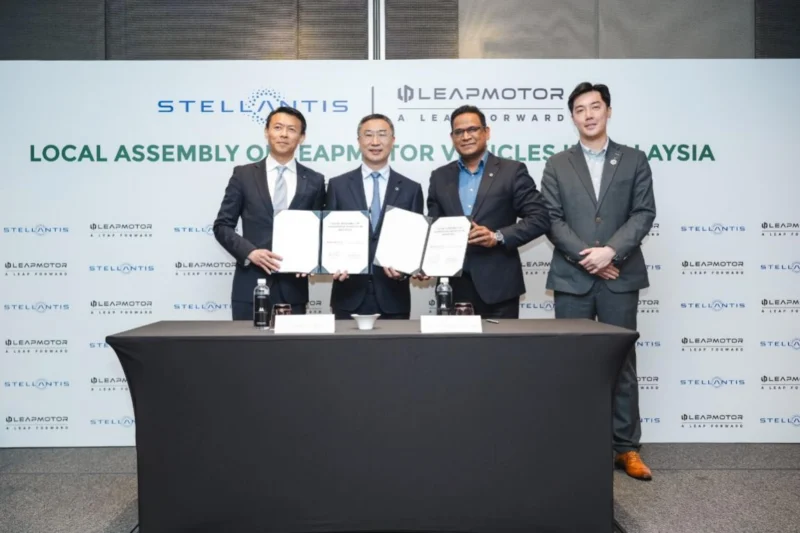
In contrast to the challenges faced by new manufacturing projects, some Chinese companies are leveraging existing local partnerships to maintain a presence. In June 2026, Leapmotor began local assembly of its C10 model at a plant in Gurun, Kedah, utilising Stellantis’s existing facilities. Similarly, Xpeng announced the start of production for its right-hand drive G6 model in collaboration with local manufacturer EPMB. Because these initiatives utilise existing manufacturing infrastructure rather than new projects, they are not subject to the 80% mandatory export constraint.
The Malaysian government maintains that these new policies are designed to foster high-quality investment, technology transfer, and the development of a robust local supply chain, mirroring the industrial model established by domestic automakers Proton and Perodua.