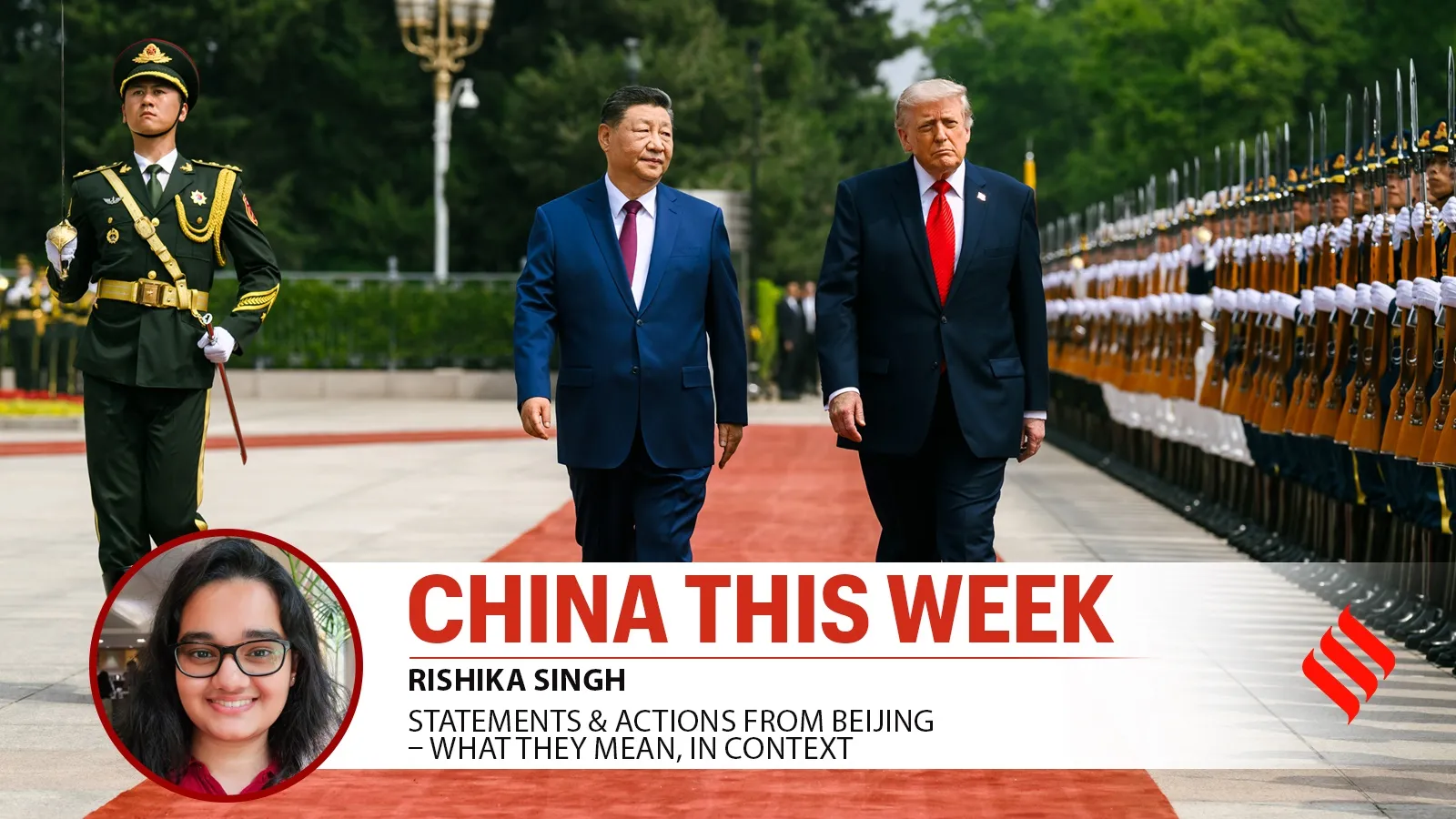
AI outfit DeepSeek, along with over a hundred other Chinese companies, was slated for addition to the Department of Commerce’s Entity List last year, according to a new report. An interagency committee purportedly recommended the addition of the Chinese AI startup after a senior U.S. State Department official said that the firm supported Chinese military and intelligence operations. Alongside DeepSeek, Chinese memory maker CXMT was also slated for the blacklist that prevents American institutions from doing business with them. However, Reuters reports that the White House has held off updating its blacklist to avoid escalating trade tensions with Beijing, especially in the lead-up to President Donald Trump’s three-day state visit to China.
Aside from being accused of helping the Chinese military, Anthropic also claims that DeepSeek and two other frontier Chinese models distilled Claude to improve the capabilities of its models, making 16 million exchanges with 24,000 fraudulent accounts. The American AI company said in its statement on X, “Distillation can be legitimate: AI labs use it to create smaller, cheaper models for their customers. But foreign labs that illicitly distill American models can remove safeguards, feeding model capabilities into their own military, intelligence, and surveillance systems.” There have also been reports that the AI firm has been using shell companies to acquire banned Nvidia chips.
Despite all those concerns, DeepSeek is gaining popularity among American users, especially as many are using it as an alternative to more expensive frontier models from OpenAI and Anthropic. CXMT is also starting to gain traction among mainstream brands, with Corsair getting DRAM chips from the Chinese memory firm to deal with the crushing shortages from Micron, Samsung, and SK hynix, at least for the Chinese market. So, if the U.S. pushes through with its threat of including these two Chinese firms in its Entity List, American companies and users would also be affected by these bans.

The United States has been using bans and export controls to help keep China in check and make it more difficult for Beijing to use the latest American tech for its own goals. However, the Chinese government has a couple of aces up its own sleeve, too. The biggest of these is its control of rare-earth materials, which are crucial for semiconductor manufacturing and are causing a shortage for chipmakers. If the White House updates the Entity List and adds the hundreds of firms that are lined up to be included, then Beijing might just retaliate and cause further instability between the two global rivals.

Follow Tom’s Hardware on Google News, or add us as a preferred source, to get our latest news, analysis, & reviews in your feeds.