China took a veiled swipe at the US for “bullying the small and weak” in a new white paper laying out its global governance strategy.
Without explicitly naming Washington, Beijing was probably speaking about the US when it criticised countries acting out of self-interest in the white paper, officially titled “More Just and Equitable Global Governance: China’s Principles, Proposals and Actions”.
It said: “By bullying the small and weak and brazenly wielding force against sovereign states, certain countries have shown they prioritise their national interests above all else, applying double standards and challenging international justice for their own selfish gain.”
It also claimed that these countries “gang up to form exclusive groups and blocs, inciting division and confrontation, and carving spheres of influence”, and in doing so “become the major source of global turbulence”.
China has previously accused the US of “bullying”, including in its push for allies to impose tariffs on China for buying Russian oil and against Venezuela when it blocked oil tankers from reaching or departing from the country.
China’s white papers are government documents that outline state policies and perspectives on issues ranging from national defence to socio-economic development.
According to Chinese state media, the new white paper aims to foster “broader consensus within the international community” and develop more “effective responses to global challenges”.
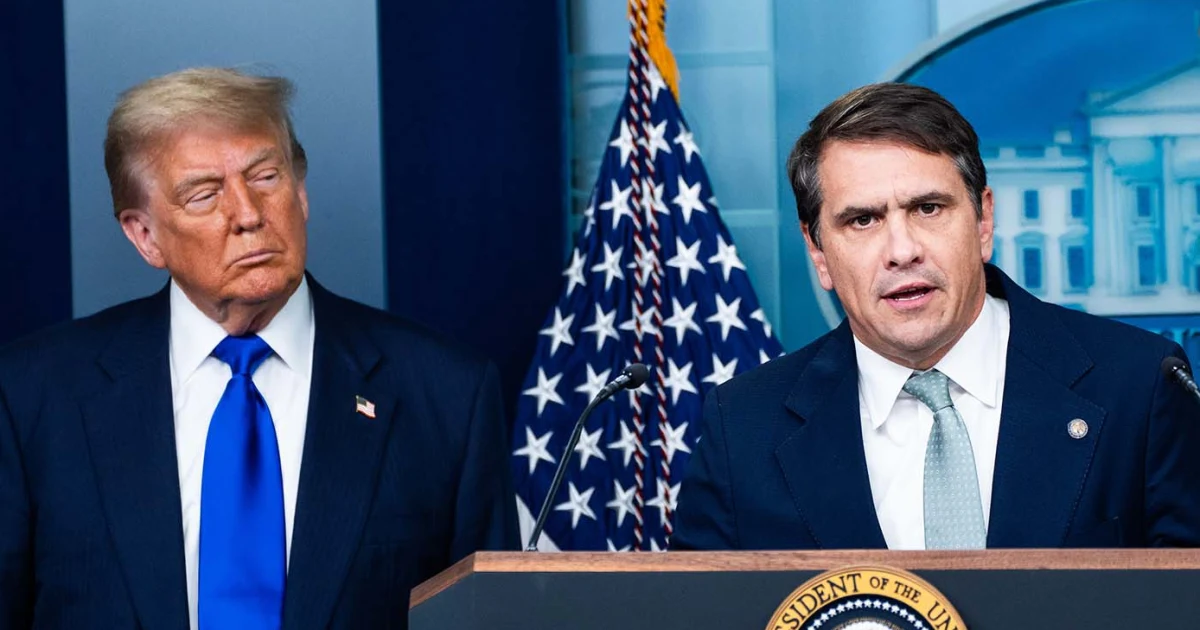
While Donald Trump touted the “fantastic” relationship between the US and China after his visit to the country last month, Xi Jinping was more guarded.
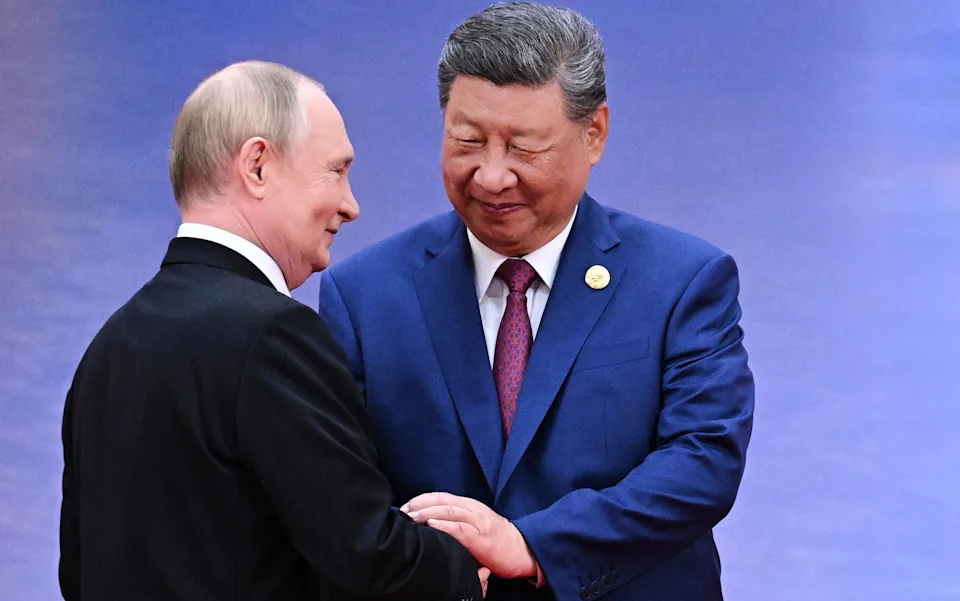
Mr Xi has warned against “hegemonism” and the “law of the jungle” during the visits of Mr Trump and Vladimir Putin this year.
Vladimir Putin held talks with Mr Xi in Beijing days after Mr Trump’s own visit to China – Sergei Bobylev/AP
In the white paper, Beijing also repeated its frustration with the US and Israel’s war in the Middle East, which pushed up global oil prices.
Before the peace deal this week, China had repeatedly criticised the war and in the new white paper wrote that the conflict had been “spilling over and spreading”.
Mr Trump previously thanked Mr Xi and Putin for their help in bringing the ceasefire with Iran to fruition, calling the Chinese president in particular “a total gentleman”.
The language in the new white paper is also notable given Beijing’s claims over Taiwan – a country much smaller than China, which it routinely coerces using military aggression.
China has also faced similar allegations of bullying by the Philippines for its aggression in the South China Sea.
In fact, Manila has accused China of the same activity that it outlines in the new white paper.
“[China] wants to use its superior strength – in short, they want to bully small countries into submission. And it is very important for the international community to know that,” Col Medel Aguilar, a spokesman for the Armed Forces of the Philippines, said in 2023.
China’s new white paper also pushed back against “nuclear sharing“, which is probably a reference to Nato’s policy that allows the US to have nuclear weapons stationed in Belgium, Germany, Italy, the Netherlands and Turkey.
“Global military spending has surged, militarism has resurfaced, and nuclear proliferation and ‘nuclear sharing’ continue to pose a grave threat, leaving international security in a precarious state,” it wrote.