Today’s ESG Updates
- China Targets Record Renewable Energy IPO: China Resources New Energy is seeking to raise $3.6 billion through what could become Shenzhen’s largest-ever IPO, with proceeds earmarked for new wind and solar projects.
- EU Agrees Carbon Market Safeguards: The European Union has approved stronger price controls for its upcoming carbon market to help limit costs for households and maintain support for climate policies.
- Lake Velence Faces Water Crisis: Hungary’s third-largest lake is approaching record-low water levels, raising concerns for local wildlife, tourism businesses and long-term water management.
- Climate Risks Threaten UK Homes: New analysis suggests millions of properties across southern England could face a higher risk of subsidence as hotter, drier conditions affect soil stability.
China plans largest Shenzhen IPO
China Resources New Energy has announced plans to raise approximately 24.5 billion yuan ($3.6 billion) through an initial public offering on the Shenzhen Stock Exchange. If completed, the listing would become the largest IPO ever recorded in Shenzhen and one of China’s biggest domestic offerings in recent years.
The company, which develops and operates wind and solar power projects across China, intends to use the funds to support a major pipeline of renewable energy investments. The offering comes as activity in China’s domestic IPO market continues to recover, with capital raised on mainland exchanges increasing significantly compared with the same period last year.
***
Further reading: China Resources New Energy seeks $3.6 billion in IPO, set to be Shenzhen’s largest
Klimado – Navigating climate complexity just got easier. Klimado offers a user-friendly platform for tracking local and global environmental shifts, making it an essential tool for climate-aware individuals and organizations.
EU strengthens carbon market controls

The European Union has agreed to strengthen price controls for its new carbon market, known as ETS2, to prevent high costs for households and maintain public support for climate policies. Under the revised measures, additional carbon permits will be released into the market if prices rise above a set threshold, increasing supply and helping to stabilize costs.
Scheduled to begin in 2028, the scheme will require fuel suppliers to pay for emissions linked to heating and transport fuels. The measure is intended to make cleaner alternatives, including electric vehicles and heat pumps, more attractive while directing funds towards household support and energy-saving home upgrades.
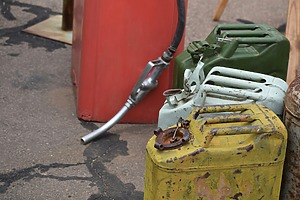
\: The market stability reserve will be allowed to intervene twice each year, releasing up to 80 million additional permits annually if prices exceed €45 per tonne of CO₂. Photo Credit: Nia Sihle
***
Further reading: EU agrees stronger price controls for new carbon market
Related Articles
Here is a list of articles selected by our Editorial Board that have gained significant interest from the public:
Hungary’s Lake Velence continues to shrink

Water levels at Hungary’s Lake Velence are approaching historic lows, prompting concerns for both local wildlife and businesses that depend on tourism. If dry weather persists through the summer, parts of the lake could become unsuitable for activities such as sailing and swimming, according to researchers monitoring conditions at the site.
Researchers attribute the problem to a combination of hotter, drier conditions and decades of water management decisions, including the drainage of surrounding wetlands once capable of holding water in the landscape. Businesses that rely on the lake have already begun to feel the effects, while local authorities and environmental groups are exploring potential solutions. However, adaptation is increasingly being viewed as a necessary part of the lake’s long-term future.
***
Further reading: Hungary’s Lake Velence drying up, threatening tourism and wildlife
Millions of UK homes face subsidence threat

Millions of properties across southern England could face a higher risk of subsidence as climate change alters temperature and rainfall patterns, according to new analysis by the British Geological Survey. Areas identified as particularly vulnerable include London, Essex, Kent, and parts of eastern England. During prolonged dry periods, clay-rich soils can lose moisture and contract, causing movement beneath buildings and increasing the likelihood of damage to foundations. Areas identified as most vulnerable include London, Essex, and Kent. In London, boroughs such as Camden, Islington, and Barnet were highlighted among those most susceptible to subsidence.
***
Further reading: Millions of homes in London, Essex and Kent at risk of sinking as climate crisis worsens
Editor’s Note: The opinions expressed here by the authors are their own, not those of impakter.com — In the Cover Photo: Renewable Energy in China Cover Photo Credit: Kilian Murphy