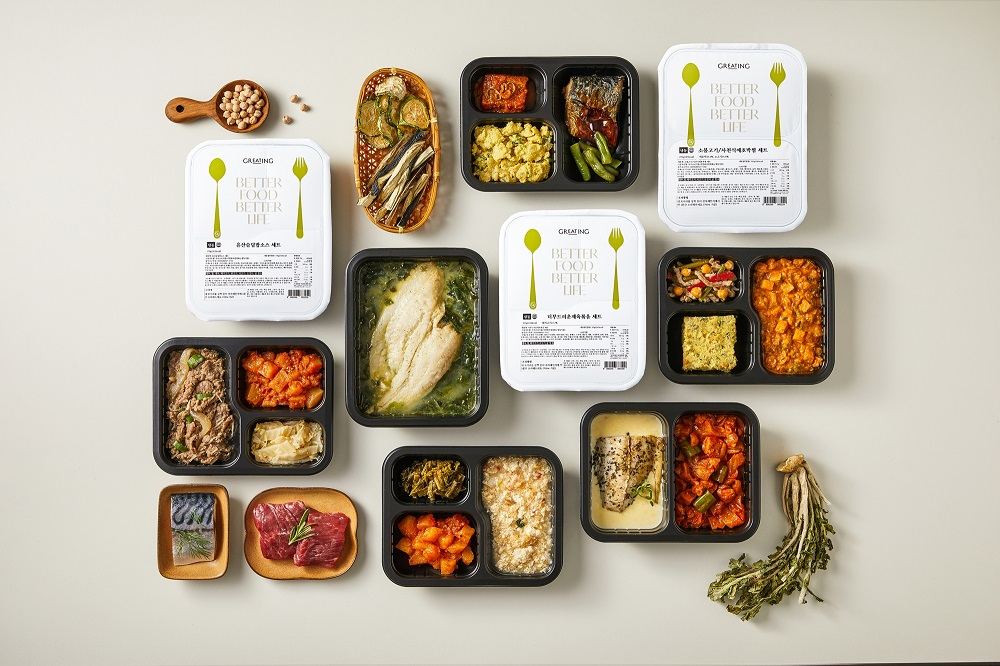

As the burden of dining-out prices grows, care food that offers both health and nutrition is gaining renewed attention as an “affordable healthy meal.” Once centered on the elderly and patients, demand has recently expanded to include people in their 20s and 30s who are keenly interested in blood sugar management, weight control, and protein intake. The food industry is also accelerating its push to attract consumers, offering everything from low-sugar, high-protein meals to artificial intelligence (AI)-based customized diets.
According to Hyundai Greenfood on Wednesday, sales of the “health meals” line — centered on low-sugar, low-calorie, and high-protein options — from the care food brand Greeting rose 24.4% in the January-to-May period this year compared with the same period a year earlier. Sales in the senior meals category also climbed 25.0%. Greeting also operates disease-specific diets for patients with diabetes, high blood pressure, kidney disease, and cancer.
Hyundai Greenfood established an early high-mix, low-volume production system based on its own production facility, the “Smart Food Center,” providing nutritionally balanced meals priced at 9,500 to 10,500 won per meal. Operating about 700 menu items — the largest level in the domestic food industry — is also cited as an advantage, as consumers can use the service over a long period without getting tired of it.
“Being able to solve a healthy meal conveniently and at a reasonable price is winning a positive response,” a Hyundai Greenfood official said. “Recently, as interest in health management and disease prevention has grown, particularly among the younger generation, the number of cases in which consumers without illnesses seek out disease-specific diets has increased significantly.”
Pulmuone operates “Design Meal,” which recommends meals tailored to individual health conditions based on AI nutritional diagnosis. Design Meal provides customized diets that can be selected according to purpose, ranging from general health meals to managing blood sugar, protein, calories, sodium, and fat. It also recommends nutrition-enhanced beverages and healthy snacks. According to Pulmuone, as of the end of last month, the monthly active users (MAU) of the Design Meal application increased 130% from a year earlier, and cumulative membership rose 37%. Over the same period, meal sales also grew more than 15%. The company explained that the “Protein Poke Meal” and “Low-Sugar High-Protein Meal,” which enhance protein intake, have gained steady popularity, particularly among the younger generation.
The industry expects the growth of the care food market to accelerate further. According to the Korea Consumer Agency’s Cham-Gagyeok price service, prices of representative menu items such as naengmyeon (cold noodles), samgyetang (ginseng chicken soup), and kalguksu (knife-cut noodles) in the Seoul area exceeded 10,000 won as of April this year, prompting analysis that demand could shift to similarly priced care food.
Rising interest in health is also driving increased protein demand, a positive factor. According to the Korea Agro-Fisheries & Food Trade Corporation (aT), the size of the domestic protein market grew from 120.6 billion won in 2019 to 450 billion won last year and is expected to reach 800 billion won this year.
“Recently, as the use of continuous glucose monitors (CGM) and blood sugar management apps has spread, particularly among people in their 20s and 30s, a food culture of carefully checking ingredients and nutritional components is taking hold,” a food industry official said. “As health management becomes part of daily life, care food is rapidly expanding beyond diets for specific groups into a meal market that encompasses all generations.”