It’s funny how often we see what we want to see.
Lately, I’ve caught myself looking for evidence that confirms my beliefs, especially in football. Whether it’s a player, a coach, a club project, or even a tactical idea, it’s easy to become attached to a narrative and then focus only on the moments that support it.
In a piece I wrote at the end of 2025, I reflected on a difficult year personally and professionally. I spoke about the doubts, the lessons, and the perspective shifts that came with them. Looking back now, I think I’ve made progress, even if not all of it is visible from the outside.
This isn’t another personal reflection. Not much has changed on the surface. I’ve found some opportunities and taken a few steps forward, but the biggest changes have been internal.
What surprised me this season was how often football reinforced some of the ideas I had been wrestling with. Watching teams, coaches, players, and entire projects unfold over the course of a season reminded me of lessons about patience, timing, belief, and process. In some cases, it confirmed what I already thought. In others, it challenged me completely.
So before attention turns fully to the World Cup, I wanted to look back at the club season and reflect on a few things football taught me along the way.
When the Process Finally Pays Off
I won’t lie, one of the things I’ve struggled with over the last few years is trusting the process.
Not in football, but in life too.
I would find myself having conversations about progress, growth, and how meaningful things take time. I believed it intellectually, but deep down I was often waiting for a sign that I wasn’t wasting my time. Some proof that patience would eventually be rewarded.
Last season, I started doubting that belief.
Part of it was football. As an Inter fan, I’ve been fortunate enough to witness a remarkable period for the club. Three Scudetti, two Coppa Italia titles, three Supercoppa wins, and two Champions League finals in six years is something many supporters would dream of.
Yet football has a way of making success feel insufficient.
Inter’s rise wasn’t immediate. There was the rebuilding work under Spalletti, followed by Conte laying foundations for what came next. It felt like a process unfolding exactly as it should. But the two Champions League final defeats, especially the most recent one, hurt. Watching Paris Saint-Germain, under Luis Enrique, dismantle us so convincingly made me question whether patience and process were enough. Maybe football was simpler than that. Maybe success belonged to those who arrived first rather than those who built best.
At the same time, away from football, I found myself becoming increasingly aware of other people’s achievements. Promotions, financial success, milestones. The kind of things that make you wonder whether you’re moving too slowly.
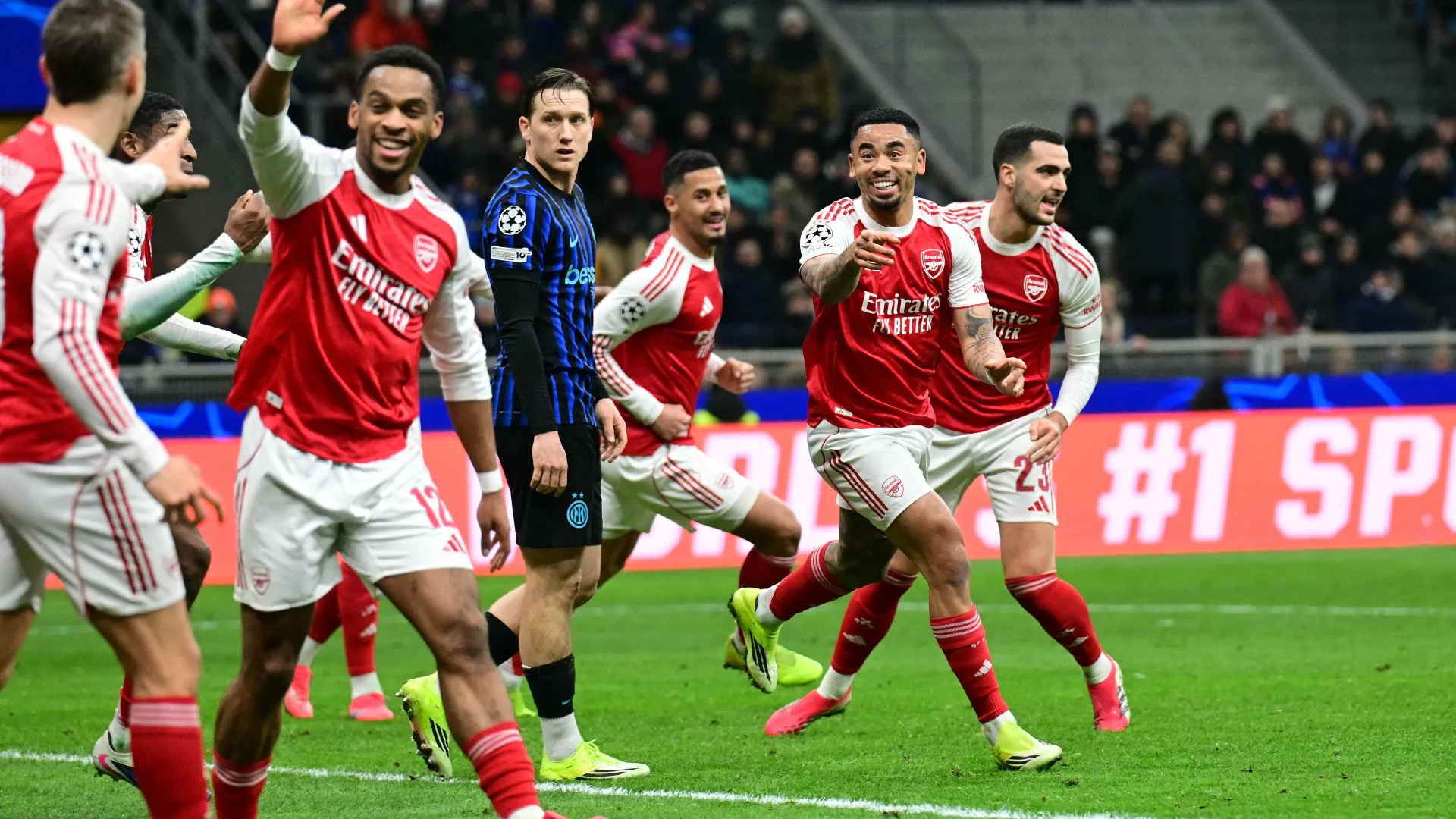
Then Arsenal won the league.
I know it sounds strange that another club’s success would affect my thinking, but passionate football supporters often see parts of themselves in the teams they follow and the stories they admire.
For years, Arteta and Arsenal were criticised. Every setback was used as evidence that the project wasn’t working. Every near miss became proof that they lacked something essential. Yet they kept building.
What struck me most was a passage I read in The Athletic after their title win:
“Years before Arsenal would become champions again, the club’s decision-makers identified what they believed could be a rare opportunity in the Premier League’s competitive cycle.”
The article explained how Arsenal analysed rival squads, age profiles, contract situations, and managerial timelines before identifying a potential window between 2023 and 2027 where Manchester City’s and Liverpool’s dominance might loosen.
That, to me, is process thinking at its finest.
Not predicting the future with certainty, but understanding cycles, preparing for opportunities, and being ready when the moment arrives.
Of course Arsenal needed luck. Every champion does. Injuries, form, transfers, and countless small moments all influence outcomes.
But luck alone doesn’t explain years of preparation.
What resonated with me wasn’t the trophy itself. It was the reminder that timing matters. Sometimes progress is happening long before the results appear. Sometimes the foundations are being built while everyone else is focused on the scoreboard.
This season reminded me that trusting the process doesn’t mean believing everything will work out exactly as planned. It means accepting that meaningful things often take longer than we would like.
Football taught me that.
And, in some small ways, life has started teaching me the same lesson too.
Reclaiming My Emotional Side
One thing I struggled with over the last few years was my relationship with football itself.
I was watching more football than ever, analysing more football than ever, and learning more about the game than ever. Yet somehow I felt more disconnected from it.
Everything became analysis.
Pressing structures. Build-up patterns. Rest defence. Set pieces. Passing networks.
I found myself appreciating football intellectually while enjoying it less emotionally.
The way Inter lost the Champions League final only amplified that feeling. Football started to feel like a problem to solve rather than something to experience.
Then something changed this season.
The Premier League wasn’t necessarily at its highest level in terms of overall quality, but I felt something returning to the game that I had missed: individual expression.
Football moves in cycles.
When pressing reached new heights and collective structures became more sophisticated, risk-taking naturally became harder. The game rewarded organisation, control, and efficiency. That era gave us some incredible football. Conte’s Inter, for example, produced some beautiful build-up sequences during the 2020-21 Scudetto season. De Zerbi’s Brighton pushed positional play and build-up patterns to fascinating levels.
I loved studying those teams.
But this season reminded me that football isn’t only about structure.
It’s also about artists.
Players who can break the script.
Players who can create something that wasn’t supposed to exist.
Watching Lamine Yamal, Rayan Cherki, Cole Palmer, Pedri, Jude Bellingham, Raphinha, Vinícius Júnior, and Nico Paz reminded me why I fell in love with football in the first place.
The pass is beautiful.
The pattern is beautiful.
The collective movement is beautiful.
But sometimes the most memorable moment is still a player doing something that nobody else on the pitch can imagine.
It’s funny because I spent a long time looking for a sign that I was reconnecting with football.
In the end, it arrived through the players who made me feel something again.
My love for the game today is probably stronger than it has ever been. Not because I analyse less, but because I’ve learned to balance analysis with appreciation.
Football is at its best when it combines structure and freedom.
The coach draws the map.
The players bring it to life.
Less Tribalism, More Empathy
A few years ago, after reading some books, analysing matches, and seeing a few of my opinions prove correct, I started to think I had football figured out.
Not completely, of course, but enough to become more confident in my judgments.
The more I learn, however, the more I realise how little I truly know.
One of the biggest lessons this season taught me was empathy.
Not sympathy. Empathy.
The ability to appreciate just how difficult football is for the people making decisions every day.
Managers, sporting directors, scouts, analysts, recruitment teams. The deeper I looked into their world through books, podcasts, interviews, and articles, the more I realised how much work happens behind the scenes and how many variables exist that supporters never see.
Football fans often assume that if something doesn’t work, somebody must be incompetent.
The reality is usually more complicated.
Sometimes a good player joins the wrong team.
Sometimes a talented coach inherits the wrong squad.
Sometimes the timing is wrong.
Sometimes injuries change everything.
And sometimes people simply get unlucky.
This season made me much more hesitant to declare that a manager should be sacked.
Of course, there are situations where it becomes obvious that a project isn’t going to work. Some appointments never fit. Some ideas never take hold.
But football’s tendency to rush to judgment has become exhausting.
Take Ruben Amorim.
His spell at Manchester United became a source of ridicule. Every poor result was treated as proof that he wasn’t good enough. Every decision was scrutinised. Every setback became evidence that the project had failed.
Did he make mistakes? Absolutely.
But looking deeper, there were also signs of progress. The underlying numbers improved. Certain structural issues started to be addressed. The team became stronger in areas such as set pieces. It wasn’t perfect, but it wasn’t the disaster many portrayed it as either.
What struck me was how quickly football discourse jumps from patience to panic.
We often talk about wanting long-term projects, but many supporters only support the idea of a process when the results arrive immediately.
That’s why Arsenal’s title resonated with me.
Arteta’s journey shouldn’t be used as an argument for keeping every manager forever. Most projects fail. That’s the reality.
What Arsenal does remind us, however, is that when a coach fits the club’s vision, when the players believe in the message, and when progress exists beneath the surface, patience can sometimes be rewarded.
The key word is sometimes.
Not every storm leads to sunshine.
But equally, not every storm means the ship is sinking.
One thing I’ve learned is that football decisions should not be driven by envy. The success of rivals often creates pressure to act quickly, even when patience might be the better option.
Sometimes clubs panic because somebody else is winning.
Sometimes supporters panic because somebody else is progressing faster.
Yet every club has its own timeline.
As an Inter supporter, I saw many fans calling for Chivu’s dismissal early in the season. Months later, those same fans were celebrating one of the most enjoyable campaigns in recent memory.
Football has reminded me that uncertainty isn’t always a sign that something is broken.
Sometimes it’s simply part of the process.
And the older I get, the more I appreciate how difficult it is to know the difference.
Trusting the Timing
If there’s one thing this season taught me, it’s that football rarely moves in a straight line.
Projects stall before they succeed.
Players disappear before they break through.
Managers look finished before they reinvent themselves.
Teams seem unbeatable before their cycle ends.
And supporters, analysts, and pundits spend most of that time trying to convince themselves they know what comes next.
The truth is that football remains beautifully uncertain.
This season challenged some of my beliefs and reinforced others. It reminded me that process matters, but so does timing. That structure matters, but so does individual brilliance. That criticism is easy, but understanding is much harder.
Most of all, it reminded me why I fell in love with the game in the first place.
Not because football always rewards the smartest people.
Not because the best team always wins.
Not because every process is vindicated.
But because football constantly surprises us.
Just when you think you’ve figured it out, a player, a coach, or a team comes along and shows you something new.
As attention now turns toward the World Cup, that’s what I’m looking forward to most.
Not being proven right.
Not having my opinions confirmed.
Just learning something new again.
Because the longer I follow this game, the more I realise that understanding football isn’t about reaching a final answer.
It’s about staying curious enough to keep asking better questions.