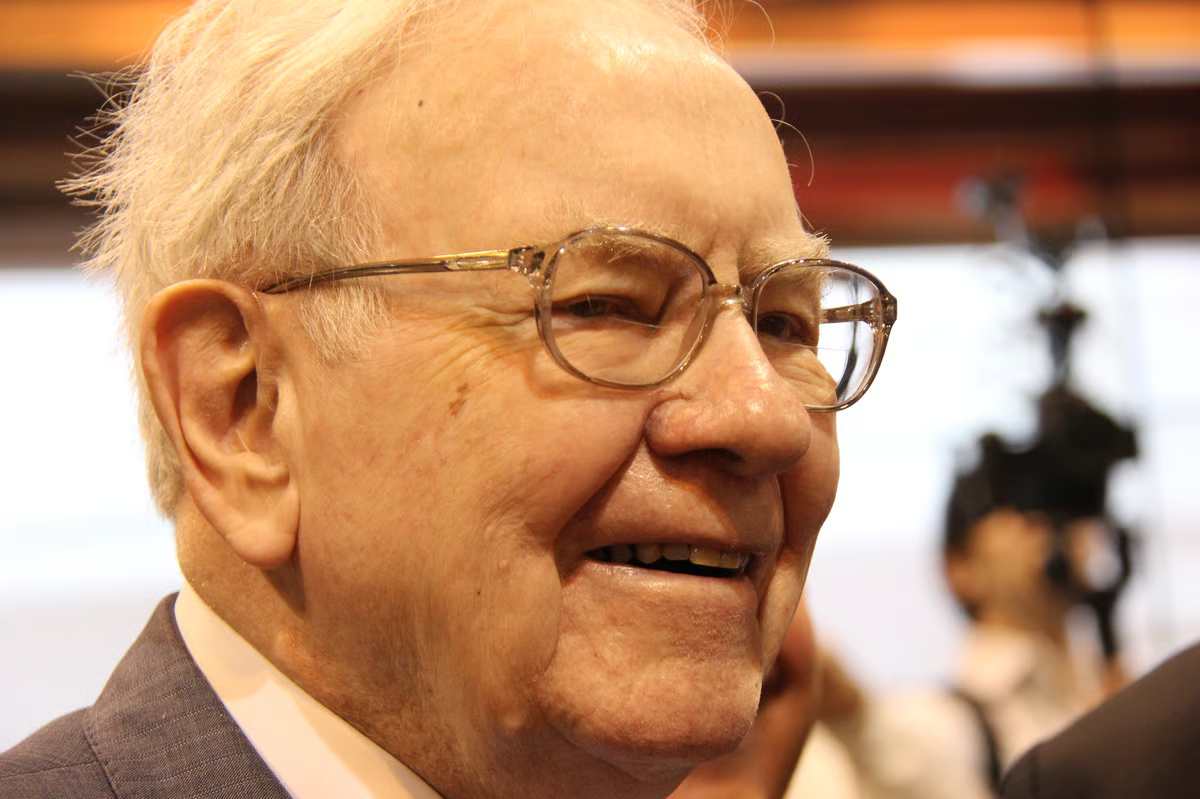
It’s been a year of eye-popping changes for Berkshire Hathaway (BRKA +0.66%)(BRKB +0.69%). It began with the retirement of longtime CEO Warren Buffett (who remains chair of the board) on Dec. 31. For the first time in well over half a century, the trillion-dollar conglomerate that the Oracle of Omaha built has a new boss, Greg Abel.
Following the filing of quarterly Form 13Fs with regulators on May 15, Wall Street and investors learned that Abel undertook a massive overhaul of Berkshire Hathaway’s $330 billion investment portfolio. A total of 16 positions were sent to the chopping block, representing a third of the total holdings that Buffett had overseen in his final quarter as CEO.
The portfolio that Warren Buffett’s successor now guides is highly concentrated, with 61% of invested assets put to work in just five stocks — one of which is a virtual monopoly.
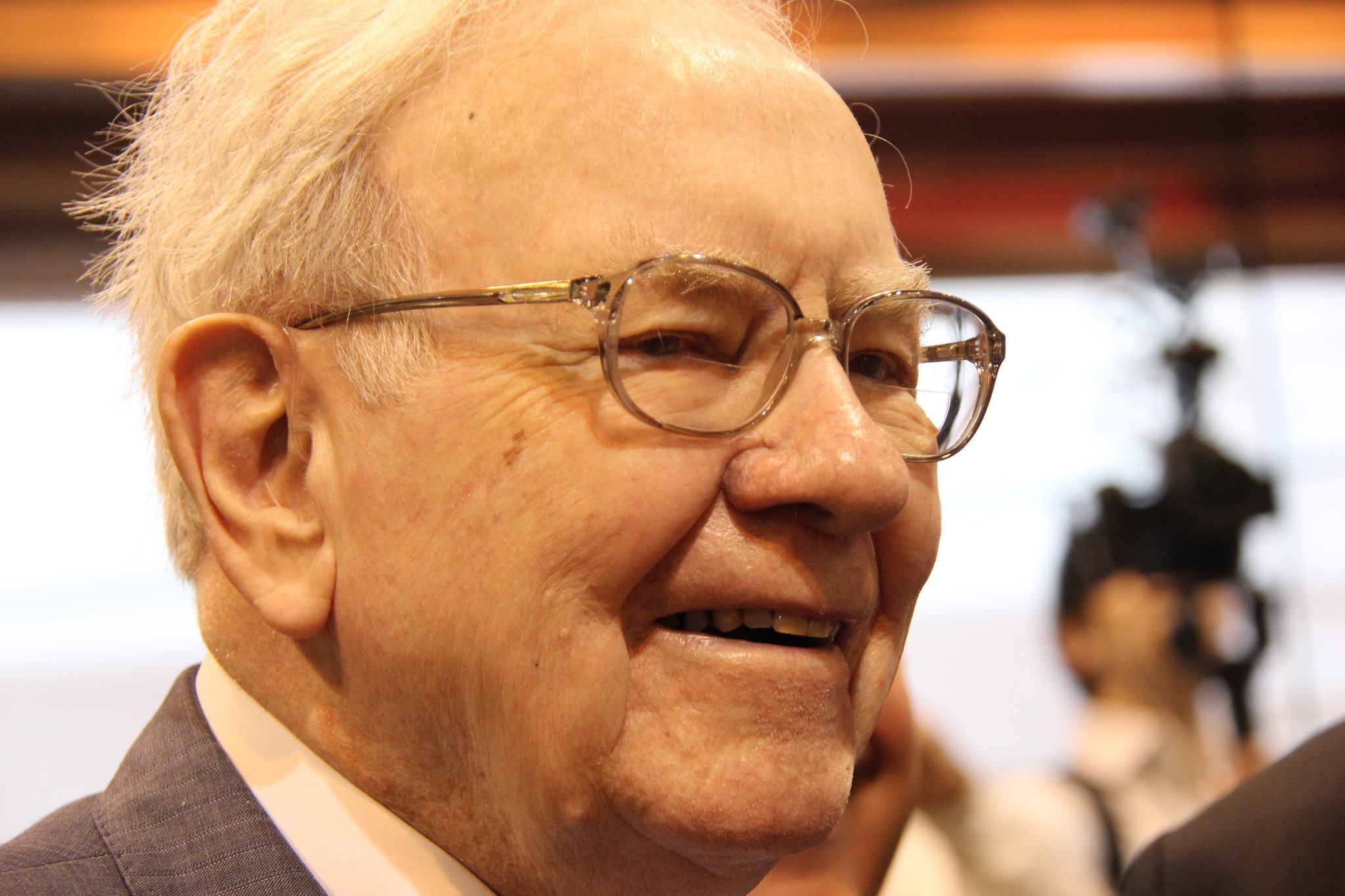
Warren Buffett retired as Berkshire Hathaway’s CEO on Dec. 31, 2025. Image source: The Motley Fool.
1. Apple: $71.1 billion (21.6% of invested assets)
As has been the case for years, Apple (AAPL +0.31%) is Berkshire’s top holding by market value. Even though Warren Buffett sold 75% of his company’s Apple stake over the nine quarters leading up to his retirement, it still accounts for nearly 22% of invested assets.
In Abel’s first annual letter to shareholders, he described Apple (along with a few other holdings) as a multidecade compounder. While Apple’s valuation is far from attractive — its current price-to-earnings ratio of 38 is a clear historical premium — Abel’s letter sets the tone that Apple stock will be a fixture for some time to come.
Buffett’s favorite aspect of Apple was, arguably, its market-leading share buyback program. Since initiating a repurchase program in 2013, Apple has spent roughly $853 billion to reduce its outstanding share count by more than 44%. This had an undeniably positive impact on its earnings per share.
However, Abel may favor Apple due to its artificial intelligence (AI) integration. The incorporation of Apple Intelligence into its physical devices (iPhone, iPad, and Mac) can boost sales and enhance its already impressive customer loyalty.

Today’s Change
(4.12%) $12.38
Current Price
$312.95
Key Data Points
Market Cap
$213B
Day’s Range
$305.44 – $314.92
52wk Range
$286.15 – $387.49
Volume
173.8K
Avg Vol
3.3M
Gross Margin
60.19%
Dividend Yield
1.09%
2. American Express: $48 billion (14.6% of invested assets)
When taking the baton from Buffett, Abel vowed to follow in his footsteps in several respects. This includes not touching the companies the Oracle of Omaha referred to as “indefinite” holdings. Credit-services provider American Express (AXP +4.12%), which has been continuously held since 1991, is one of these forever stocks.
The beautiful thing about Amex’s operating model is its ability to double-dip on both sides of the register. In addition to being the No. 3 payment processor by credit card network purchasing volume in the U.S., thereby collecting merchant fees, American Express is also a lender. Personal and business credit cards enable Amex to collect annual fees and interest income.
American Express has a knack for attracting high earners, as well. The well-to-do are less likely to alter their spending habits or to miss payments during economic hiccups.
But maybe the best aspect of holding Amex stock after 35 years is the jaw-dropping yield on cost. Amex’s $3.80/share annual dividend, compared to Berkshire’s roughly $8.49/share cost basis in Amex stock, works out to an annual yield on cost of almost 45%!
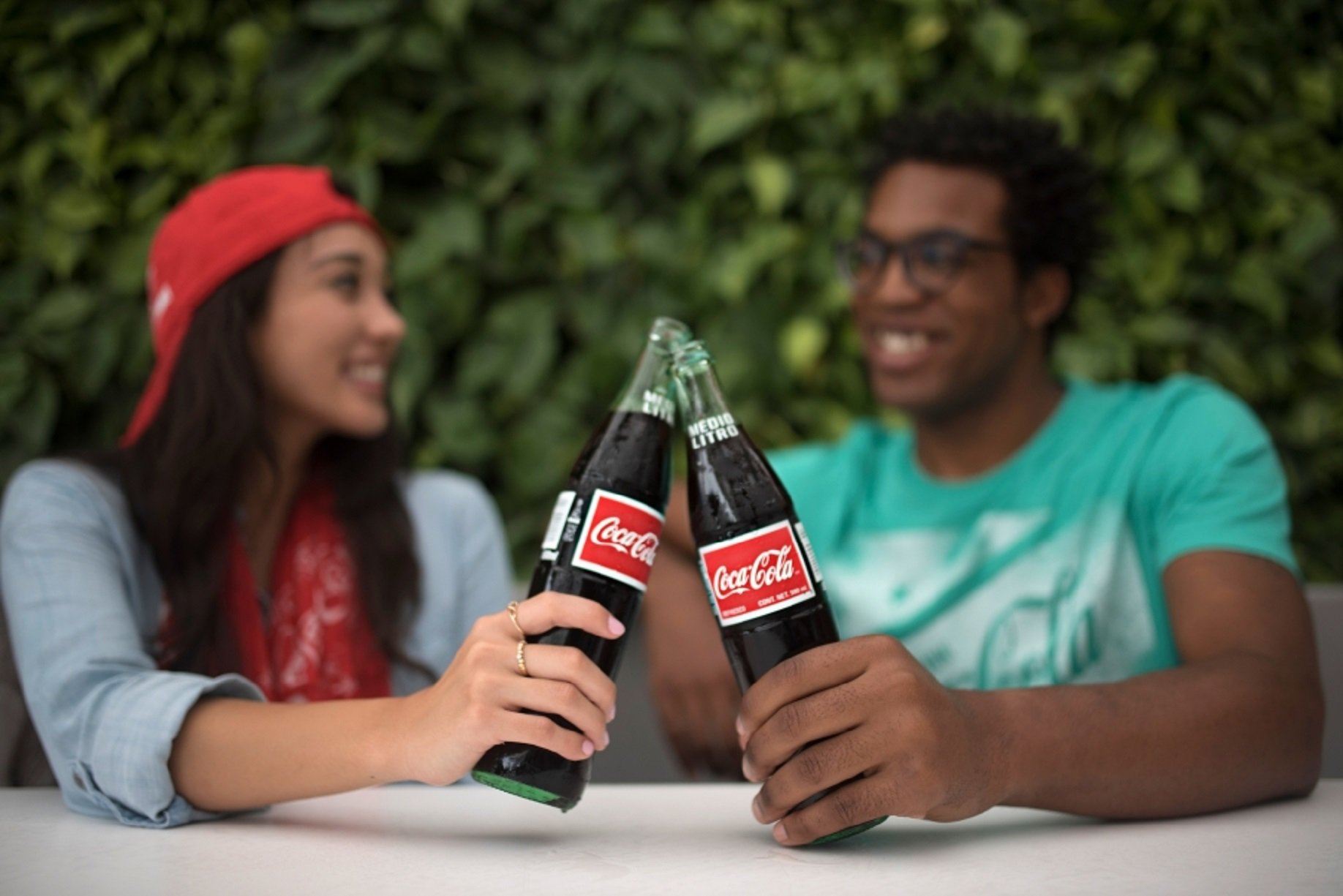
Image source: Coca-Cola.
3. Coca-Cola: $31.6 billion (9.6% of invested assets)
Another Buffett-labeled indefinite holding that’s not going anywhere under Abel’s watch is beverage behemoth Coca-Cola (KO 2.46%). This is Berkshire’s longest continuous holding (since 1988).
Coca-Cola is practically unrivaled in terms of geographic diversity. With the exception of North Korea, Cuba, and Russia, it has active operations in every other country. This allows it to take advantage of meaningful organic growth opportunities in emerging markets, while still netting predictable operating cash flow in developed countries.
Furthermore, Coca-Cola has done an exceptional job of connecting with and engaging its customers. Having more than 100 years of history in its sails helps it connect with more mature audiences, while AI-driven ads can tailor individual messages to younger consumers.
Plus, if you thought Amex’s annual yield on cost was impressive, you’ll love Coca-Cola, which has increased its dividend for 64 consecutive years. Coke’s $2.12/share annual dividend, and Berkshire’s cost basis of approximately $3.25/share for Coca-Cola, equate to an annual yield on cost of 65%!

Today’s Change
(3.16%) $1.65
Current Price
$53.78
Key Data Points
Market Cap
$384B
Day’s Range
$52.53 – $54.05
52wk Range
$43.66 – $57.55
Volume
1.7M
Avg Vol
38.2M
Dividend Yield
2.03%
4. Bank of America: $26.5 billion (8% of invested assets)
Similar to Apple, Warren Buffett was a persistent seller of Bank of America (BAC +3.16%) shares in the lead-up to his retirement. He disposed of 50% of his company’s stake in BofA (as Bank of America is commonly known) through Dec. 31, 2025, with Abel continuing to sell shares (albeit modestly) in the first quarter.
Bank stocks were always a favorite of Buffett due to their cyclical ties. Though it’s impossible to predict when economic downturns will begin, history has shown that periods of expansion last substantially longer than recessions. The nonlinear nature of economic cycles favors financial institutions.
Bank of America was also perfectly positioned to take advantage of the Federal Reserve’s aggressive rate hikes from May 2022 through July 2023. BofA is the most interest-sensitive of America’s money-center banks. In other words, higher interest rates boosted its net interest income more than other big banks.
However, BofA’s value proposition isn’t what it used to be. When Buffett first invested in BofA preferred stock in August 2011, its common stock was trading at a 62% discount to book value. By the start of 2026, Bank of America’s shares were valued at a 43% premium to book.

Today’s Change
(3.77%) $13.54
Current Price
$372.53
Key Data Points
Market Cap
$4.5T
Day’s Range
$358.21 – $373.23
52wk Range
$162.00 – $408.61
Volume
2M
Avg Vol
29.1M
Gross Margin
60.43%
Dividend Yield
0.23%
5. Alphabet: $22 billion (6.7% of invested assets, both share classes combined)
Lastly, Berkshire Hathaway’s new look portfolio under Greg Abel more than tripled its stake in Google parent Alphabet (GOOGL +3.77%)(GOOG +3.82%) during the first quarter. The 36,403,656 Class A shares (GOOGL) and 3,585,215 Class C shares (GOOG) purchased collectively vaulted Alphabet to Berkshire’s fifth-largest holding.
Abel, like his predecessor, appreciates businesses with sustainable moats. Alphabet offers a virtual monopoly through Google. Data from GlobalStats shows that Google has accounted for 89% to 93% of worldwide internet search engine traffic over the last decade. This, along with its ownership of streaming platform YouTube, yields substantial ad-pricing power.
But the bulk of Alphabet’s long-term growth potential is tied to its cloud infrastructure services platform, Google Cloud. Integrating generative AI solutions and large language model capabilities into Google Cloud has rapidly accelerated sales growth for this margin-rich segment.
Alphabet’s balance sheet is another selling point. It closed out March with close to $127 billion in cash, cash equivalents, and marketable securities, and generated nearly $46 billion in cash from operations in the first quarter of 2026. This is a recipe for robust shareholder returns.