Elon Musk wants SpaceX and Tesla (TSLA stock) teams to build 100 gigawatts of solar power manufacturing capacity in the US. He wants to do that within three years. Industry reports say this plan could reshape America’s solar market if the companies can pull it off.
The plan is huge. Module manufacturing grew more than 50% in 2025, with 65.5 GW of capacity online, up from 42.5 GW at the end of 2024. Musk wants to build more than the entire current US market can make. That’s bold even for him.
The Scale Challenge: Can Tesla and SpaceX Really Build 100 GW of Solar Capacity?
The numbers show just how big this goal is. As of last year, U.S. factories were officially able to produce enough solar modules to meet domestic demand. Cell capacity, however, lags far behind, at just 3.2 gigawatts. Tesla and SpaceX each want to build 100 GW of yearly output.
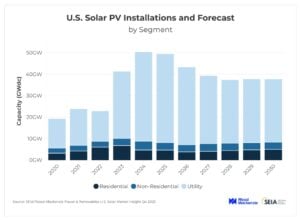
- Total solar module manufacturing in the US was approximately just above 45 GW at the end of 2025, and is expected to rise to 60 GW in 2026.
- The two companies want to build over three times that much. Combined, they’d aim for 200 GW of total yearly capacity.
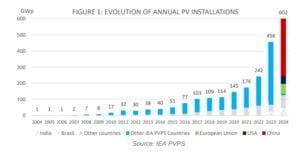
This would make them the world’s biggest solar makers. China leads global output today. But Musk thinks America can build massive solar capacity quickly. Tesla has built manufacturing facilities in China and the US — much faster than skeptics assumed the company could.
The plan goes beyond just making panels. “We’re going to work toward getting 100 GW a year of solar cell production, integrating across the entire supply chain from raw materials all the way to finished solar panels.” That means mining, refining, cells, and modules all in America.
A $2.9 Billion Bet on American Solar Manufacturing
Tesla has already started spending. Tesla is looking to buy equipment worth $2.9 billion for manufacturing solar panels and cells from Chinese suppliers, including Suzhou Maxwell Technologies. The deal shows Musk is serious about the 100 GW goal.
The equipment purchase from China includes key tools for making solar cells. As per reports, Suzhou Maxwell Technologies, the world’s biggest producer of screen-printing equipment used to make solar cells, is among the leading candidates to supply machinery for the project. Other potential suppliers include Shenzhen S.C New Energy Technology and Laplace Renewable Energy Technology.
The timing matters too. The Chinese companies were told to deliver the equipment before this autumn, with two saying it would be shipped to Texas. Tesla wants to move fast on this plan.
The reported $2.9 billion solar spend would likely increase Tesla’s previously guided $20 billion in 2026 capex, Barclays analyst Dan Levy said following the news. That’s a lot of money for one company to invest in solar.
Why Texas Is Ground Zero for Musk’s Solar Ambitions
Texas will be the center of Tesla’s solar push. The Brookshire facility is where Tesla plans to anchor that 100 GW ambition. Electrek has confirmed that Tesla is planning full vertically integrated solar manufacturing at the Brookshire site, not simple panel assembly.
The state gives Tesla some help with power grid rules too. Legislators in Texas, where Tesla operates its largest US gigafactory and has announced plans to expand, passed Senate Bill 6 in June 2025, directing the Public Utility Commission of Texas to develop a new framework for large load interconnections greater than 75 MW.
SpaceX will likely build its own separate 100 GW capacity. Musk plans to build the solar capacity mainly for use by Tesla, although some will be used to power SpaceX satellites. That suggests both companies will use much of their own output.
The space-based solar plans connect to SpaceX’s broader goals. Both companies see huge energy demand coming from AI and data centers. Solar could power those needs.
Dream Big, Build Bigger: What Could Stand in the Way?
Industry experts have mixed views on whether this can work. To anyone who knows about US solar manufacturing, Elon Musk’s claim that SpaceX and Tesla are working to build 100 GW of annual PV manufacturing capacity might seem unachievable.
Additionally, the supply chain needs work too. The domestic solar supply chain shows severe imbalances. Some stats include:
- Polysilicon production from Hemlock Semiconductor and Wacker Chemie holds steady at 40,000 metric tons, which supplies only 21 GW of solar production.
- Ingot and wafer active capacity from Hanwha Qcells and Corning provides just 5.3 GW. Crystalline silicon cell manufacturing stands at only 3 GW.
But the equipment costs look right. According to the 2025 Benchmarks in the Detailed Cost Analysis Model from energy data resource Open EI, the equipment necessary to produce 100 GW of tunnel oxide passivated contact (TOPCon) cells per year would require an investment of $3.5 billion if purchased from the lowest-cost Chinese suppliers. Tesla’s $2.9 billion deal fits that range.
Current demand supports big growth, too.
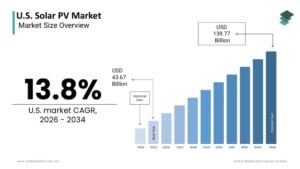
- The U.S. Solar PV Market was valued at USD 43.67 billion in 2025, is estimated to reach USD 49.69 billion in 2026, and is projected to reach USD 139.77 billion by 2034, growing at a CAGR of 13.8% from 2026 to 2034.
Can Tesla Beat China’s Solar Dominance?
Tesla faces trade rule challenges. Federal rules govern a 10% domestic content bonus tax credit, with projects needing to prove that 50% of total component costs come from U.S.-mined, produced, or manufactured items. The 45X advanced manufacturing tax credit provides a $0.07 per watt subsidy for U.S.-assembled modules.
Chinese oversupply hurts US makers. Severe and chronic oversupply in the global solar industry is largely driven by manufacturing capacity expansion in China, where production output now exceeds global installation demand.
- At the peak of China’s 2024 solar boom, new factories were announced almost weekly, resulting in module prices dropping by up to 50%.
Other companies are building capacity too. Manufacturing concentration is moderate: the top five module suppliers held roughly 60% shipment share in 2025.
- First Solar’s 14 GW cadmium-telluride capacity unlocks full domestic-content and prevailing-wage adders.
- Hanwha Q CELLS’ 8.4 GW Georgia facility brings crystalline-silicon output within 10% of Southeast-Asian cost benchmarks.
New factories keep opening. April 2025:
- Boviet Solar opened a North Carolina plant worth USD 294 million, launching 2 GW of initial capacity with plans to reach 4 GW.
- Waaree Energies secured approval to double its solar module manufacturing capacity at its Brookshire facility in Texas, USA, elevating the total capacity to a significant 3.2 GW.
The Bottom Line
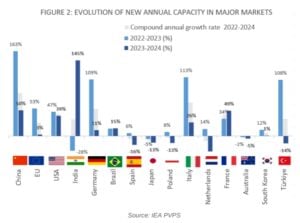
Musk’s 100 GW solar plan is huge but not impossible. Tesla has the money to try. The US market can support big growth. China’s oversupply creates opportunities for US makers with the right cost structure.
The real test will be execution. Tesla is almost a decade behind schedule on what Musk said the company would achieve with self-driving cars, and SpaceX is years behind schedule on sending people to Mars. But both companies have delivered on big factory projects before.
Success would transform US solar manufacturing. Two companies making 200 GW yearly would make America a solar export power. It would also reduce dependence on Chinese supply chains. That fits with broader US goals for energy independence and carbon reduction.
The plan faces real challenges. Supply chain gaps, trade rules, and Chinese competition all create risks. But if Tesla and SpaceX can build their 100 GW factories, they’ll reshape global solar markets. The next three years will show if Musk’s latest big bet pays off.